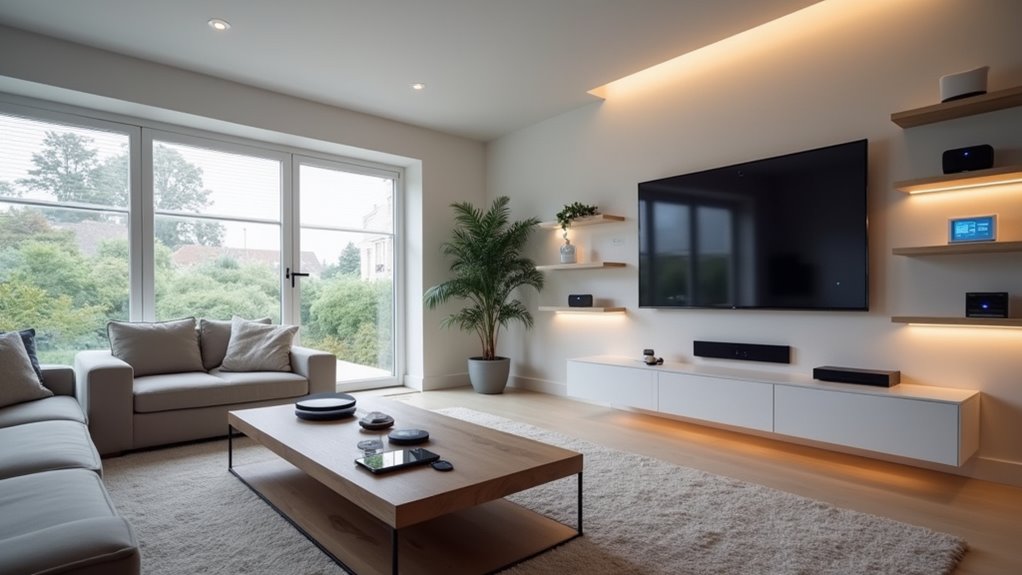
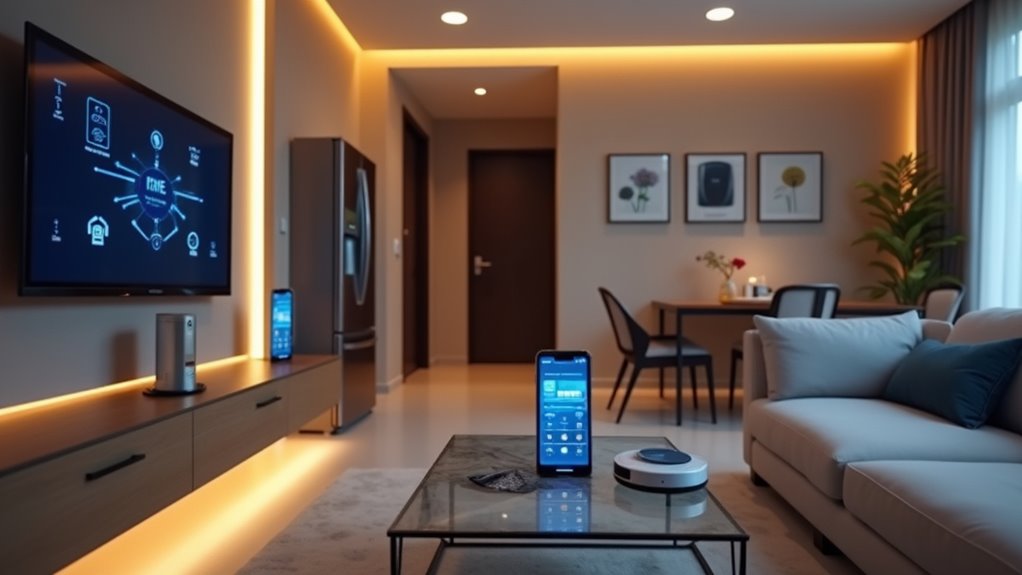
While everyone’s been busy arguing about whether robots will take over the world, smart home automation has quietly exploded into a $88.29 billion industry in 2024.
Market analysts project it’ll hit $243 billion by 2031. Triple in seven years? That’s a 15.6% annual growth rate. Not bad for an industry that was worth $75.77 billion just last year.
The tech behind this boom isn’t exactly groundbreaking anymore. IoT connects everything, AI makes it smart, and cloud computing stores all that data somewhere.
IoT, AI, and cloud computing – the unremarkable trinity powering your supposedly revolutionary smart home.
Voice assistants like Alexa and Google Assistant have turned controlling your home into casual conversation. Remember when clapping to turn off lights was peak innovation? Yeah, that aged poorly. Apple’s jumping back in with their second-generation HomePod, betting that premium sound quality and seamless ecosystem integration still matter.
Millennials and Gen Z are eating this stuff up. They want convenience, remote control, and the ability to check their front door camera while pretending to work.
Smart security systems already claim 23% of the market share, offering real-time monitoring and AI-based threat detection. Facial recognition, motion sensors, the works. Paranoid? Maybe. But at least they know when the delivery guy drops their package.
Energy efficiency plays its part too. Smart thermostats and lighting systems adjust based on whether anyone’s actually home. Groundbreaking concept, right?
These devices learn user behavior, schedule themselves, and supposedly save money on utilities. During power outages, most cloud-based smart devices become inoperative without electricity or backup systems. Governments love the sustainability angle, which probably helps with those pesky regulations.
The real growth story appears to be happening in Asia-Pacific and the Middle East. Rapid urbanization, rising incomes, new homeowners who want the latest gadgets.
That said, trade shows and industry events keep pushing awareness, creating opportunities for both tech giants and startups trying to grab their piece. Major players like Google, Amazon, Samsung, and Honeywell are competing alongside smaller innovators like Control4 and ADT Inc., all racing to capture market share.
Smart lighting, appliances, thermostats, entertainment systems – they’re all getting the AI treatment. Multi-functionality seems to be the name of the game now.
We’re talking about devices that schedule, adapt, learn, and integrate with everything else in the house. The residential sector dominates, but commercial applications are catching up.
The market’s there. The technology’s mature enough. Consumer demand keeps climbing.
At this rate, that $243 billion projection might actually be conservative. Welcome to the future, where your refrigerator knows more about your eating habits than you do.