Unless someone’s been living under a rock, they’ve probably noticed smart home gadgets are everywhere now. The market’s flooded with devices promising to transform daily life. Most of it’s junk, honestly. But some stuff actually works—and tech experts know exactly which devices their relatives should buy first.
Smart plugs? They top the list. Cheap, simple, and they actually work. No rewiring needed. Just plug them in, connect to Wi-Fi, and suddenly that ancient lamp from grandma becomes voice-controlled. These things can convert pretty much any dumb appliance into something schedulable. The energy monitoring features tend to show exactly how much power that space heater’s sucking down—real eye-opener for most people.
Smart plugs transform any old appliance into something schedulable—no rewiring needed, just plug in and connect.
The smart thermostat comes next, and for good reason. Energy Star research suggests these typically save 10-15% annually on heating and cooling costs. Real money we’re talking about here. Those learning features seem to adapt to routines automatically, so nobody needs to remember to adjust temperatures anymore. Remote control via phone means coming home to a warm house in winter—or at least that’s the promise. Room sensors can help regulate specific areas, though results may vary. HVAC compatibility’s usually straightforward, but check first.
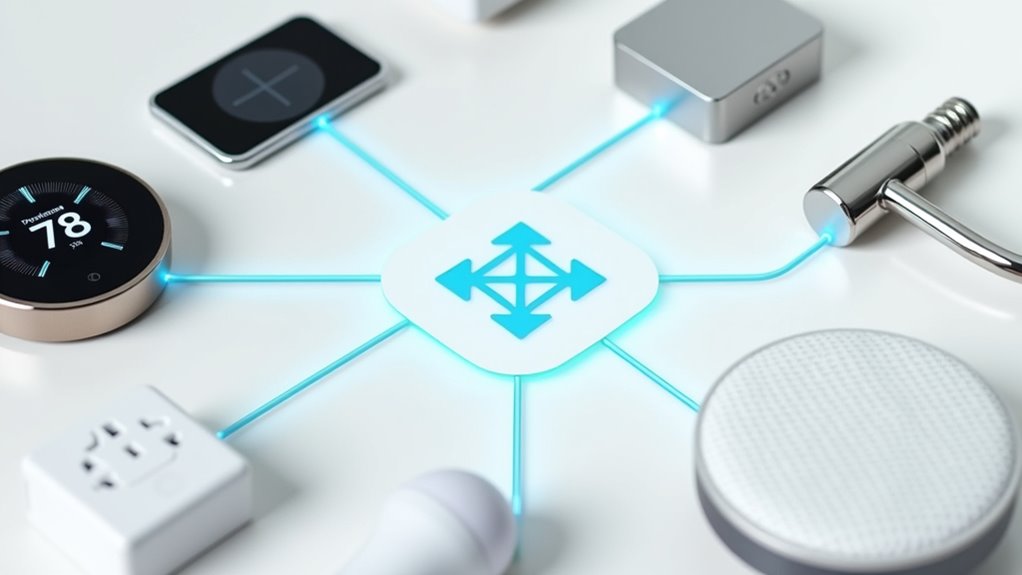
Smart bulbs follow close behind. LED versions appear to cut lighting energy use by up to 80% compared to traditional bulbs. Not a typo—though your mileage might depend on what you’re replacing. Color-changing options set whatever mood you’re after. Dimming happens without special switches, which is convenient. Motion sensors and schedules mean lights turn off when rooms empty, assuming everything’s configured right. Matter, Zigbee, and Z-Wave protocols should guarantee they’ll work with whatever hub comes later. Zigbee bulbs from different manufacturers like Philips Hue and Innr demonstrate direct compatibility since they utilize the same base technology.
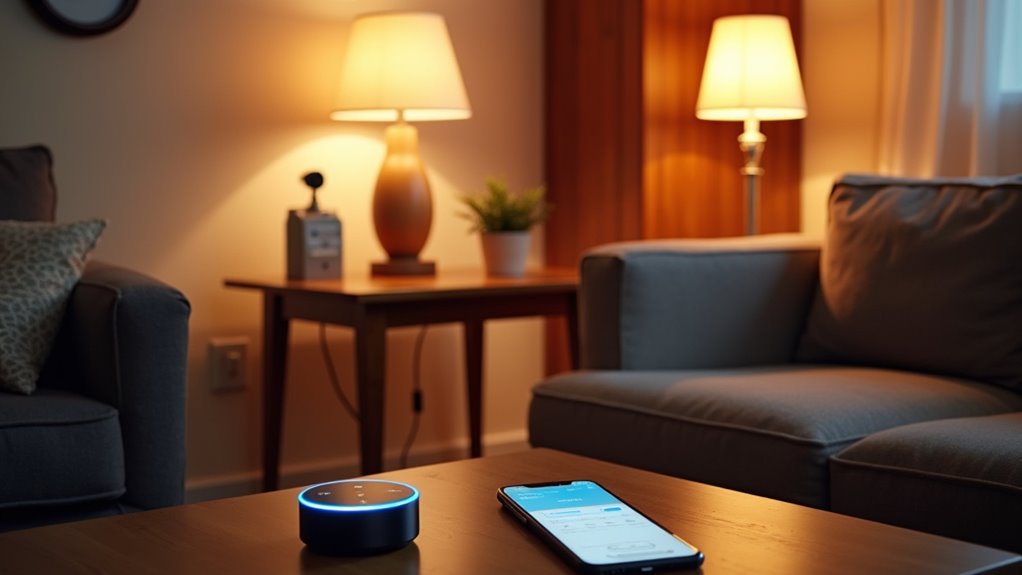
About those hubs—they’re pretty much essential for serious automation. Amazon Echo, Google Nest Hub, Apple HomePod, Samsung SmartThings. Pick one based on what ecosystem you’re already stuck with. Multi-protocol support supposedly means devices from different brands play nice together, though “nice” is relative. Matter protocol adoption’s likely making setup easier, but we’ll see how that plays out long-term. The new standard enables cross-brand automation where devices from different manufacturers can actually work together in complex scenarios. Firmware updates keep everything secure and functional—in theory. Apps like Roku Smart Home can centralize control of compatible devices and enable custom scenes for automation, though they typically only work within their own ecosystem.
Security devices round out the starter kit nicely. Smart locks provide keyless entry and temporary access codes for guests—perfect for Airbnb hosts or forgetful teenagers. Video doorbells show who’s at the door without getting up from the couch. Door and window sensors integrate with alarms, assuming compatible systems. AES encryption protects against hacking, though let’s be honest, nothing’s foolproof.
Water leak sensors deserve mention too. Early warnings can prevent thousands in damage—ask anyone who’s dealt with a burst pipe. Battery-powered versions using Zigbee or Z-Wave protocols supposedly run for years. They’re the kind of insurance most people don’t know they need until their basement’s flooded.