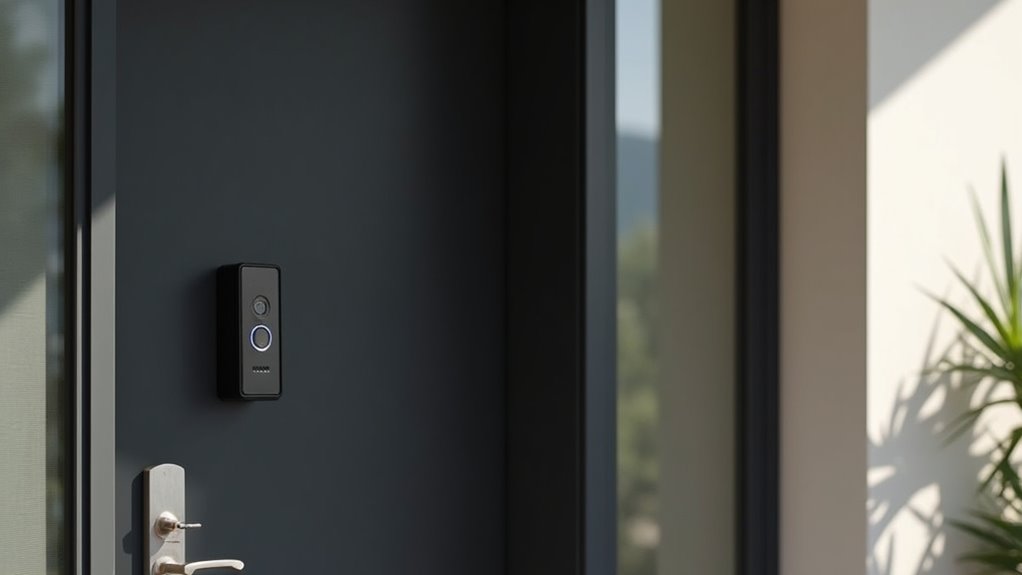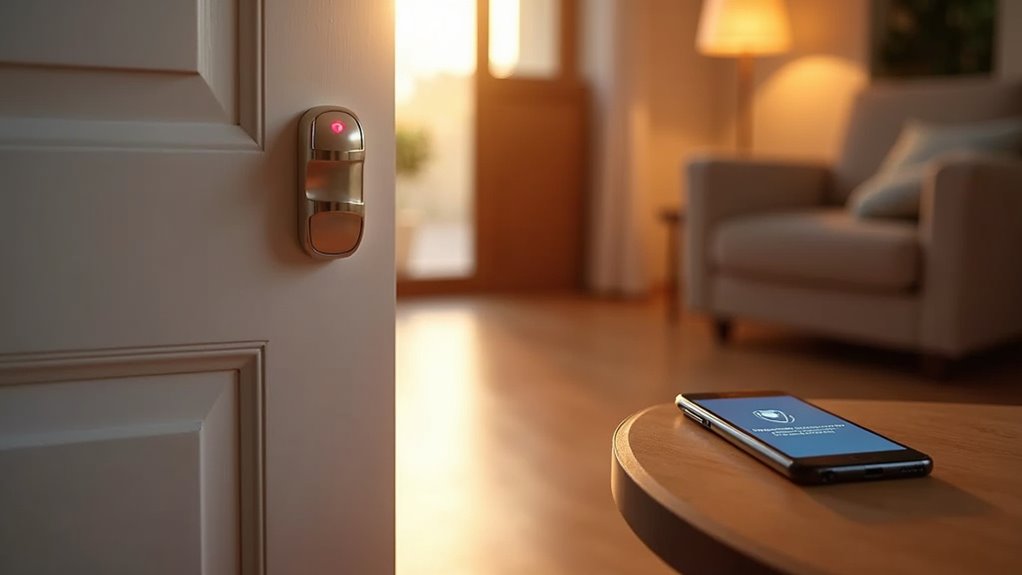
Here’s the basic setup. Magnetic switches detect the exact moment a door or window opens by sensing a circuit break. Some sensors hide inside the door frame itself — completely invisible to anyone casing the place. Motion and magnetic sensors trigger wireless signals instantly. No delay. No warning for whoever is on the other side of that door.
Magnetic switches catch the exact moment a door opens. No delay. No warning. No second chances.
The installation is almost embarrassingly simple. Adhesive mounts. No wiring. No drilling. Renters can use it. Homeowners can use it. Batteries are already included, so the thing works right out of the box. Some models run on just two AA batteries and deliver five to ten years of battery life. Five to ten years. That’s longer than most people keep a smartphone.
WiFi connectivity means no hub is required. The system connects directly to alarm panels through wireless radio frequencies. It operates in remote locations without any issues. AC line power is also an option for setups that need it.
When a door opens, the alerts come fast. Email notifications. Text messages. Instant push alerts through security apps. Audio alarms. Visual alarms. Some systems even connect to smart home specialists during emergencies. A chime sounds on a receiver the moment something triggers. There is nowhere to hide from that kind of speed.
The applications go beyond home security. Healthcare facilities use this technology to prevent patients from wandering into dangerous areas. Pharmacies monitor fridges and cleanrooms. Storage facilities track unit doors remotely. Medical refrigerators stay under constant watch. It covers a lot of ground.
Cost is almost a non-issue. Models like the Honeywell 5800mini start at $31.95. No monthly fees. No additional software. Compatible with various alarm systems already on the market. The whole thing avoids the logistical nightmare of traditional wired installations. Advanced platforms can also combine door and temperature data to help distinguish excursions caused by open doors from those caused by closed-door equipment failures. Devices like the XW-111 operate as stand-alone independent controllers, requiring no cloud services or subscription fees of any kind. For those who want expanded coverage across multiple entry points, multiple hubs can coexist within a single home without overwhelming the network or creating dead zones.
Simple technology. Real consequences. That combination is exactly what makes it so effective — and so deeply unpopular with people who prefer unbolted doors and zero witnesses.