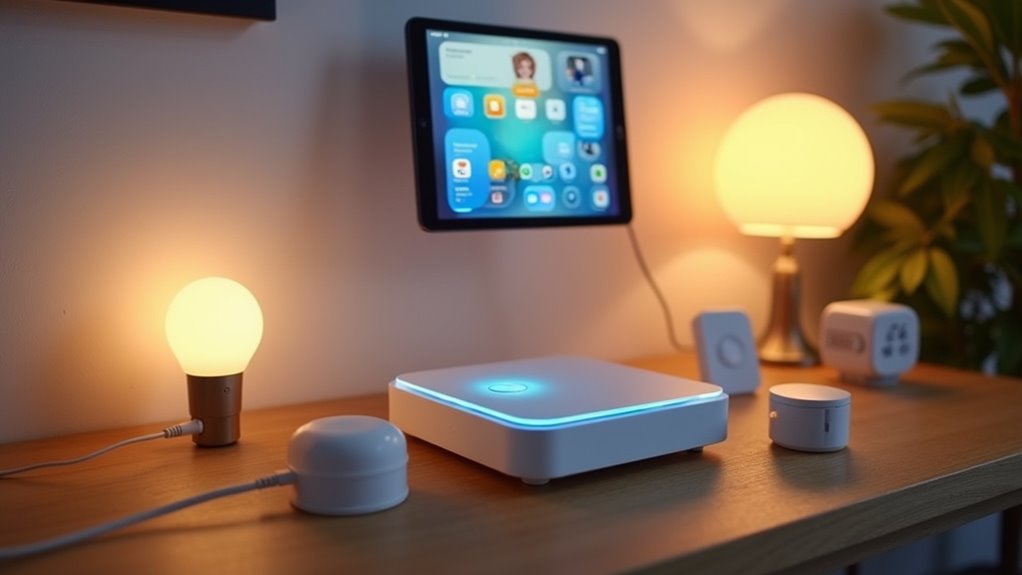

How did we go from Nikola Tesla‘s radio-controlled demonstrations in 1898 to arguing with Alexa about the weather? The smart home wars have been raging for decades, and frankly, it’s been exhausting.
The journey started innocently enough. Tesla showed off his radio-transmitting control boxes in 1898. By the early 20th century, electric appliances like vacuum cleaners and washing machines appeared, though calling them “smart” would be generous.
The real breakthrough came in 1966 when James Sutherland designed Echo IV, the first integrated smart home system that could handle digital shopping lists and device control. The system even included an educational feature requiring children to answer questions before watching TV.
The 1980s brought commercial smart home technology focused on basic heating and rudimentary automation. Nothing fancy. Just the building blocks of what would become today’s interconnected nightmare.
Then the tech giants arrived. Amazon and Google became the primary gladiators in this arena, each pushing their own ecosystems. Amazon Echo prioritized seamless shopping integration because, naturally, they wanted users buying more stuff. Google Home emphasized AI and software innovation, playing to their strengths.
Apple and Samsung joined the fray with their closed ecosystems—HomeKit and SmartThings—creating even more fragmentation.
Here’s where things got messy. Proprietary standards like Zigbee, Z-Wave, and HomeKit meant devices couldn’t talk to each other. Consumers needed multiple apps and hubs just to control their own homes. Frustrating doesn’t begin to cover it.
The fragmented platforms created device incompatibility that confused everyone. Smaller brands and startups tried to innovate but hit walls due to ecosystem barriers. The industry recognized this mess and started forming alliances to address standardization issues. The competitive escalation between platforms drove rapid improvements in technology and features as each manufacturer responded to their rivals’ advances.
Enter the Matter protocol, a recent universal standard designed to bridge these gaps and enable cross-brand functionality. Security concerns about privacy and data protection still persist, slowing widespread adoption. Matter devices offer enhanced security features with AES-128 encryption and zero-trust authentication to protect your home network. Price points and ease of use remain critical factors for consumers.
Despite the chaos, smart home devices have transformed daily living. Automation of routine tasks like lighting and heating became commonplace. Voice control emerged as the central feature for user interaction. Remote access provides convenience, while integration with e-commerce enables automated purchasing.
The smart home wars created innovation through competition, but fragmentation nearly killed consumer confidence.