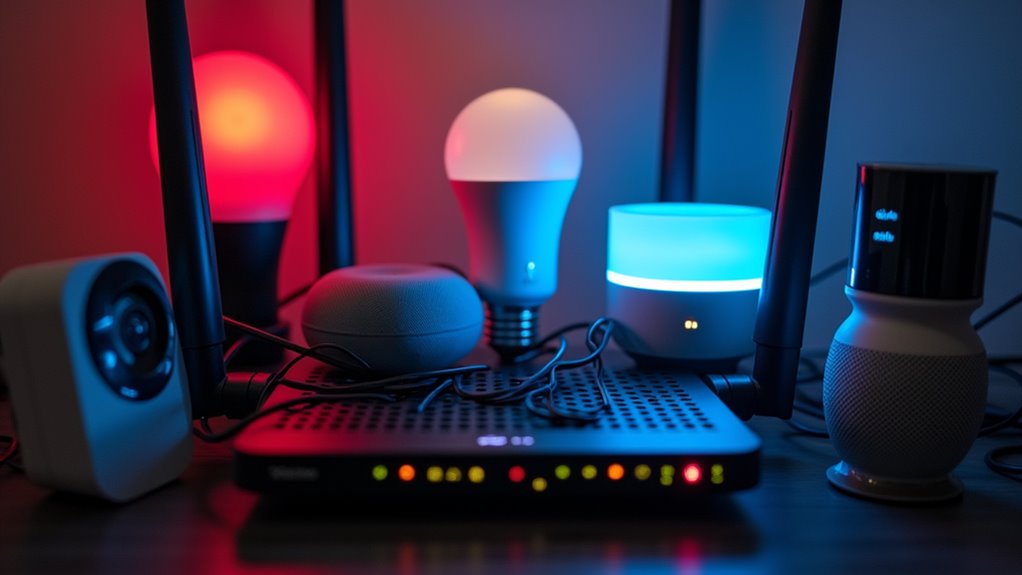
Security cameras alone can consume 25 Mbps or more. Add streaming devices, smart TVs, and gaming consoles, and suddenly that standard home internet connection feels woefully inadequate.
Even seemingly innocent devices like smart plugs and light bulbs gang up on networks. One or two? No problem. Twenty or thirty? Welcome to slowdown city.
A handful of smart bulbs won’t hurt, but deploy a small army and watch your network crawl to its knees.
The real culprit is the 2.4 GHz band, where most smart devices congregate like teenagers at a mall food court. This bandwidth becomes a battleground when security cameras, baby monitors, and smart speakers all compete for the same wireless real estate.
Throw in interference from microwave ovens and cordless phones, and the situation gets messy fast.
WiFi, Bluetooth, and ZigBee protocols share spectrum space, creating a technological free-for-all. In apartment buildings or dense neighborhoods, overlapping networks turn connectivity into a contact sport.
Response times crawl, devices disconnect randomly, and that smart thermostat starts acting not-so-smart.
Security takes a hit too. Many IoT devices ship with laughably weak protection, turning homes into hacker playgrounds. Approximately 80% of devices are vulnerable to some form of cyberattack, making security a critical concern for smart home owners.
Compromised gadgets can expose personal data or become launching pads for automation interference attacks. That innocent smart doorbell might be broadcasting more than expected visitors. Router placement becomes critical as these vulnerabilities multiply, with poor positioning amplifying both signal broadcasting issues and security risks.
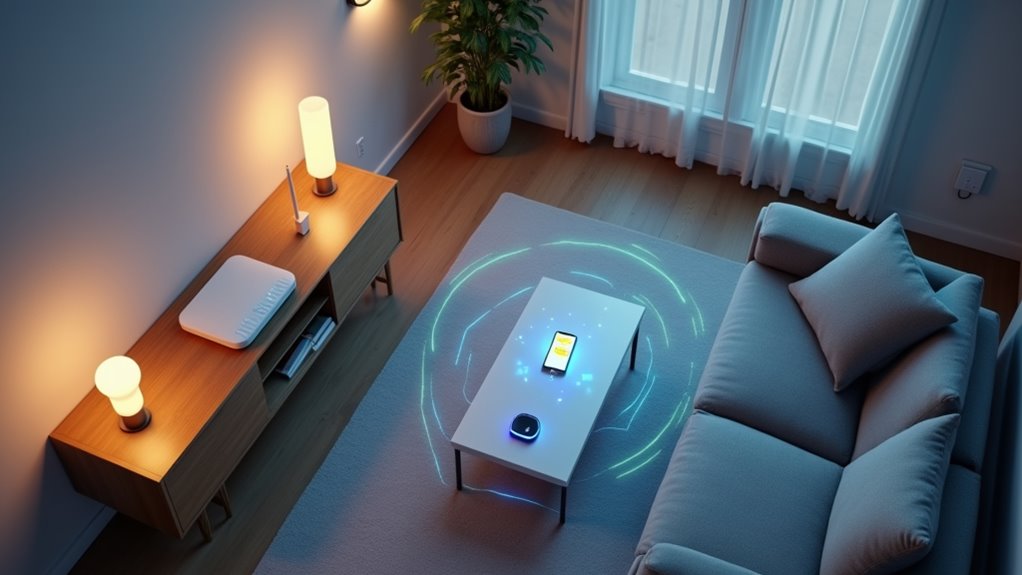
Physical barriers compound these problems. Walls, furniture, and building materials block signals, creating dead zones where devices struggle to connect.
Large homes become WiFi wastelands, with gadgets constantly searching for stable connections and draining batteries in the process.
Device compatibility adds another layer of frustration. Different communication standards don’t always play nicely together, and older devices often lack support for newer WiFi protocols.
The result? A house full of gadgets that can’t quite sync up properly.
Network performance degrades predictably as more devices join the party. Throughput drops, latency increases, and firmware updates become exercises in patience.
The smart home transformation promised seamless integration, but delivered digital chaos instead. Market researchers estimate the smart home market globally reached $30 billion in shipped products during 2018 alone, signaling just how widespread these connectivity challenges have become.