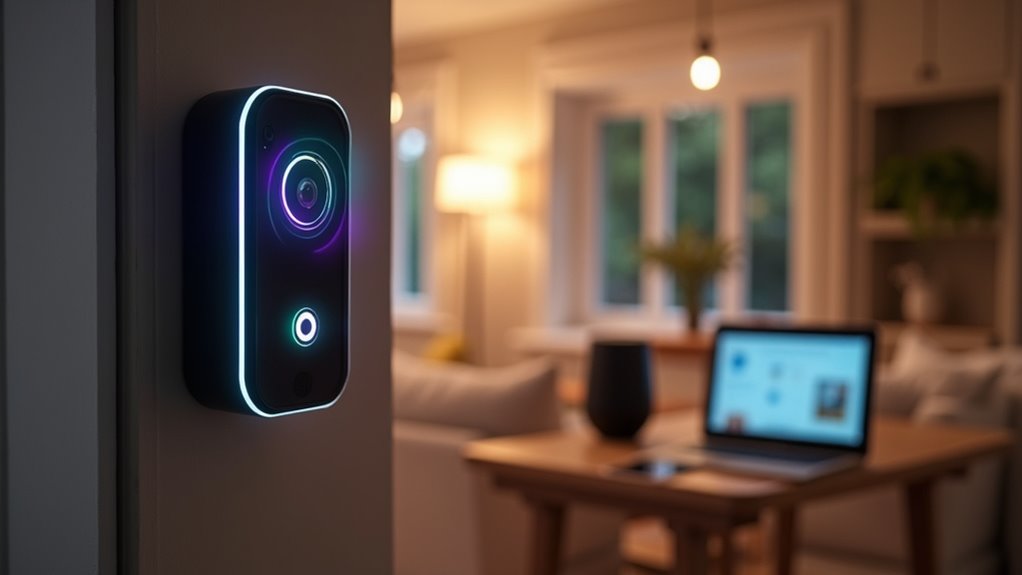

While homeowners once relied on peepholes and basic doorbells, the smart doorbell camera market is exploding toward a projected $4.8 billion by 2030. The growth makes sense. People want security, convenience, and the ability to yell at delivery drivers from their couch.
But here’s where things get interesting. A new breed of smart doorbell cameras supports Matter, Thread, AND Zigbee protocols simultaneously. That’s not just tech jargon – it’s a game changer that solves the biggest headache in smart homes: compatibility.
Finally, smart doorbell cameras that speak every protocol – ending the compatibility nightmare that’s haunted smart homes for years.
For years, smart devices lived in walled gardens. Ring worked with Alexa, Nest played nice with Google, and Apple HomeKit did its own thing. Mixing brands meant juggling multiple apps and dealing with devices that couldn’t talk to each other. Frustrating doesn’t begin to cover it.
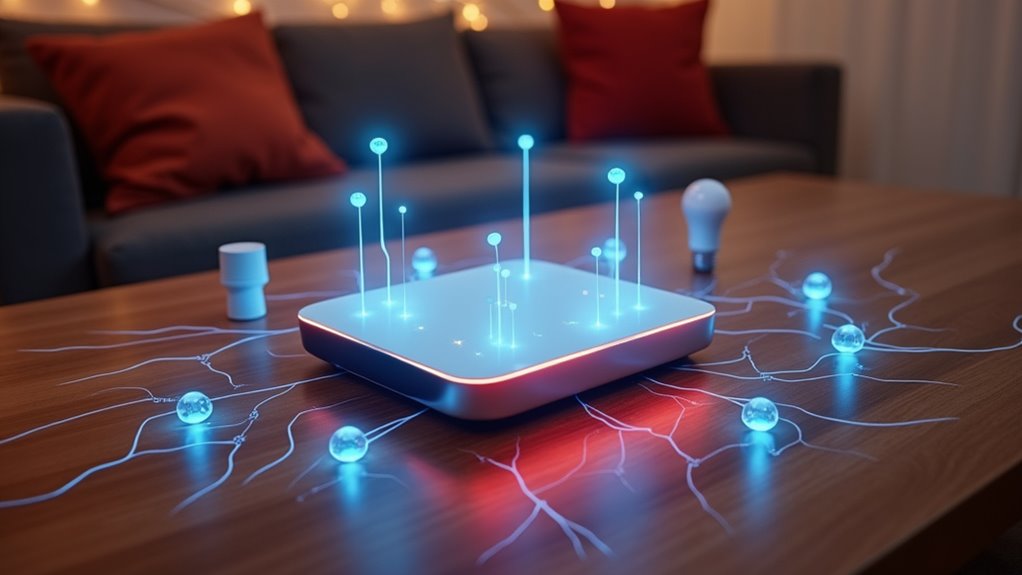
Matter changes that dynamic completely. It acts as a universal translator, enabling devices to work across Amazon Alexa, Apple HomeKit, Google Home, and SmartThings platforms. Thread and Zigbee provide the mesh networking backbone, creating stable, low-latency communication that self-heals when nodes fail. The result? One doorbell camera that integrates seamlessly into virtually any smart home ecosystem.
The technical specs are impressive too. These cameras deliver 2K resolution as standard, AI-powered detection for people and packages, color night vision, and wide-angle lenses exceeding 140 degrees. Two-way audio lets homeowners communicate instantly with visitors. Local control prioritization improves response times when connecting with other smart devices. Local storage combined with encrypted cloud options address privacy concerns without sacrificing convenience.
Security remains robust across all three protocols. AES-128 encryption, end-to-end protection, and multi-factor authentication keep data secure. Automatic firmware updates patch vulnerabilities before they become problems. Physical tamper detection adds another layer of protection. Using wired connections when possible can enhance security further by eliminating wireless vulnerabilities and preventing jamming attacks.
The power efficiency impresses most. Battery-powered models run 6-12 months on a single charge, while mesh networking reduces strain on Wi-Fi networks. When nodes fail, the system automatically reroutes traffic. Matter employs advanced authentication mechanisms using public-key cryptography to prevent unauthorized access.
Triple-protocol support basically future-proofs the investment. Users avoid vendor lock-in and can switch smart home platforms without replacing hardware. That flexibility extends device lifespan and reduces upgrade costs significantly. Smart doorbell cameras speaking multiple protocols don’t just monitor homes – they eliminate the compatibility chaos that has plagued smart home adoption.