While everyone’s still fumbling with three different apps to turn on their lights, the neighbor’s smart home runs like clockwork on Matter protocol—the new standard that’s finally getting Apple, Google, Amazon, and Samsung devices to play nice together. Their Amazon Echo hub? It doesn’t just bark out weather updates. The thing’s got built-in Zigbee and Amazon Sidewalk, connecting devices without those constant Wi-Fi dropouts that plague lesser setups. And that Google Nest Audio sitting in their kitchen actually seems to understand when someone mumbles “turn off the basement lights” through a mouthful of cereal.
Matter protocol finally gets tech giants playing nice while everyone else juggles three different apps for basic lighting.
What really gets me is their Nest Thermostat. It quietly learns preferences without anyone programming a thing—tracking manual adjustments, weather patterns, humidity levels, daily routines. No schedules needed. The fourth-generation model even includes remote temperature sensors to balance heating and cooling across multiple rooms. Though honestly, the Ecobee Premium in the upstairs hallway might take things even further. Multiple temperature sensors balance climate zones throughout the house, so every room stays comfortable. Not just the one with the thermostat.
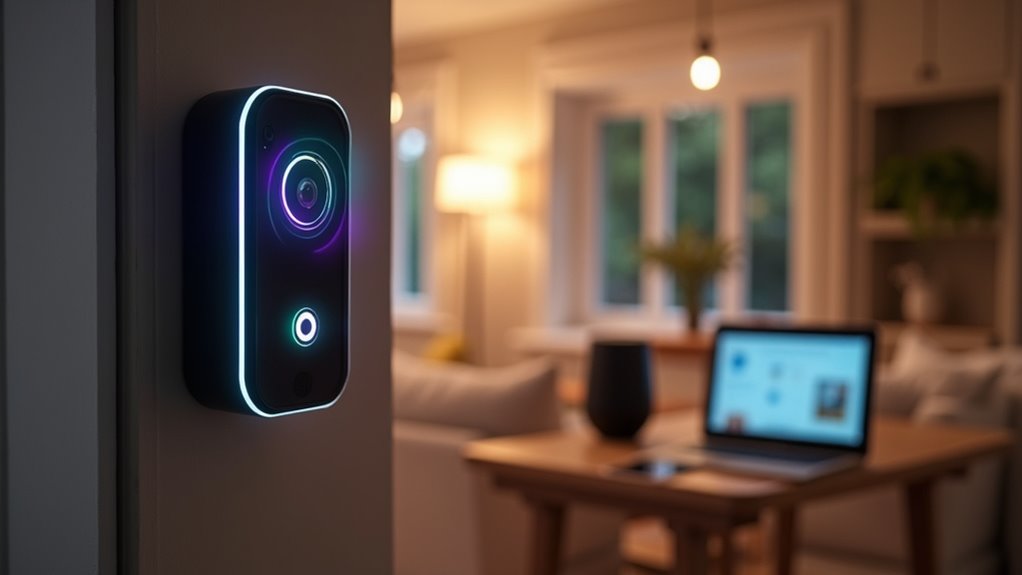
Their security setup makes traditional systems look prehistoric. Indoor and outdoor smart cameras run on Power-over-Ethernet for what appears to be rock-solid reliability. Gone are those “camera offline” notifications during storms. The Aqara Camera Hub G5 Pro gives them options—Wi-Fi when it’s convenient, PoE when stability matters more. Everything streams encrypted feeds with tamper detection baked right in, and regular firmware updates seem to patch vulnerabilities automatically. The Arlo Pro 5S mounted above the garage captures 2K resolution footage across a 160-degree field of view with crystal-clear night vision.
Now, the networking backbone isn’t some basic router from 2015. They’re running Wi-Fi 6 with Target Wake Time, which likely explains why battery-powered sensors last months instead of weeks. Zigbee and Z-Wave LR create mesh networks extending coverage to the garage, shed, even that weird corner behind the water heater. Thread-enabled devices handle low-latency communication without draining batteries—or so the specs suggest.
Those LifX Luna bulbs adapt color and intensity throughout the day. Morning coffee gets warm whites. Movie night triggers deep blues and purples. Motion sensors, ambient conditions, and what seems like AI-powered contextual triggers orchestrate everything. No clapping required. Matter’s local communication capabilities enable their system to operate seamlessly even when internet connection drops, maintaining full functionality throughout outages.
Matter protocol ties it all together using end-to-end encryption and device authentication. Every gadget speaks the same language, managed through one interface instead of seventeen. That said, the real test comes with data privacy standards—they’re supposed to keep information locked down with explicit opt-in requirements for sharing. Their smart home doesn’t just work. It apparently works intelligently.