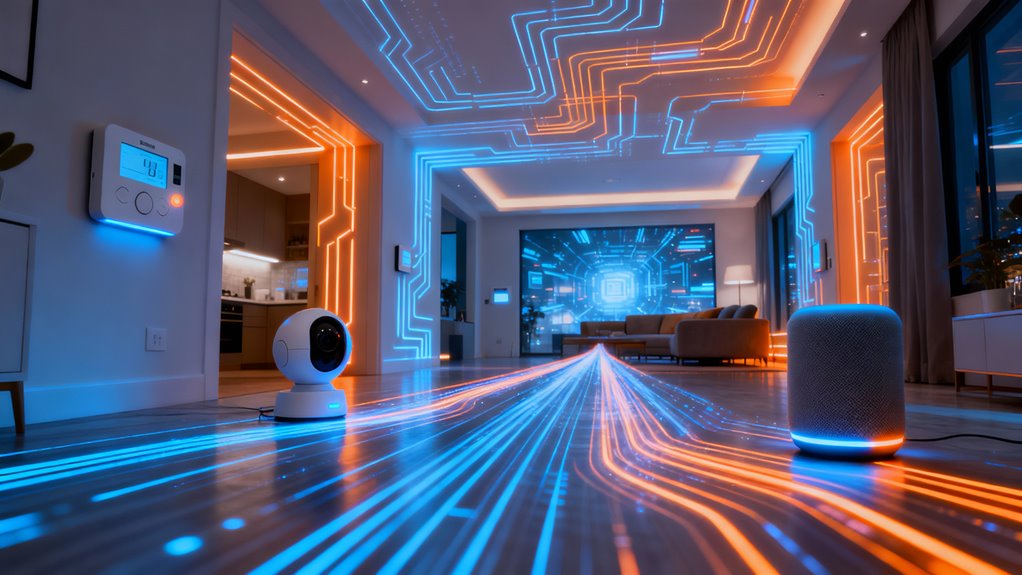

While most smart home enthusiasts dream of devices that actually talk to each other, the reality is a fragmented mess of incompatible gadgets and proprietary ecosystems. Your Philips lights won’t cooperate with Samsung switches. Google refuses to play nice with Apple. Meanwhile, you’re drowning in seventeen different apps just to turn on a lamp.
Enter Home Assistant, the open-source solution that fundamentally tells every major tech company to sit down and behave. This platform operates as a central hub for devices using Bluetooth, Zigbee, Z-Wave, EnOcean, Wi-Fi, Ethernet, Thread, and Matter protocols. It doesn’t care about brand loyalty or corporate feuds—it just works.
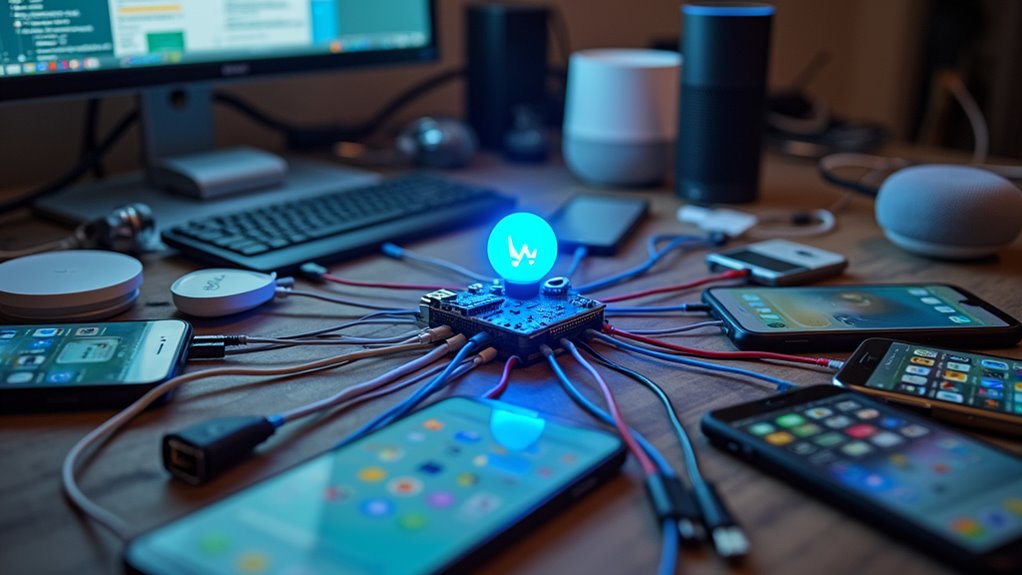
Home Assistant: the diplomatic translator that forces your feuding smart devices to actually have a civilized conversation.
The integration capabilities are frankly ridiculous. Over 1,900 official integrations exist, with thousands more community add-ons available. Smart lights, switches, thermostats, sensors, security cameras, locks—if it has connectivity, Home Assistant probably supports it.
The platform bridges ecosystems that manufacturers deliberately keep separate, exposing everything to Apple HomeKit, Google Home, or Alexa regardless of original compatibility.
Perhaps most importantly, Home Assistant operates locally. Your automations process without begging permission from distant servers. No mandatory subscriptions, no third-party accounts required for basic functionality. When the internet dies—and it will—your smart home continues functioning because everything runs on-premises.
The automation possibilities border on the absurd. Time-based triggers, sensor data, device states, multi-condition logic chains—it’s all there. NFC tags can trigger complex routines with a smartphone tap.
Blueprints simplify setup for beginners, while scripting capabilities satisfy the most demanding power users. The automation blueprints feature, introduced in December 2020, allows easy community-driven additions that streamline complex setups.
Voice control works with Google, Alexa, Siri, plus a built-in local voice assistant. Like Matter-compatible devices, Home Assistant provides local control that significantly reduces lag and keeps your smart home operational during cloud outages. Dashboards customize per user, web interfaces provide universal access, and role-based permissions keep family members from accidentally triggering chaos.
The platform fundamentally eliminates vendor lock-in by granting actual ownership of smart home infrastructure. Older devices continue working through integrations, extending lifecycles beyond manufacturer support windows. Installation requires only basic hardware like a Raspberry Pi and internet connectivity for initial setup and updates.
Since the software is free and open-source, hardware costs remain the only significant expense.
Home Assistant transforms smart home dreams into functional reality, no corporate cooperation required.