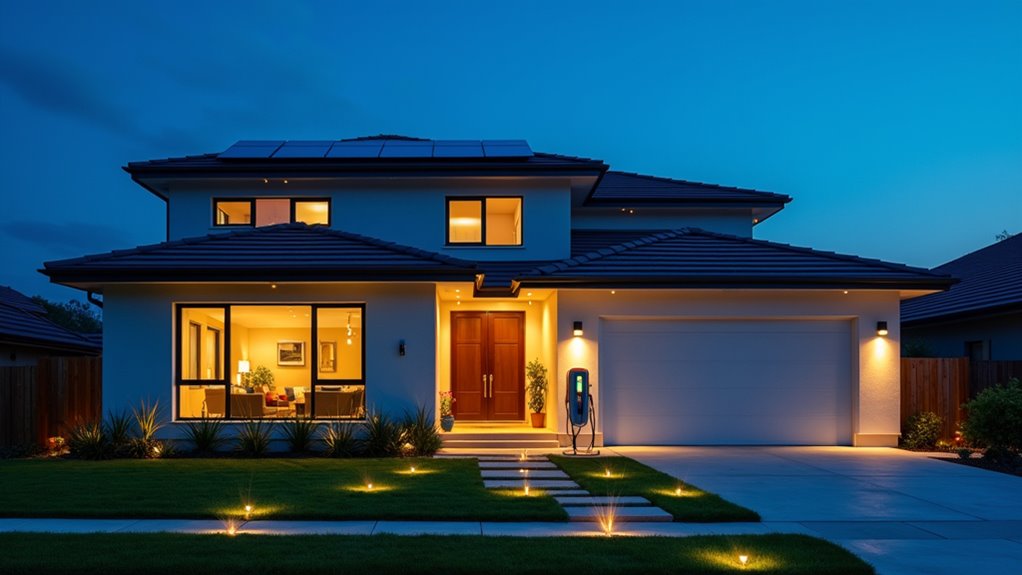

While Americans are still figuring out how to program their coffee makers, the smart home transformation is charging ahead whether they’re ready or not. The numbers don’t lie. By 2027, roughly 63 million U.S. homes will be classified as smart homes, representing a penetration rate that’s climbing from 43.3% in 2025 to 46% just two years later.
The math is straightforward. With 93.59 million Americans expected to be smart home users by 2027, the change isn’t coming—it’s already here. And it’s profitable. The U.S. smart home market is projected to hit $64.24 billion by 2027, with each smart home generating an average revenue of $483.10.
Money talks, and homebuyers are listening. A staggering 78% are willing to pay extra for smart home features. Energy efficiency, convenience, and security top their wish lists. Rising utility costs aren’t helping traditional homes compete either. Smart thermostats and energy management devices suddenly look a lot more attractive when the electric bill arrives.
When utility bills spike, smart thermostats stop looking like luxury gadgets and start looking like financial necessity.
The average American household already has 8 smart devices installed. Whether they’re talking to Google Assistant’s 85.4 million users, Apple Siri’s 81.1 million, or Amazon Alexa’s 73.7 million, voice assistants are becoming as common as kitchen appliances. The initial investment averages $1,173 per household—a price point that’s dropping as technology advances. Full smart home automation can achieve 30-40% reductions in energy use over traditional homes.
Not everyone’s jumping on board enthusiastically. Two-thirds of Americans worry about data privacy, and 57% of those 55 and older see no need for smart home technology. Fair enough. But the market doesn’t care about holdouts.
Geography matters. North America leads globally with a 40% market share, concentrated in tech-driven metros like Los Angeles and New York City. Smart features in these areas command premium prices, while rural and lower-cost regions lag behind. Meanwhile, Asia Pacific is positioned to become the largest global market for smart homes in 2023.
The compound annual growth rate of 10.63% from 2022 to 2027 suggests this trend won’t slow down. Government tax incentives and energy conservation programs are accelerating adoption. Smart home shipments hit 189 million units globally in just the first half of 2024. Across the globe, device shipments are expected to reach 1.25 billion by 2026.
The transformation is relentless, practical, and increasingly inevitable.


