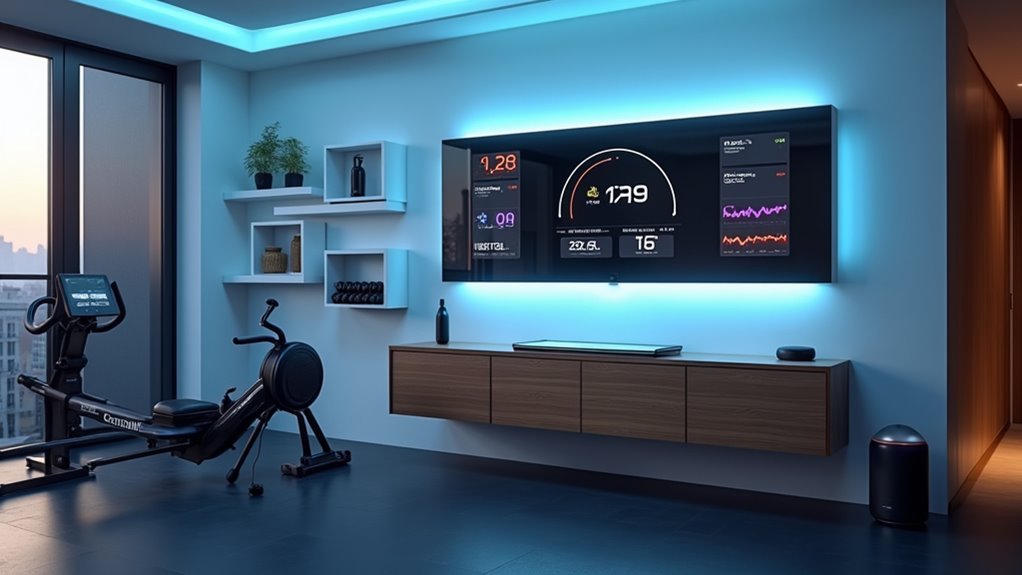

While traditional gym memberships collect dust and monthly fees, the smart home gym market is quietly building muscle—USD 4.1 billion worth in 2025, to be exact. And it’s not slowing down. Analysts project this sector will likely balloon to USD 6.7 billion by 2035, riding what appears to be a steady 5.1% CAGR. That’s what happens when AI-powered equipment starts making commercial gym trainers look like expensive wallpaper.
The technology driving this shift? It’s not subtle. AI integration delivers real-time feedback and adaptive workouts that actually respond to performance—imagine a rowing machine that adjusts resistance when your form slips. Meanwhile, IoT connectivity syncs everything from your Apple Watch to your Spotify playlist, creating a data tracking experience that traditional gyms can’t touch. Throw in AR/VR capabilities for immersive training environments (think cycling through virtual Alps), and suddenly that basement treadmill feels more advanced than Planet Fitness. Gamification elements are being introduced to boost motivation during workouts, turning mundane reps into achievement-unlocking experiences.
Product categories span the obvious suspects: cardiovascular equipment like treadmills and bikes, strength training gear from dumbbells to resistance bands. But here’s the twist—the smart versions come loaded with touchscreens, sensors, and voice assistants. They track progress automatically. Adjust routines based on analytics. They don’t judge you for skipping leg day, but they definitely know.
Consumer behavior tells the real story here. People seem to want convenience and flexibility without commuting to a warehouse full of strangers—shocking, right? Subscription-based platforms offering live and on-demand classes are eating into traditional gym revenue, apparently capturing 15-18% of industry dollars. That said, wearable devices contribute another 18-22% to market growth, because tracking heart rate variability is now non-negotiable, it seems.
The numbers get specific fast. Home fitness equipment claims roughly 25-30% of market share—your neighbor’s Peloton isn’t an anomaly anymore. Connected home integration accounts for 10-12%, letting equipment talk to thermostats and lighting systems (dimmed lights for yoga, anyone?).
Even more interesting: professional users are expected to hold 72.9% of the end-user segment in 2025. Turns out serious athletes may prefer personalized tech over waiting for the squat rack.
North America and Europe dominate adoption—no surprise there, given their digital infrastructure and health-obsessed demographics. Younger consumers are predictably leading the charge toward digital-first solutions. India’s market is heating up with a projected 6.4% CAGR through 2035, fueled by an expanding middle class and rising disposable income. The verdict? Smart home gyms probably aren’t replacing commercial facilities entirely just yet. Even so, they’re making a compelling argument that monthly membership fees might be the real waste of money—especially when your smart mirror knows your workout history better than you do.