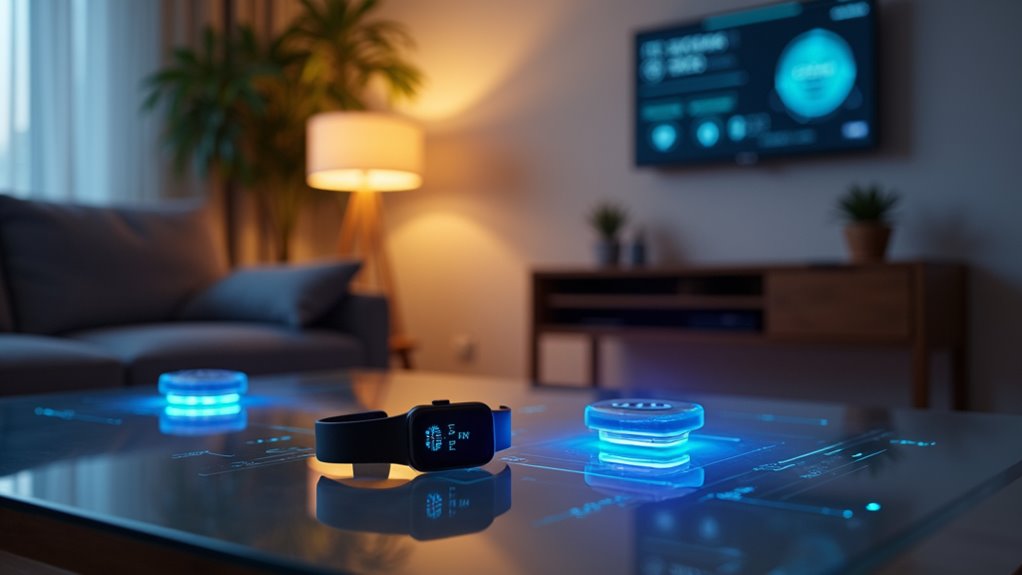
The smart home healthcare market is absolutely exploding. We’re talking $194.51 billion by 2033, with a jaw-dropping 24.3% annual growth rate. That’s not a typo.
Current market size estimates for 2024 bounce around wildly, from $5.88 billion to $23.01 billion. Apparently nobody can agree on the exact numbers, but everyone agrees it’s massive. The U.S. alone is projected to hit $284.86 billion by 2034. These figures sound almost comically large.
North America currently dominates with 39.1% market share, while Asia-Pacific is sprinting ahead with the fastest growth rates. The drivers are pretty obvious when you think about it. Baby boomers are aging out and want to stay home instead of moving to nursing facilities. Chronic diseases are everywhere. Healthcare costs are brutal. So naturally, people are turning to smart watches, glucose monitors, and fall detection systems.
Wireless technology owns this space, capturing over 91% of the market. Testing and monitoring products make up 76.9% of sales, with health status monitoring representing 68.5% of usage. Cardiovascular monitoring leads the pack at 23.4%. Skilled nursing services grab the biggest slice at 28.2% of the service category.
But here’s where things get interesting, and not in a good way. Privacy concerns are genuinely threatening this growth trajectory. People are rightfully paranoid about their health data floating around in cyberspace. Can you blame them?
Integration challenges are equally messy. Trying to connect new devices with existing healthcare infrastructure is like forcing puzzle pieces that don’t fit. Elderly users struggle with complex interfaces, which defeats the entire purpose. Regulatory frameworks are fragmented disasters, creating operational nightmares for companies.
Cybersecurity threats loom constantly. Device maintenance becomes a recurring headache. Standards are all over the place. The projected physician shortage by 2032 will only intensify reliance on these automated healthcare systems. Americans are already spending over US$ 46 monthly on in-home health devices, highlighting the financial commitment consumers are making to this technology.
The technology itself is impressive. Edge AI chips enable real-time processing. Advanced sensors can detect atrial fibrillation and Parkinson’s symptoms. FDA-compliant alert systems work remarkably well.
The question remains whether privacy fears and implementation challenges will derail this rocket ship. The market opportunity is enormous, but execution hurdles are equally formidable.


