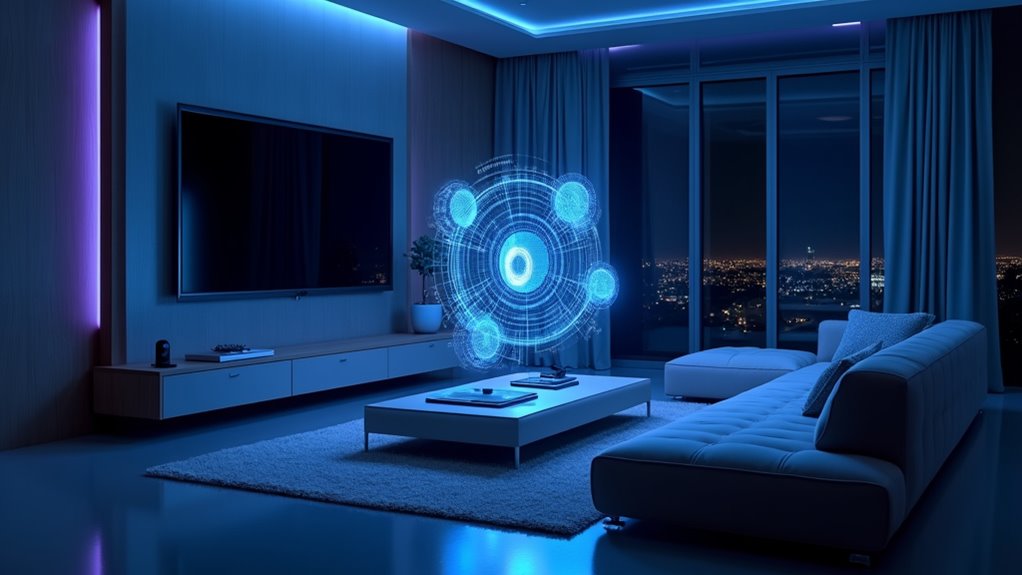
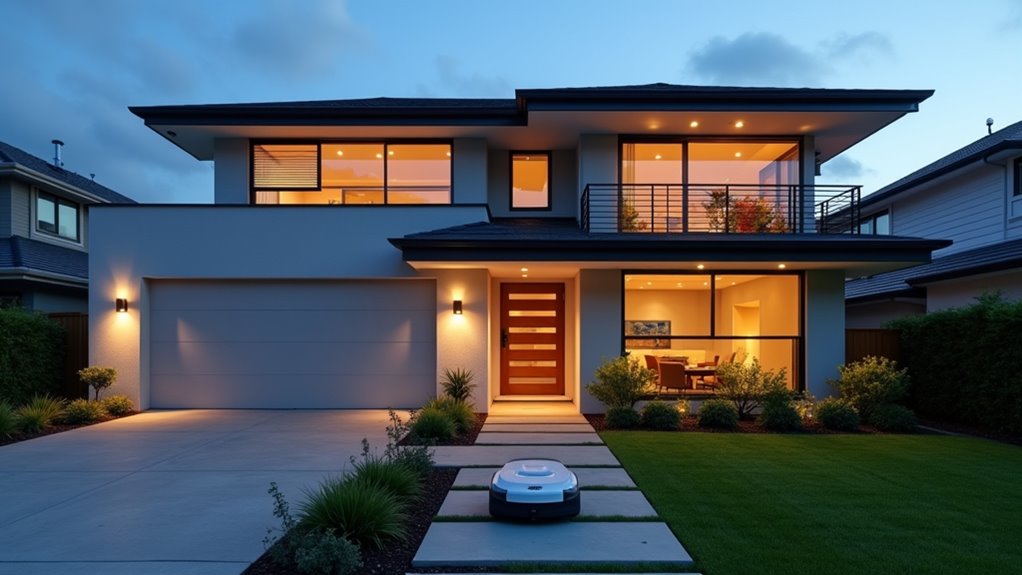
Most people have no idea their house is bleeding money through outdated tech. While they’re manually adjusting thermostats like it’s 1985, smart homeowners are watching their heating bills drop by 20%. Real money, every single month.
Your thermostat is stuck in 1985 while smart homeowners pocket 20% monthly savings.
Here’s what the numbers tell us: Smart thermostats typically pay for themselves in one to three years through energy savings alone. That’s not even counting the convenience factor. Smart HVAC upgrades appear to slash energy bills by up to 15% in Energy Star-certified buildings – and get this, HVAC efficiency standards seem to drive 44% of all building energy savings.
That old thermostat you’ve got? It might as well be burning cash.
Take smart lighting. Connected homes can see energy use drop by 30% just from switching over. Motion sensors kill the lights when nobody’s around (finally, no more yelling about who left the bathroom light on). Automated dimming adjusts brightness as the day goes on. And remote control? You can check and fix things from the office, from vacation, wherever. Almost embarrassingly simple, really.
Now here’s where it gets clever. AI-enabled appliances can run during those off-peak hours when electricity costs less – your dishwasher starts at 2 AM, who cares? They’ll ping you with maintenance alerts before that weird noise becomes a $500 repair. Wi-Fi connected devices let you schedule everything from one app on your phone. Some studies suggest overall household energy consumption could drop by up to 30% with proper automation. Not a typo.
Solar integration? That’s a whole different ballgame. By 2025, projections indicate 22% of new US homes will likely feature solar-integrated smart energy systems. These setups coordinate all your home’s energy sources – storing power when it’s cheap, using it when rates spike. In Australia, solar panels paired with battery storage can cut your annual energy costs by over $1,000.
Smart panels and storage systems work in tandem, offsetting grid energy use without you lifting a finger.
Security systems have absolutely exploded – we’re talking 38% growth since 2023. Automated locks, cameras, sensors all talking to each other. Remote monitoring means you know instantly if something’s wrong.
Even insurance companies are getting in on it, lowering premiums for homes with smart security. Go figure.
And yeah, government incentives make the whole thing even more appealing. Energy Star’s offering $50 to $100 rebates per smart thermostat. Over in Germany, the BAFA program appears to cover 35% of heat pump costs.
These financial incentives can potentially cut payback periods by 40%. The global smart energy market is rocketing from $11.26 billion in 2025 to $16.3 billion by 2029. Demand response programs alone saved one terawatt-hour of energy in 2022 – though admittedly, that’s a number so big it’s hard to wrap your head around.
For the ultimate smart home experience, consider upgrading to premium speakers like the Sonos Era 300 that offer superior sound quality while maintaining seamless integration with your home automation system.