How dramatically has the smart home landscape shifted in recent years?
Everyone thinks they know which device will transform everything. Spoiler alert: they’re probably wrong.
The next big smart home breakthrough isn’t what the tech world expects it to be.
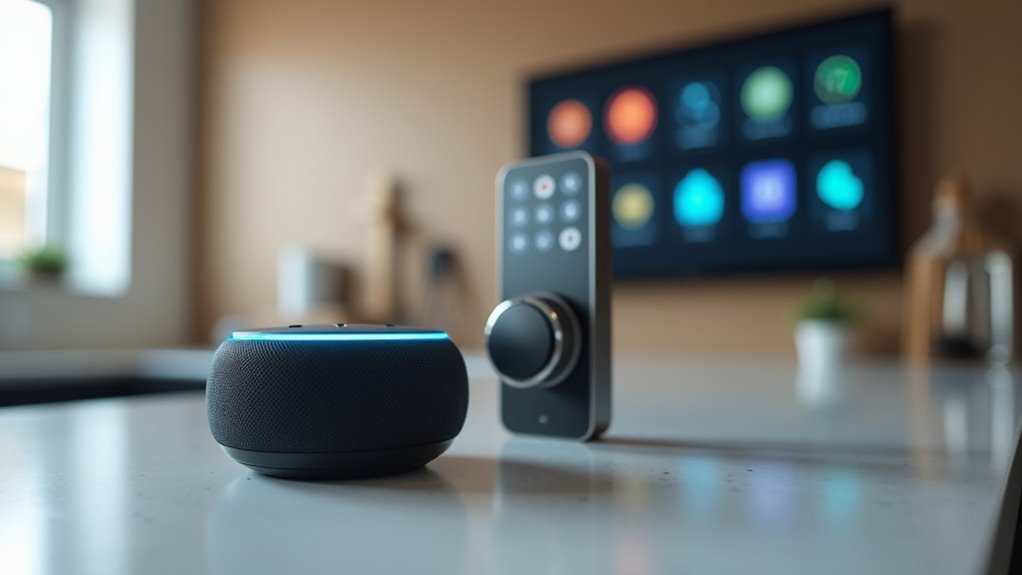
The conventional wisdom points to voice assistants. Amazon’s Echo 2025 dominates market share with its simple interface and vast ecosystem. Sure, Alexa Gen X brings improved multi-room recognition and edge AI processing for faster responses. Advanced routines that react to weather and commute updates? Impressive.
But here’s the thing – voice control isn’t the game-changer people claim it is.
Smart locks get similar hype. The Aqara U200 offers encrypted authentication and Matter protocol compatibility. Security concerns drive adoption rates, and wireless cameras monitor everything in real-time. Remote access control sounds groundbreaking until you realize it’s just a fancy doorknob with Wi-Fi.
Entertainment devices grab headlines too. LG’s OLED Evo G5 boasts 40% brighter displays, while foldable projectors like ZIP promise portable flexibility. Adaptive sound and visuals that adjust to room conditions seem cutting-edge. They’re not changing everything though. They’re just making Netflix prettier.
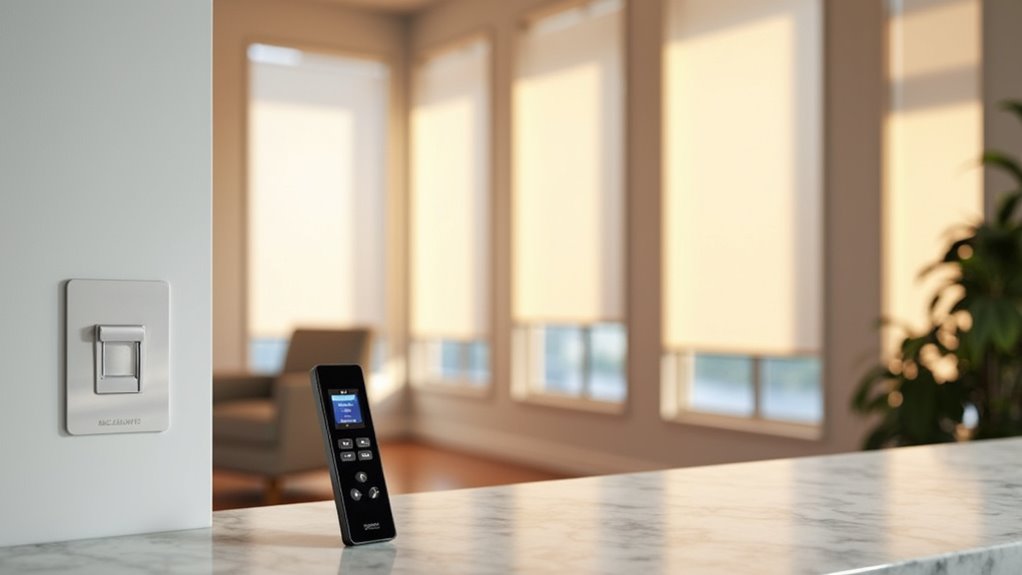
The real disruptor? All-in-one control panels. Nobody talks about them. The Portworld 5-inch Touch Panel integrates lighting, HVAC, and security management seamlessly. Multiple connectivity options including Zigbee, Wi-Fi, Bluetooth, and RS485 guarantee broad compatibility. These panels translate between diverse protocols creating a unified experience that solves major interoperability challenges.
Power over Ethernet support eliminates cable clutter. Compact designs fit any interior.
Here’s why panels matter more than flashy gadgets: centralized control. Smart hubs like Amazon Echo Show 8/15 get praise for compatibility, but they’re still voice-dependent. Matter protocol support across devices creates interoperability, but you still need something to manage it all visually and intuitively.
The Google Nest Thermostat Pro exemplifies the problem. AI-driven heating routines are sophisticated, but they’re isolated. Solar sync adjusts HVAC based on energy supply for truly intelligent climate management. Individual smart devices excel in their categories but fail at seamless integration.
Custom app integration through Android-based systems allows personalized automation that voice assistants can’t match. While everyone obsesses over asking Alexa to dim lights, control panels quietly orchestrate entire homes. Office workers benefit from this trend too, with multifunctional gadgets like the Desk Size Pro V9 promoting active working while maintaining productivity focus.
The future isn’t about talking to your house. It’s about touching it.


