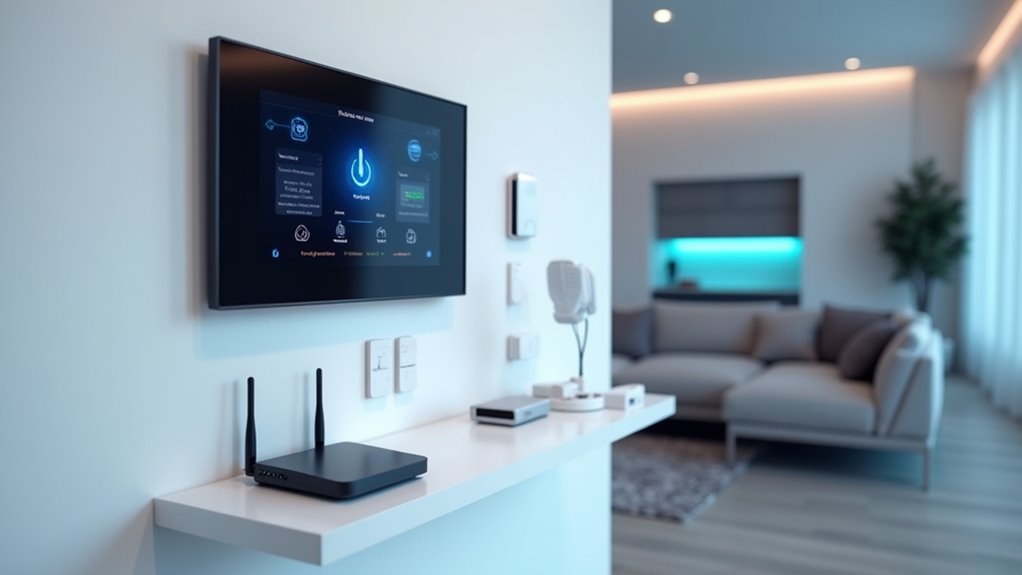

In terms of smart homes, the numbers don’t lie. The global home automation and controls market just hit USD 77.23 billion in 2025, and it’s not slowing down. Industry analysts project it’ll balloon to USD 175.18 billion by 2033. That’s a whopping 10.78% compound annual growth rate.
The automation and controls segment alone is expected to jump from USD 88.9 billion this year to USD 144.61 billion by 2029. Meanwhile, control modules specifically are racing from USD 22.34 billion to USD 55.77 billion by 2034. These aren’t small potatoes anymore.
What’s driving this explosion? IoT proliferation, obviously. Consumers are finally waking up to energy conservation benefits. Government incentives don’t hurt either. High-speed internet and 5G rollout are making smart homes actually functional instead of glorified tech demos. People want convenience, security, and aging-in-place solutions. Who knew?
Smart homes went from overpriced tech demos to actually useful thanks to 5G, IoT, and people caring about energy bills.
The residential sector remains king, fueled by luxury housing integrations and smart home ecosystems. Commercial real estate is catching up fast with automated energy management investments. Everything’s going smart: lighting, HVAC, security systems, entertainment centers, appliances. Wi-Fi, ZigBee, Bluetooth, Z-Wave – pick your protocol.
North America leads the charge. Europe and APAC follow close behind, thanks to modernization efforts and smart city initiatives. However, Asia-Pacific is emerging as the region with the most substantial future growth potential.
Technology keeps evolving. AI and machine learning are making automation actually intelligent instead of just programmable. Voice assistants dominate control modules. Analytics provide energy management insights and predictive maintenance capabilities. Cloud-based controls and hybrid architectures are gaining traction. AI-powered predictive HVAC modules are delivering impressive 15% energy savings compared to traditional systems.
But here’s the catch. Security and privacy concerns still freak people out, and for good reason. Data breaches aren’t exactly rare these days. Manufacturers are scrambling to add advanced encryption and cybersecurity features. Users are becoming more aware of vulnerabilities lurking in their smart toasters and thermostats. Industry experts recommend using separate networks for IoT devices to minimize security risks when one device is compromised.
The competitive landscape is brutal. Rapid innovation meets cutthroat competition. Companies focus on product expansion and strategic partnerships. Interoperability remains a headache, driving alliances and open standards adoption. Price wars and user experience battles define success.
Despite security fears, the market keeps exploding. Aging-in-place solutions are hot. The smart home transformation isn’t stopping anytime soon.


