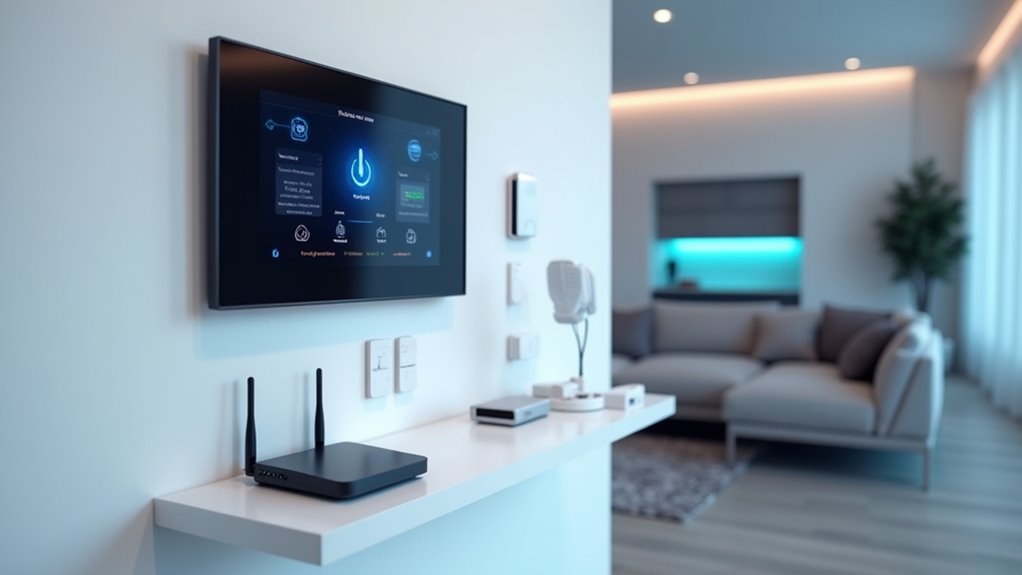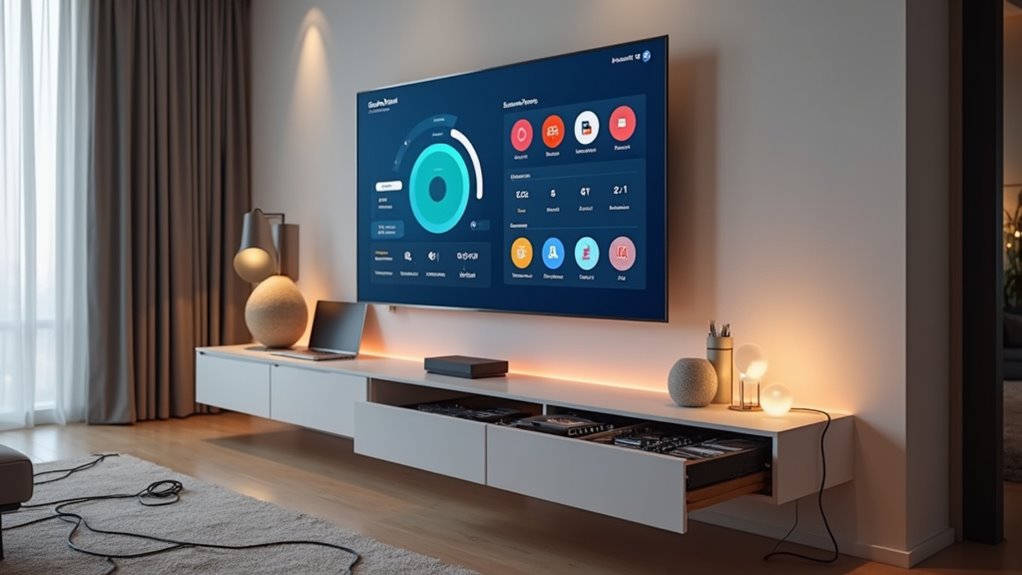

Most smart home enthusiasts have a drawer full of abandoned hubs collecting dust. The truth is, smart TVs are quietly replacing those dedicated hubs, and frankly, it’s about time. Samsung Smart TVs come with SmartThings baked right in. No extra box. No additional power adapter cluttering your entertainment center.
The consolidation makes sense. One device handles streaming, device control, and automation. Users get a single interface instead of juggling multiple apps. It’s almost shocking how much simpler everything becomes when you’re not constantly switching between different platforms and controllers.
Samsung’s TV-based hubs support Zigbee, Z-Wave via dongle, and Wi-Fi. That’s broader compatibility than many standalone hubs offer. Apple TV takes a different approach but delivers similar results—it functions as an Apple Home hub, essential for controlling HomeKit devices remotely. Both options eliminate the need for separate hardware purchases.
Device compatibility isn’t an afterthought anymore. TV-based hubs natively support Alexa, Google, and third-party devices. Major smart TV platforms integrate with leading device brands, ensuring frequent compatibility updates. These systems connect with locks, sensors, and appliances without the usual headaches.
Complex automations that once required standalone hubs now run directly through smart TVs. SmartThings on TV supports multi-device orchestration—lights, thermostats, cameras—all from the TV interface. Scenes for “movie time” or “bedtime” can be activated without reaching for your phone.
Apple TV enables remote control and automation for HomeKit devices from anywhere, not just locally. When setting up multiple Apple TVs or HomePods, only one acts primary hub while others remain on standby.
Reliability improves with fewer points of failure. TVs are often always on, providing quicker response times. Direct Ethernet connections increase reliability and speed of device commands. Firmware updates arrive via TV OS, streamlining maintenance that used to require manual hub management.
The cost savings are real. Eliminating additional hardware means fewer purchases, less power consumption, and reduced electronics clutter. Unlike dedicated hubs that often cost under $100, TV-based solutions leverage existing hardware investments. Maintenance and support bundle into the TV’s ecosystem, potentially lowering long-term costs. The interoperability benefit addresses one of the biggest challenges of smart home systems by allowing devices from different manufacturers to communicate effectively.
Manufacturers are ceasing standalone hub production in favor of TV-embedded solutions anyway. The industry has spoken.