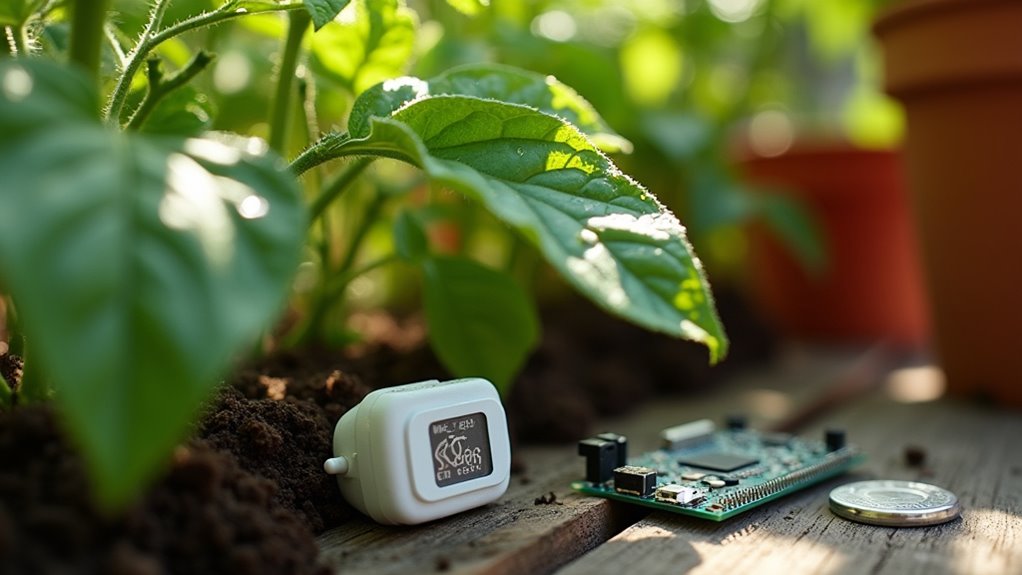
When garden enthusiasts realize their plants are dying despite their best efforts, they often turn to BLE sensors to solve the mystery. These tiny devices promise to monitor temperature, humidity, moisture, conductivity, and even formaldehyde levels.
But getting them to work properly? That’s been another story entirely.
The problem wasn’t the hardware. Popular Xiaomi models like the LYWSD03MMC and Qingping sensors worked fine out of the box. They transmitted data through advertising packets, no pairing required.
The issue was that stock firmware was, frankly, terrible. Default broadcast intervals stretched to ten minutes, which is useless when your tomatoes are wilting in real-time.
Enter custom firmware communities who finally cracked the code. Projects like pvvx emerged, offering what manufacturers should have provided from day one.
These firmware modifications cranked broadcast rates down to every minute, extended battery life through optimized data handling, and removed the annoying manufacturer app requirements that nobody wanted anyway. The passive listening approach for advertisement packets ensures the sensors don’t drain their batteries faster while maintaining consistent data flow.
The hardware itself was never the bottleneck. Most BLE garden sensors run on low-power MCUs like the Telink TLSR8258, powered by standard CR2032 coin cells. They feature LCD displays and can operate for months.
The sensors were capable machines trapped in mediocre software.
Flashing custom firmware became surprisingly straightforward once the community figured it out. Users could upgrade via MCU debug interfaces or OTA tools, though doing so meant kissing manufacturer app support goodbye.
Few shed tears over that loss.
Integration with home automation platforms like ESPHome and Home Assistant suddenly became seamless. ESP32-based hubs could passively scan for sensor broadcasts, preserving battery life while forwarding data to IoT dashboards like ThingsBoard.
Users could define telemetry topics and update intervals through simple YAML configurations.
The real question isn’t why BLE sensor firmware finally works properly – it’s why manufacturers took so long to deliver basic functionality that the open-source community had to fix for them.
Custom firmware transformed garden monitoring from a frustrating experiment into a genuinely useful tool. The installation process requires no physical modifications or soldering, making it accessible to users without technical expertise. Sometimes the community really does know better.