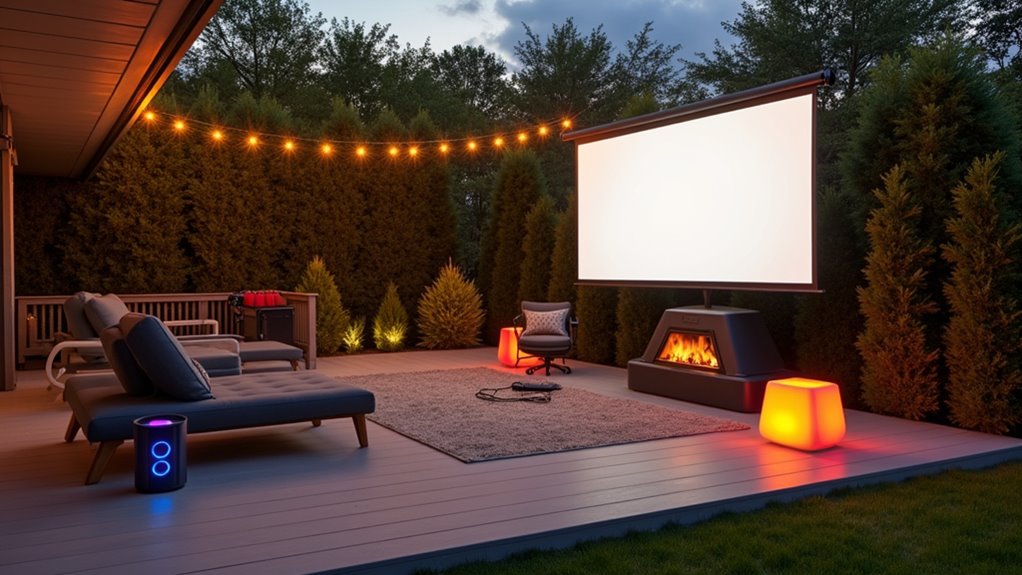
Five years ago, a smart backyard meant having a Bluetooth speaker that mostly worked. Today? Backyards have gone full sci-fi. RGB light strips sync to music while pellet grills text you when the brisket hits perfection. Tech companies seem to think every outdoor space needs an upgrade—and honestly, they might be onto something if you’ve got a lawn and decent Wi-Fi.
Let’s talk lighting first. These IP65-rated strips don’t just illuminate anymore—they blast different colors from each LED simultaneously, creating light shows that’ll either make you the coolest house on the block or that neighbor everyone complains about. Voice commands through Alexa turn ordinary pathways into something resembling airport runways.
Voice commands through Alexa turn ordinary pathways into something resembling airport runways.
Even solar-powered lanterns connect to apps now, which feels excessive until you’re adjusting them from bed. Those color-changing path lights? Part safety feature, part suburban disco—probably both.
Entertainment tech has crept onto patios with surprising sophistication. Take the Anker Nebula Mars 3 projector—it runs on battery power, shrugs off water, and transforms any boring wall into a movie screen. Some setups include retractable screens that motorize into pergolas and roll up for safekeeping when movie night ends.
Meanwhile, invisible speakers lurk in landscaping (apparently visible ones offend modern sensibilities). The JBL Charge 5 keeps the music going through rain showers. And then there’s the Bluetooth fire pit. Yes, that’s a real thing. You control flame height from your phone like some kind of pyromaniac wizard.
Smart grills might’ve eliminated the guesswork, though purists would argue they’ve stolen barbecuing’s soul. Pellet grills start remotely, hold exact temperatures, and ping your phone when the meat’s done. Gas grills sport touchscreens that suggest where to place your burger through an app. Built-in probes constantly monitor internal temps. The Brisk It Origin 940 takes it further with AI-powered suggestions that recommend recipes based on what you actually like to eat.
Remember poking steaks and pretending you knew what you were doing? Those days are over.
Maintenance robots now patrol yards like tiny, helpful invaders. Robotic mowers equipped with GNSS RTK and AI cut grass without boundaries—they even spot dry patches and adjust cutting heights on the fly.
Anti-theft sensors protect these pricey grass-cutters, which makes sense given what they cost. Pool cleaners navigate underwater obstacles wirelessly, following programmed cycles you set once and forget. Smart plugs handle irrigation and fountains on schedules nobody quite remembers programming.
Security cameras with 2K resolution and night vision keep watch over everything, alerting you to squirrels, delivery drivers, and what the system thinks might be suspicious shadows.
Floodlight cameras pan and tilt from your phone. Smart doorbells mean you can screen visitors without budging from the couch. Your backyard has eyes everywhere now. Just be aware that approximately 80% of IoT devices have vulnerabilities that could potentially expose your outdoor sanctuary to cyberattacks.
Privacy probably died somewhere between installing that smart doorbell and teaching the AI to distinguish your cat from an actual burglar.