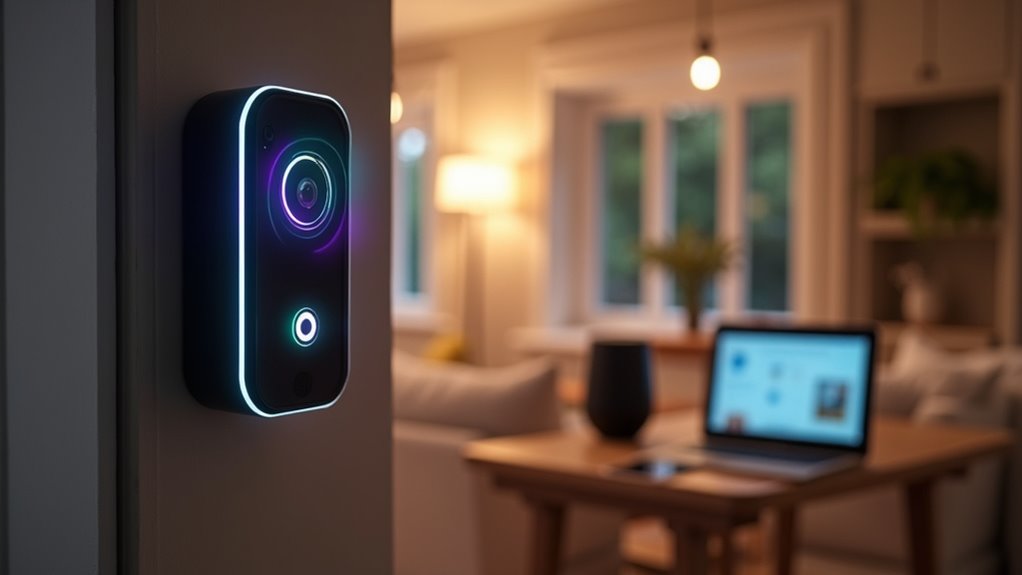
The porch light that refuses to work with the living room setup. The backyard string lights that need their own app. The floodlights that somehow can’t talk to Alexa despite the box saying otherwise. Smart home lighting has been a mess—67% of consumers apparently hit compatibility walls when mixing brands. Enter Matter, the protocol that might finally fix this nonsense.
Smart home lighting has been a mess—67% of consumers hit compatibility walls when mixing brands.
Matter isn’t just another standard, though. Over 300 companies back it, including the big ones—Apple, Google, Amazon, Samsung. They actually agreed on something. Shocking. The protocol uses IP-based communication, which should mean better security and less lag. Tests suggest Matter-enabled bulbs set up 40% faster than the old way. Could be the end of downloading seventeen different apps just to turn on the porch.
The hardware’s getting good too. LIFX’s SuperColor PAR38 floods come Matter-ready out of the box, pumping out 1600 lumens. That’s stadium-level bright for your backyard. Their SuperColor Luna Lamp and various 1600lm models ship with Matter enabled straight from the factory—no firmware gymnastics required. Then there’s Nanoleaf’s Essentials BR30, which uses Thread for what seems to be rock-solid connections.
Even Govee’s jumping in—their M1 strip lights are waterproof RGB strips that apparently work with everything now. Philips Hue bulbs? They’re getting Matter through software updates. Late to the party but at least they showed up.
Linkind’s A19 bulbs might be the sleeper hit here. Cheap, Matter-compatible, and they boast a 90+ CRI with 800 lumens. Probably good enough for most people who just want to see their deck at night. Setup’s dead simple too—scan a code, done. No proprietary apps. No account creation. No selling your firstborn to the data gods.
These lights do what you’d expect. RGB colors, tunable whites, dimming, scheduling—the usual tricks. Most appear to be IP65 rated or better, so rain won’t kill them. Many integrate with motion sensors and security systems, potentially turning backyards into automated fortresses. Matter’s AES-128 encryption also patches about 60% of the security holes found in older smart bulbs.
Wi-Fi and Thread handle the connectivity, which should keep everything stable even when the neighbor’s microwave goes nuclear. The energy-saving features of these smart lights can help offset their initial higher costs through optimized usage and automated scheduling.
Here’s the real win: ecosystem flexibility. Buy whatever brand looks good to you. Mix LIFX with Linkind if you want. Throw in some Nanoleaf while you’re at it. They’ll likely all play nice with Apple Home, Google Home, Alexa, and SmartThings. Finally.