
In the domain of managing music in a smart home, most people assume their trusty Home Assistant can handle everything just fine. They’re wrong. Dead wrong. While Home Assistant struggles with basic media handling through clunky manual integrations, Music Assistant swoops in like a sledgehammer to a house of cards.
The difference becomes glaringly obvious the moment someone tries to manage multiple music sources. Home Assistant’s native approach? Good luck with that mess. Music Assistant merges online and offline sources into one unified database, automatically eliminating duplicates and matching identical tracks across providers. It’s like having a personal librarian who actually knows what they’re doing.
Most add-ons fumble around with basic playbook features. Music Assistant delivers crossfade, volume normalization, and gapless playback across every supported device. Sonos, Google Cast, Squeezelite, DLNA, AirPlay—it doesn’t matter. The synchronization works flawlessly across different hardware brands, something that makes other solutions look embarrassingly amateur.
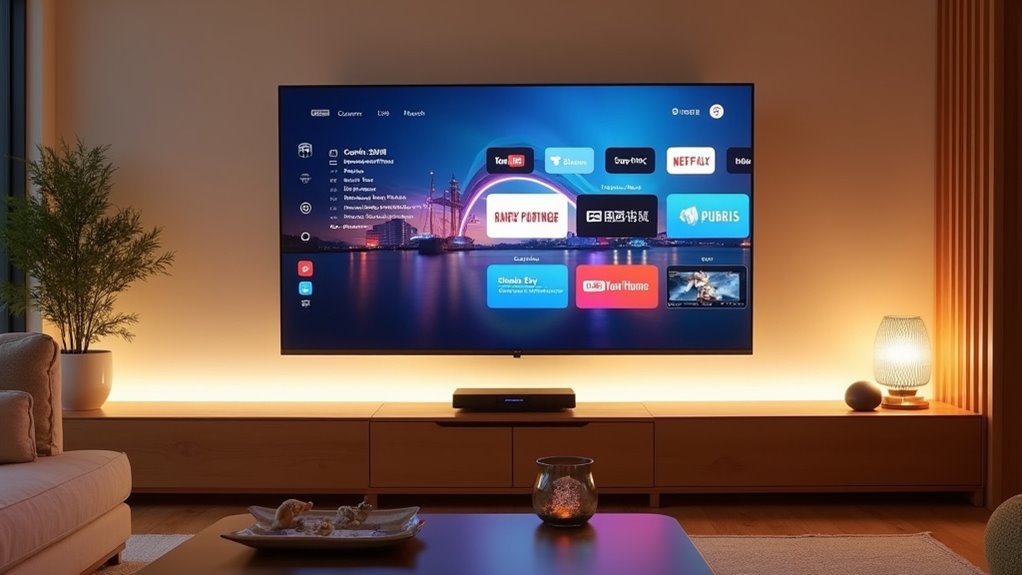
The user interface tells the whole story. While standard Home Assistant media interfaces feel like they were designed in 2005, Music Assistant’s Progressive Web App actually makes browsing music enjoyable. Similar to how smart home systems offer remote access and real-time alerts, Music Assistant provides rich metadata, proper album art, equalizer controls—all integrated seamlessly with Home Assistant dashboards without the usual configuration nightmare.
Here’s where things get really interesting. Music Assistant’s automation capabilities run circles around Home Assistant’s scattered media features. Users can trigger complex music routines based on presence, time, or smart sensors with granular control that other add-ons can’t touch. Voice commands work without the usual hiccups and workarounds. The system requires an always-on device like a Raspberry Pi or NAS to maintain continuous operation.
The scalability factor seals the deal. Multi-account support for streaming services means each family member keeps their personalized playlists under one roof. Try doing that with standard Home Assistant add-ons—it’s a headache nobody needs. Unlike other solutions that suffer from vendor lock-in, Music Assistant empowers users to freely switch between streaming providers while keeping their playlists intact.
Music Assistant doesn’t just replace other solutions; it makes them look like amateur hour. When something this comprehensive exists, settling for Home Assistant’s basic media handling feels like choosing a flip phone over a smartphone. The comparison isn’t even close.