While most of Japan still argues over which anime streaming service reigns supreme, the country’s connected TV market is quietly preparing for world domination. The numbers don’t lie: Japan’s connected TV market is projected to hit USD 5.7 billion by 2035, up from USD 2.2 billion in 2025. That’s a solid 10% CAGR over the next decade.
Traditional television is basically dying a slow, painful death. Consumers are dumping cable faster than expired sushi, gravitating toward on-demand streaming and OTT platforms instead. Smart homes are becoming the norm, not some futuristic fantasy, and high-speed internet plus 5G networks are making streaming quality actually watchable.
Cable’s death spiral accelerates as Japanese consumers flee to streaming faster than you can say “sayonara.”
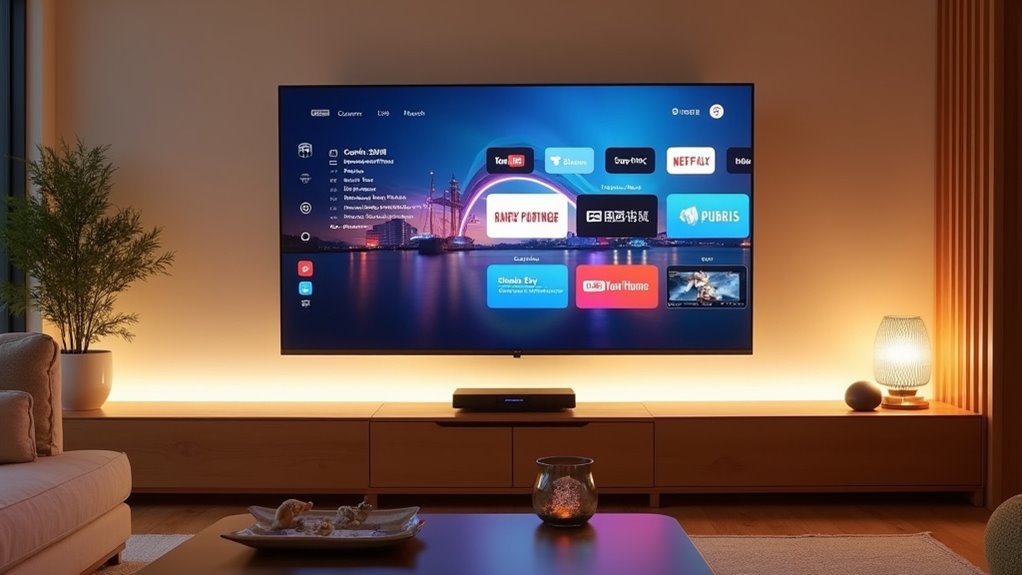
The tech improvements are genuinely impressive. OLED and QLED displays are becoming standard because, frankly, nobody wants to watch their favorite shows on garbage screens anymore. AI-powered recommendations and voice assistants are now expected features. Some manufacturers are even developing weather-resistant TVs, because apparently watching Netflix in a typhoon is a priority. Manufacturers are also experimenting with vertical TV designs specifically optimized for social media content and mobile gaming experiences.
Companies like Sony, Toshiba, LG, and Samsung are fighting tooth and nail for market dominance. They’re throwing money at exclusive streaming partnerships and proprietary operating systems, desperately trying to differentiate themselves in an increasingly crowded space. The competition is brutal, which means faster innovation cycles and better pricing for consumers. Sony currently dominates with a commanding 29.4% market share, significantly ahead of its competitors.
But it’s not all smooth sailing. Premium displays cost serious money upfront. Data privacy concerns are making some consumers nervous about smart TVs potentially spying on their viewing habits. Japan’s aging population isn’t exactly rushing to adopt new technology, preferring their traditional viewing habits.
The fragmentation across platforms creates headaches too. Regional licensing restrictions mean your favorite international shows might disappear without warning. Manufacturers are struggling to keep software updated across their entire product lines.
Despite these challenges, connected TVs are positioned to become Japan’s primary home entertainment hub by 2035. The shift toward multi-device, cross-platform viewing is unstoppable. Younger demographics are driving demand for real-time, on-demand content, especially niche streaming platforms focused on anime and exclusive Japanese content. Traditional television‘s funeral is already planned.