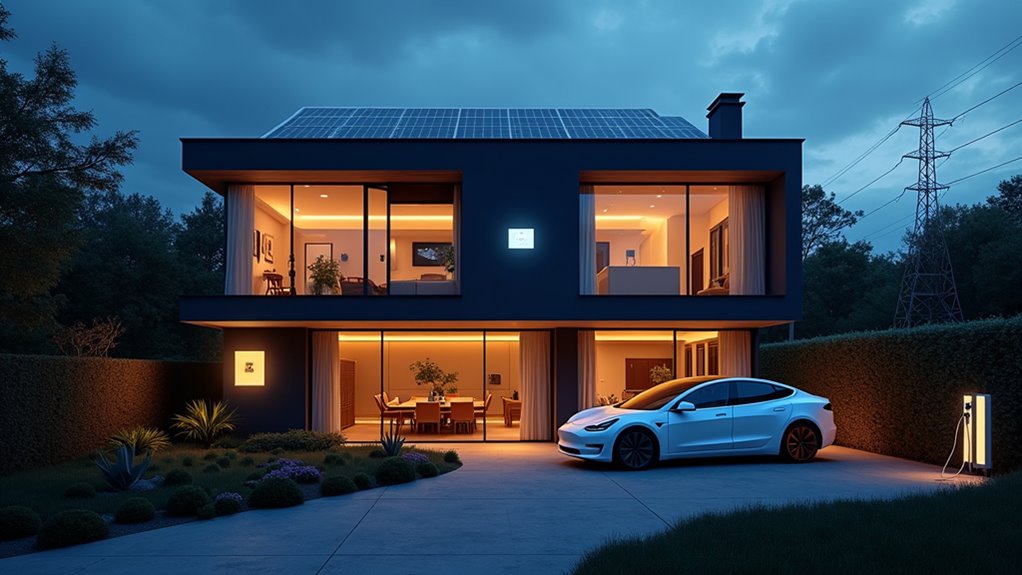

While homeowners debate granite countertops versus quartz, the real battle happening in housing isn’t about aesthetics—it’s about energy efficiency. The numbers don’t lie. New buildings slice energy use by over 40% compared to their aging counterparts, thanks to strict building codes that have been tightening the screws since 1975.
Legacy homes are energy vampires. Those 93 million older residential buildings in the U.S. alone pump out 20% of the country’s annual greenhouse gas emissions. That’s equivalent to Brazil’s entire national emissions footprint. Brutal but true.
Here’s where it gets interesting. Modern cavity walls boast U-values of 0.3 versus 0.55 in older properties—basically superior insulation that keeps the outside weather where it belongs. New homes in the UK save homeowners £135 monthly on energy costs, a whopping 55% reduction compared to older homes.
Meanwhile, newer U.S. homes are 30% larger yet use only 2% more energy overall. The efficiency gains are staggering.
The real kicker? Building codes since 1975 have reduced energy use in new construction by up to 45%, but legacy homes remain largely untouched by these regulations. It’s like having a speed limit that only applies to cars manufactured after 2020.
Building codes have slashed new home energy use by 45% since 1975, while millions of older homes dodge these efficiency rules entirely.
Legacy homes rely heavily on fossil fuel heating systems that have seen better decades. Their degraded heating systems work harder for the same comfort level, while modern buildings deploy high-efficiency equipment and smart controls. Smart thermostats alone can reduce heating and cooling costs by up to 15% in these older homes. New builds benefit from latest heating technologies that significantly outperform older systems experiencing wear and tear.
Sure, newer homes use 18% more energy for appliances and electronics—more gadgets, more consumption—but superior system efficiency more than compensates. Simple adaptations like reflective rooftop coatings could impact global cooling equivalent to removing 24 gigatons of greenhouse gas emissions.
The market is shifting toward zero net energy buildings, though they represent a tiny fraction of total housing stock. Annual new construction adds maybe 150,000-200,000 homes yearly in Canada against a base of 15 million existing homes. That’s like trying to empty an ocean with a teaspoon.
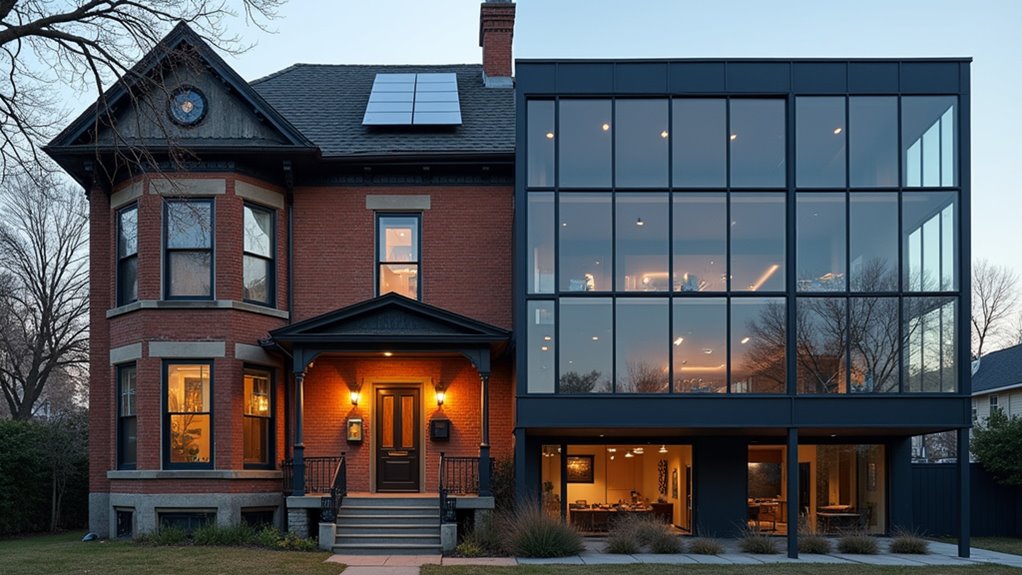
Retrofitting legacy homes could yield significant efficiency improvements, but cost and logistics remain stubborn barriers. The technology exists. The regulations favor new construction. The emissions keep climbing.