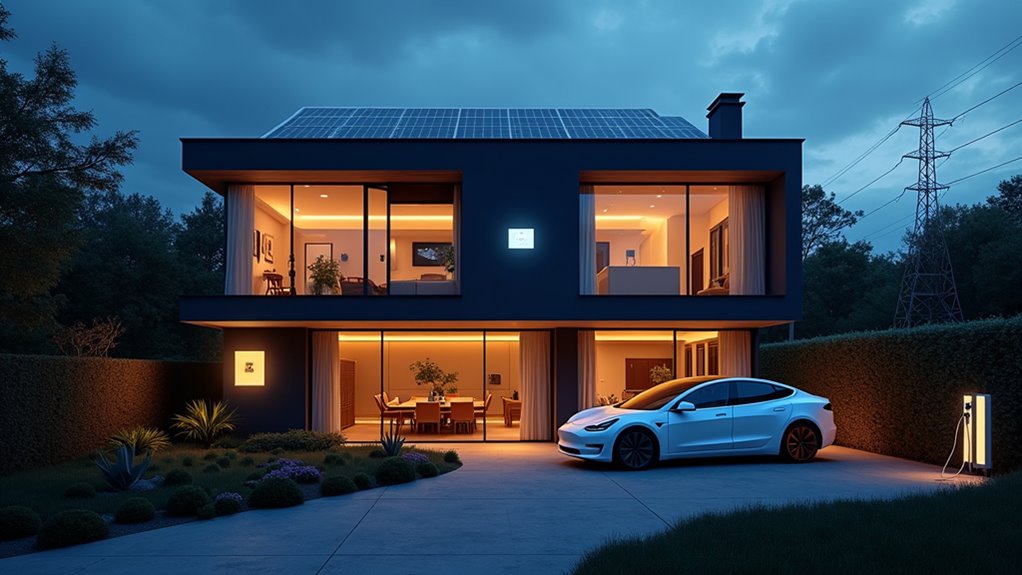

When someone pits a portable wind turbine against solar panels, the results are honestly kind of brutal. A $100 solar panel produced 594 watt-hours under average conditions. That same $100 spent on a wind turbine? Maximum power output of 0.5 watts. Half a watt. Let that sink in.
The efficiency numbers don’t tell a clean story either. Different sources throw around different ranges. Wind turbines get cited anywhere from 20-50% efficiency depending on who’s talking. Solar panels land between 15-24%. So on paper, wind looks competitive. In practice, for portable or residential use, it’s a different conversation entirely.
Efficiency numbers lie. Wind looks competitive on paper. In practice, it’s a completely different conversation.
Solar panels are quieter. Simpler to install. They last 25-30 years compared to wind turbines’ 20-25 years. Maintenance on solar is minimal. Wind turbines have moving parts, which means more things breaking, more service calls, more cost piling up over time. Not exactly a selling point.
Space and location matter too. Wind turbines need open land, tall masts, clearance, and in many cases, permits. Solar panels go on a roof. The roof is already there. Nobody’s filing paperwork for a rooftop panel array in the suburbs. Wind turbines are loud and visually hard to ignore. Solar panels sit quietly doing their thing.
Upfront costs reflect this gap. Residential solar runs $10,000-$30,000. Small wind installations can reach £30,000-£50,000 depending on size and location. Per watt, solar costs around $2.19 while wind averages $1.50. Wind is cheaper per watt but demands more from the site, the budget, and the owner’s patience.
Payback periods tell a similar story. Solar typically breaks even in 7-10 years. Wind turbines stretch that to 10-15 years. Wind does carry a lower levelized cost of energy over its lifetime, which is worth noting. But that long-game advantage gets complicated fast when factoring in maintenance and installation headaches.
Annual output for a 4kW solar system averages around 3,400 kWh. Small wind turbines produce 2,000-9,000 kWh, but that upper range requires ideal wind conditions. Ideal conditions aren’t guaranteed. Solar just needs daylight. Wind systems also demand average wind speeds of at least 12-15 mph to generate electricity effectively, a threshold many residential locations simply never meet. One advantage wind holds over solar, however, is that wind generates at night, keeping power flowing during hours when solar panels produce nothing at all.
Both energy sources also pair well with smart home systems, where smart thermostats learn household schedules to optimize how and when stored energy gets used, squeezing more value out of every watt generated.