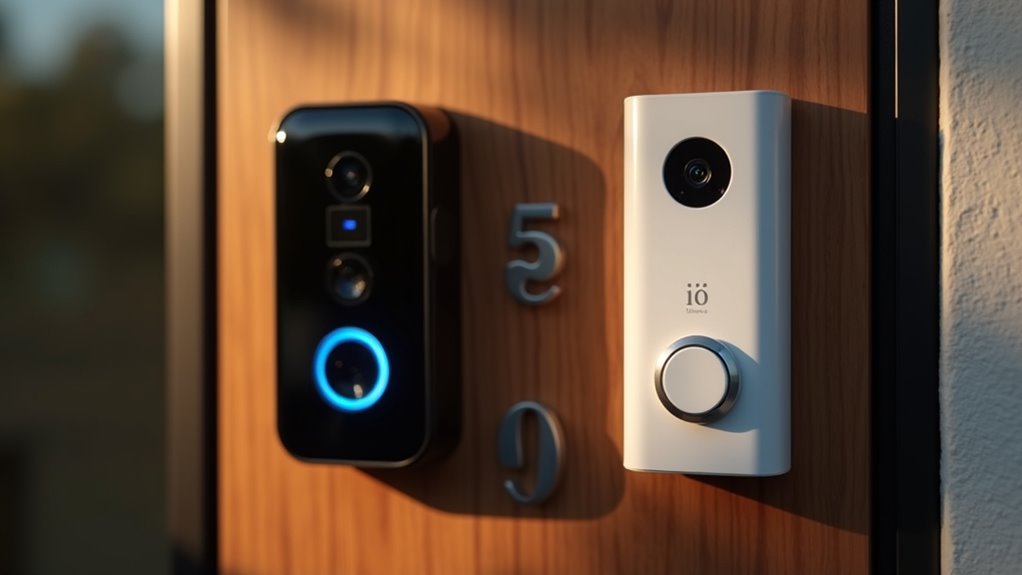
The future of home security has arrived, and it’s nothing like the clunky alarm systems homeowners remember from decades past. Those ancient beeping boxes? They’re about as relevant as a rotary phone.
Today’s systems use AI-driven facial recognition that actually knows the difference between your neighbor’s cat and a burglar. Real-time behavior analysis spots threats before they become problems. Machine learning algorithms get smarter every day, reducing those annoying false alarms that had everyone scrambling to punch in codes at 3 AM.
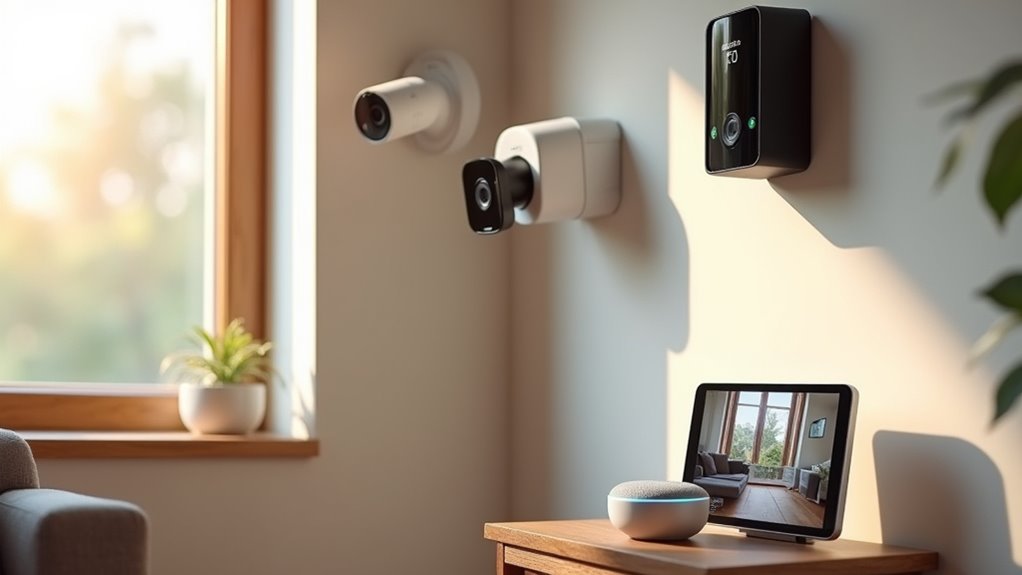
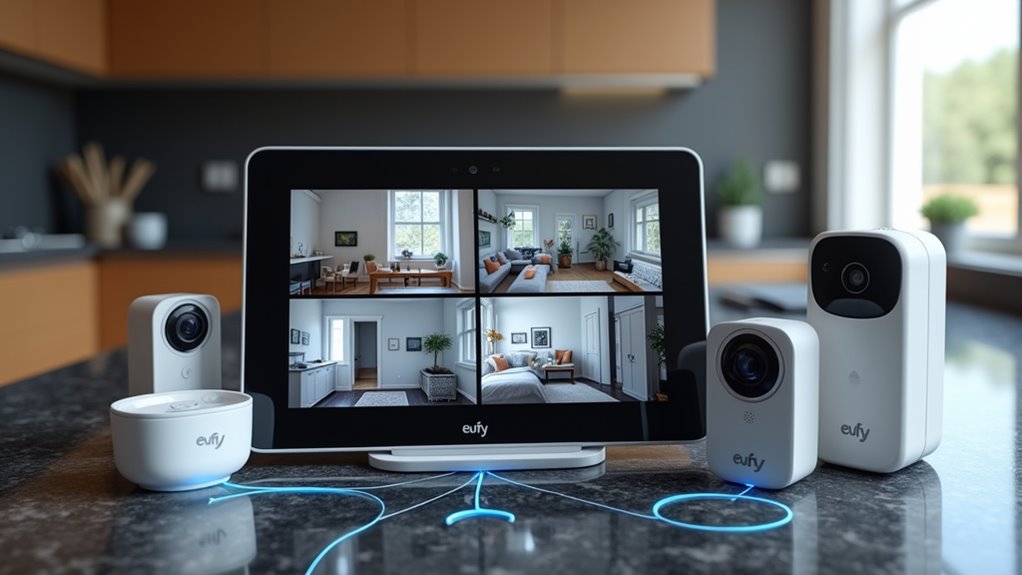
The integration possibilities are staggering. These systems don’t just sound an alarm—they orchestrate an entire response. Cameras, sensors, smart lights, thermostats, and voice assistants work together seamlessly. About 24% of U.S. households with three or more smart devices already utilize this security integration. Why? Because it works.
Modern security systems orchestrate complete responses—cameras, sensors, lights, and voice assistants working together seamlessly across your entire smart home ecosystem.
Forget drilling holes and running wires everywhere. Wireless systems eliminate installation headaches and physical vulnerabilities. Cloud-based storage means footage is accessible from anywhere, anytime. Remote updates keep everything current without technician visits. Need to expand? Just add devices. Simple. However, those prioritizing maximum security might consider wired systems which offer enhanced protection against jamming attacks and require physical access for tampering.
The numbers speak volumes. The home security market is projected to hit $57.99 billion in 2025, growing at 8.9% annually through 2037. North America alone could reach $62.32 billion by 2037. Over 257 million smart homes existed globally by 2021, and that number keeps climbing. Subscription-based services continue driving this expansion as consumers prefer the affordability and convenience of monthly plans over large upfront investments. Smart city initiatives in the Asia Pacific region are accelerating adoption as governments promote integrated security solutions for urban populations.
But here’s the catch—cybersecurity became non-negotiable. With 1,475+ data breaches exposing 163 million records in the U.S. during 2019, security companies now bundle encryption, firewalls, and multi-factor authentication with physical protection. Smart move.
Predictive analytics represents the real game-changer. These systems identify patterns and vulnerabilities before incidents occur. Automated alerts trigger instant responses across multiple devices, notifying emergency contacts immediately. Response times shrink dramatically.
Traditional alarm systems were reactive—something bad happened, then they screamed about it. Modern systems are proactive, preventing problems and orchestrating intelligent responses. They integrate with existing smart home infrastructure, learn from behavior patterns, and adapt continuously.
The old guard is officially obsolete. Today’s home security isn’t just about protection—it’s about intelligence, integration, and peace of mind that actually makes sense.