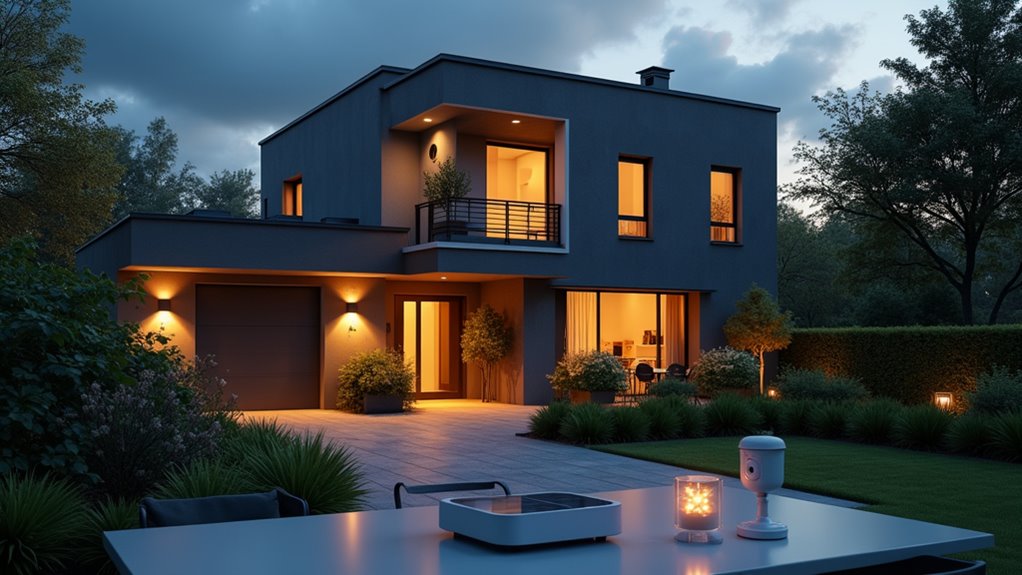
While vacation home owners used to rely on neighbors peeking through windows and hiding spare keys under fake rocks, today’s rental properties are getting a serious tech upgrade. Smart locks have exploded in popularity, with installations jumping 60% in major markets. No more lost keys floating around. No more changing locks between guests. Property managers can zap temporary codes to renters’ phones and revoke them instantly when checkout hits. Pretty slick. To ensure reliable operation, smart locks require battery replacement every 6-12 months, making them a low-maintenance security solution.
Smart locks eliminate lost keys and locksmith bills while letting managers control access remotely with temporary codes.
The real game-changer might be noise monitors. Devices like Minut track sound levels without recording actual conversations – because nobody wants Big Brother listening in on their vacation arguments. These gadgets ping owners the moment someone throws an unauthorized rager. They detect cigarette smoke too. House rules actually get enforced now. With 25% of renters admitting to breaking rules during stays, these monitors catch violations that traditional methods miss.
Traditional alarm systems still dominate the security game, beating out cameras and nosy neighbors. Property owners shell out about $1,375 yearly on security features, hoping to avoid the average $534 in damage costs. Smart alarms let managers arm and disarm remotely, sending instant alerts when something’s amiss. Regular inspections provide backup protection because technology isn’t perfect.
Outdoor cameras watch the perimeter without creeping out guests. Interior cameras? They’re disappearing fast thanks to privacy bans and general creepiness. Motion-activated outdoor models integrate with alarms and smart lights, creating a coordinated defense system that captures evidence if trouble shows up. Smart security devices build guest trust by focusing on transparent safety measures rather than invasive surveillance.
Environmental sensors detect smoke, carbon monoxide, and water leaks before disasters strike. Early warnings save properties and maybe lives. Some devices combine environmental monitoring with noise detection, streamlining the whole operation. Insurance companies love this stuff – lower premiums follow safer properties.
Smart lighting rounds out the tech arsenal. Scheduled lights fool potential burglars into thinking someone’s home. Smart plugs control lamps remotely, adding another layer of fake occupancy.
The integration’s the real magic. These gadgets talk to property management systems and Airbnb platforms, triggering automatic guest messages when problems pop up. Self-check-in through smart locks keeps guests happy while eliminating those awkward key handoffs. Technology handles the heavy lifting while owners sleep soundly, miles away from their investment properties.