The smart home security market isn’t messing around. Combined projections across multiple market segments point to a staggering $163.15 billion total opportunity by 2035. That’s not a typo.
The smart home security market is on track to hit $163.15 billion by 2035. Not a rounding error.
Right now, the global smart home security market sits at roughly $34.86 billion in 2024. One major segment alone, smart home security services, clocked in at $38.17 billion that same year. Both are growing fast. The services segment is expected to hit $118.54 billion by 2035, running at a 10.85% CAGR.
The broader hardware and solutions market is projected to reach $78.93 billion by 2035 at 12.2% CAGR. Add those up. Yeah, the numbers get big quickly.
Some projections are even more aggressive. One forecast puts the market at $37.84 billion in 2025, exploding to $80.54 billion by 2030 at a 16.2% CAGR. Another pins that same $80.54 billion figure at 2035, using a 16.8% CAGR from 2026. Analysts can’t fully agree on the exact trajectory. They do agree it’s going up.
North America is currently running the show. The region dominates market share, driven by heavy investment in AI, IoT, and cloud-based services. Meanwhile, Asia-Pacific is growing the fastest. Classic setup. The old guard leads, the new challenger charges hard.
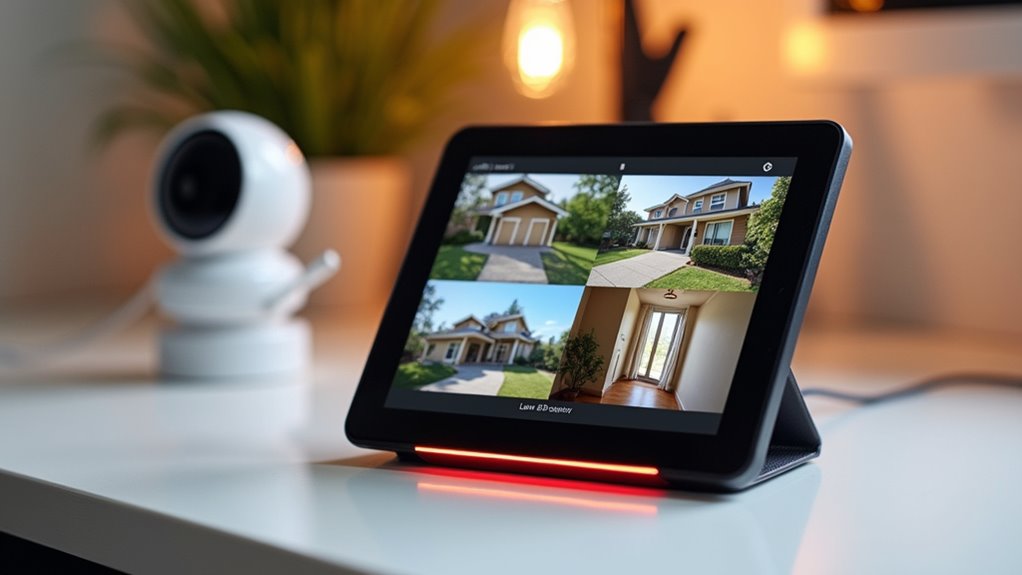
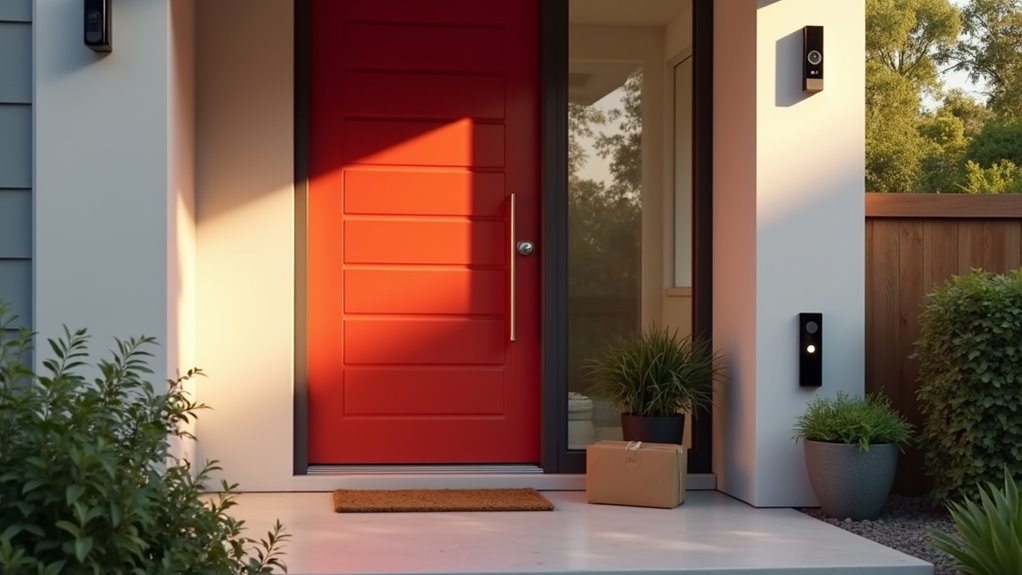
What’s fueling all this? Rising crime rates are pushing people toward smarter security solutions. Consumers are waking up to just how vulnerable traditional systems actually are. IoT devices, wireless cameras, smart locks, and video doorbells are spreading fast into residential homes. Central to connecting these devices is technology like Zigbee mesh networking, which extends range and reduces network congestion across increasingly complex home setups.
Residential users are currently the largest end-user segment. Commercial is growing the fastest. Shocker.
The big players include ADT, Vivint, Ring, SimpliSafe, Honeywell, and Nest Labs. Competition is fierce. Innovation in AI-driven analytics, predictive security, and subscription-based monitoring services is where the real battleground is forming. Key participants are also doubling down on R&D, partnerships, and joint ventures to aggressively expand their client base and strengthen regional presence.
AI and machine learning aren’t buzzwords here. They’re genuinely reshaping how these systems detect threats and respond. Cloud-based platforms and energy-efficient devices are also accelerating adoption. Wireless technology has already pulled ahead, surpassing wired technology in 2024 with a valuation of 30.0 billion dollars, reflecting the growing consumer preference for flexible, easy-to-install systems. The market is evolving fast. Blink and you’ll miss the next shift.