By 2026, smart thermostats still can’t seem to get out of their own way. These supposedly intelligent devices keep failing homeowners in surprisingly basic ways. Wi-Fi issues top the list. Weak signals, thick walls, or a router planted on the wrong side of the house can cut off the thermostat entirely. No connection means no app control, no firmware updates, and no account syncing. The thermostat just reverts to a basic schedule. Or nothing at all.
Wi-Fi drops and smart thermostats stop being smart. Weak signals don’t just cause inconvenience — they cause complete failure.
Power problems are somehow even messier. More than 60% of smart thermostat instability traces back to power supply failures, not broken devices. Older homes often lack a C-wire, which is the common wire that delivers continuous power to smart models. Without it, the thermostat struggles to maintain Wi-Fi, run schedules, and power its monitoring features simultaneously. Loose wires and corroded connections make things worse. So does plugging in a manufacturer-supplied power adapter that doesn’t actually stabilize the system properly.
Then there’s calibration drift. Sensors wear out. Electrical interference messes with readings. Aging components stop performing accurately. The result? A thermostat showing one temperature while the room sits 4-5°F warmer or cooler. The system kicks on and off at the wrong times. Energy gets wasted. The HVAC cycles constantly. Not exactly what anyone paid for.
Incompatibility issues round out the disaster. Thermostats installed without checking voltage type or wiring configuration cause short cycling and sometimes total system failure. Heat pump systems get especially confused when thermostats can’t distinguish between auxiliary heat and normal operation. Multi-zone systems and older zoning controls frequently clash with newer smart devices. Bad thermostat placement near heat sources or drafts makes everything worse by feeding the system false temperature data.
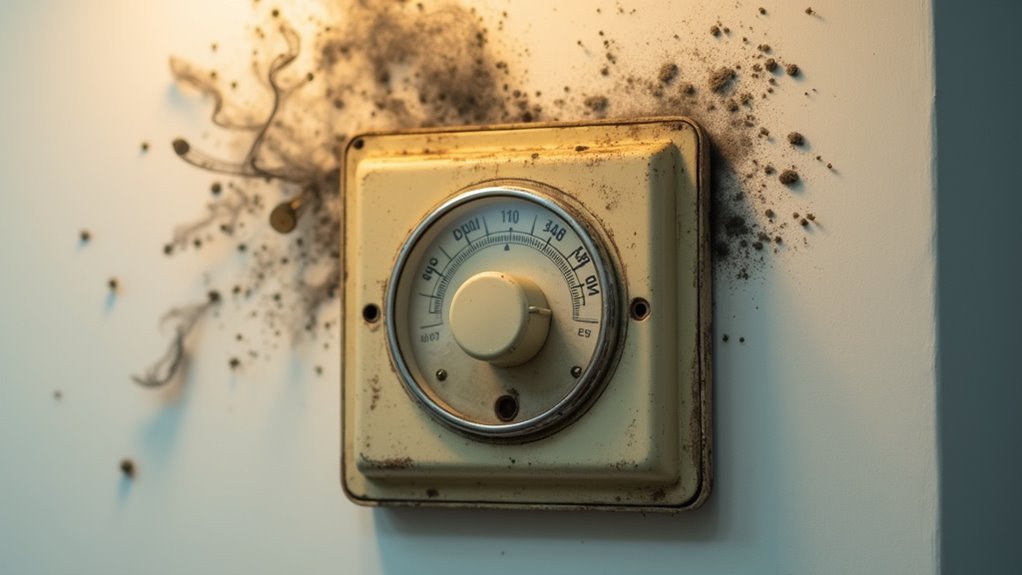
Dust doesn’t help either. Buildup inside the thermostat interferes with sensors, disrupts communication with the HVAC system, and accelerates component wear. Dirty components produce inaccurate readings and unpredictable cycling. It’s an unglamorous problem. But it’s real. Smart thermostats promise comfort and convenience. Upgrading to a modern smart thermostat can reduce HVAC runtime by up to 15%, yet only when the device is properly installed, calibrated, and maintained. Before installation even begins, turning off power at the breaker is a critical safety step that also prevents accidental damage to the thermostat’s sensitive electronics during setup. A malfunctioning thermostat can quietly overwork compressors, motors, and heat exchangers, driving up repair costs long before any obvious failure appears. In 2026, they’re still finding creative new ways to underdeliver.