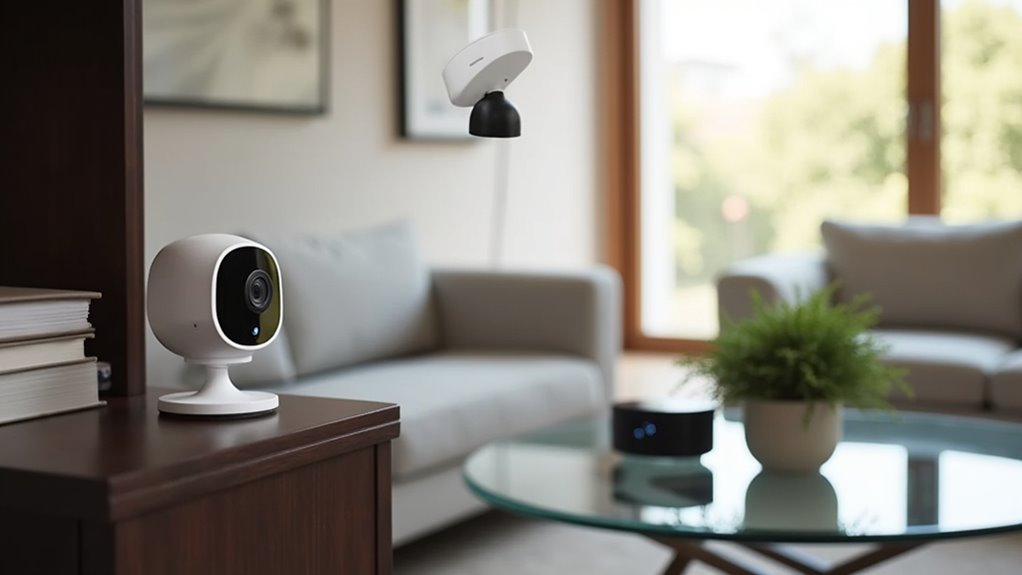
Nearly half of all Americans have video surveillance watching their property. Millions more are about to join them. The smart home security camera market hit $9.98 billion in 2024, and somehow nobody’s talking about how it’s racing toward $30 billion by 2030. That’s a 20.7% annual growth rate—which seems insane for something that basically sits on your porch and stares at delivery drivers.
But here’s what’s actually happening: 94 million U.S. households actively use security systems right now. Not thinking about it. Not considering it. Actually using them. Another 51% of non-users say they’re buying one within the year. Even renters—who can’t paint their walls without permission—are more interested in security cameras than homeowners. Fifty-four percent versus fifty percent. Go figure.
The whole smart home security segment appears to be worth $40.38 billion in 2025. By 2034? It could reach $145.54 billion. These aren’t made-up numbers from some tech bro’s pitch deck, mind you—this is real market data suggesting Americans are absolutely obsessed with watching their front doors through their phones.
AI changed everything, or at least most things. These cameras don’t just record anymore. They recognize faces, analyze activity patterns, and—here’s the kicker—they’ve stopped crying wolf every time a leaf blows by. The latest models feature two-way voice calling support so you can yell at porch pirates in real-time. Motion sensors, glass break detection, spotlight cameras. The whole setup is getting smarter while people seem to be getting more paranoid about package thieves.
Property crime is driving this boom, obviously. But there’s something else going on. Younger homebuyers want this stuff built in from day one. They grew up with smartphones and expect their houses to be just as connected. Urban areas see the highest adoption rates—which makes sense, since that’s where most of the crime happens anyway.
North America dominates with $3.78 billion of the global market. The U.S. alone will likely grow from $10.37 billion to $43.93 billion by 2034. That’s a 15.53% compound annual growth rate for a decade straight, if trends hold. The Asia Pacific region follows with the fastest growth trajectory at 17.5% CAGR, fueled by rapid urbanization and rising security demands.
Tariffs and supply chain problems might slow things down, sure. Components get stuck. Prices go up. Even so, Americans keep buying. Thirty-two million people want doorbell cameras. Fourteen million want alarm systems. The market apparently doesn’t care about trade tensions when someone’s Amazon package disappeared last week. Security experts recommend using separate networks for these devices to prevent hackers from accessing your entire home system through a single vulnerable camera.