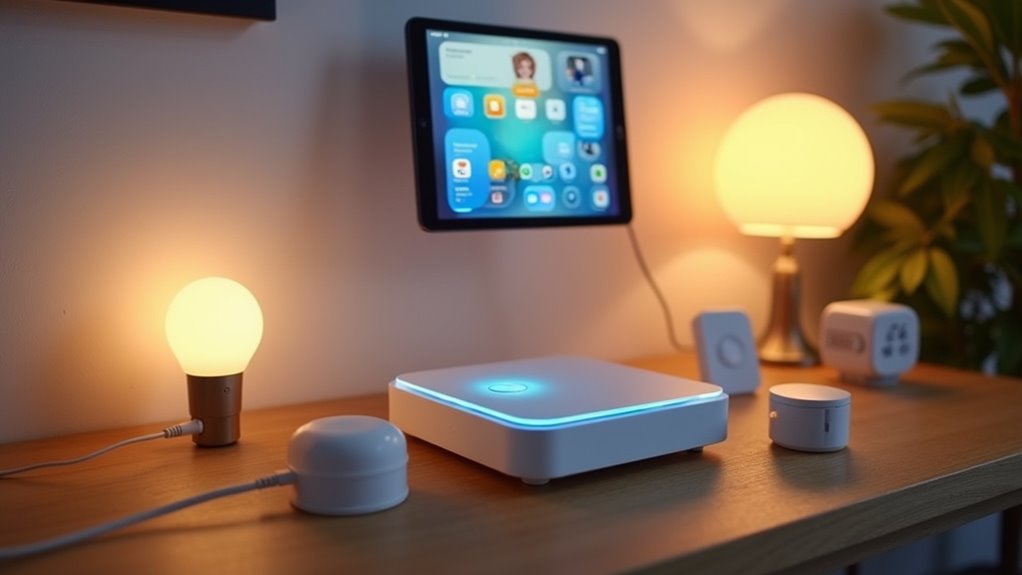
Unless someone’s been living under a rock, they’ve probably noticed smart home devices don’t exactly play nice together. Amazon gadgets ignore Apple products. Google stuff pretends Samsung doesn’t exist. Frankly, it’s been a mess. Enter Matter, the standard that’s supposedly fixing this whole disaster.
Smart home devices from different brands refusing to work together has been an absolute nightmare—until Matter showed up.
Matter lets devices from Amazon, Apple, Google, Samsung, and basically everyone else actually work together. Wild concept, right? The standard supports Wi-Fi, Thread, Ethernet, and Bluetooth LE—devices can communicate however they want. Light bulbs, switches, smart plugs, locks, sensors, media devices? They’re all getting Matter certification. Matter 1.2 expands this with nine additional categories, bringing even more device types into the ecosystem.
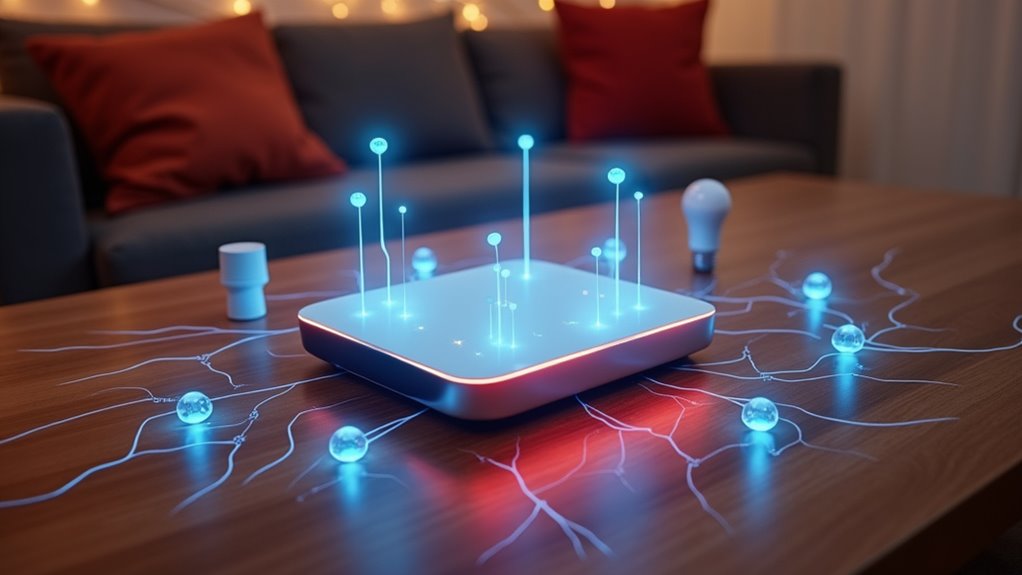
Here’s the kicker: these things work locally without cloud connectivity. No internet? No problem. The devices keep running. Even better, Matter creates a mesh system that lets devices relay messages to each other, extending network coverage throughout the home.
Security isn’t an afterthought here. Matter uses end-to-end encryption and public key infrastructure, which sounds fancy but basically means hackers can’t easily mess with your stuff. Device authentication keeps fake products off networks, while data minimization principles mean less personal information floating around. You control your data—though manufacturer and platform policies still apply. Nobody’s completely escaping the fine print, after all. However, potential security vulnerabilities during device pairing have been identified as a concern for Matter implementation.
Now, what about all those old smart devices people already bought? Some Wi-Fi and Zigbee products can get firmware upgrades to join the Matter party. Others need bridges to connect.
The stuff that can’t upgrade? It keeps working on native platforms but can still coordinate with Matter devices for routines and automations. Major brands are releasing upgradable hubs and bridges. That said, device eligibility depends on hardware capabilities and whether manufacturers care enough to provide support.
Setup used to be torture. Different apps, different processes, different headaches. Matter provides one consistent setup experience across all compatible devices—Bluetooth Low Energy handles the initial connection. Alexa, Google Home, Apple Home all natively support Matter now. No more juggling seventeen proprietary apps. No more linking accounts everywhere.
The participant list reads like a tech industry who’s who: Amazon, Apple, Google, Samsung, Philips Hue, Eve, Eufy, Logitech, Nanoleaf, Leviton, Aeotec, SmartThings. They’re all in.
With its open-source, alliance-backed structure, we’re seeing rapid adoption and support. The smart home might actually get smart. Finally.