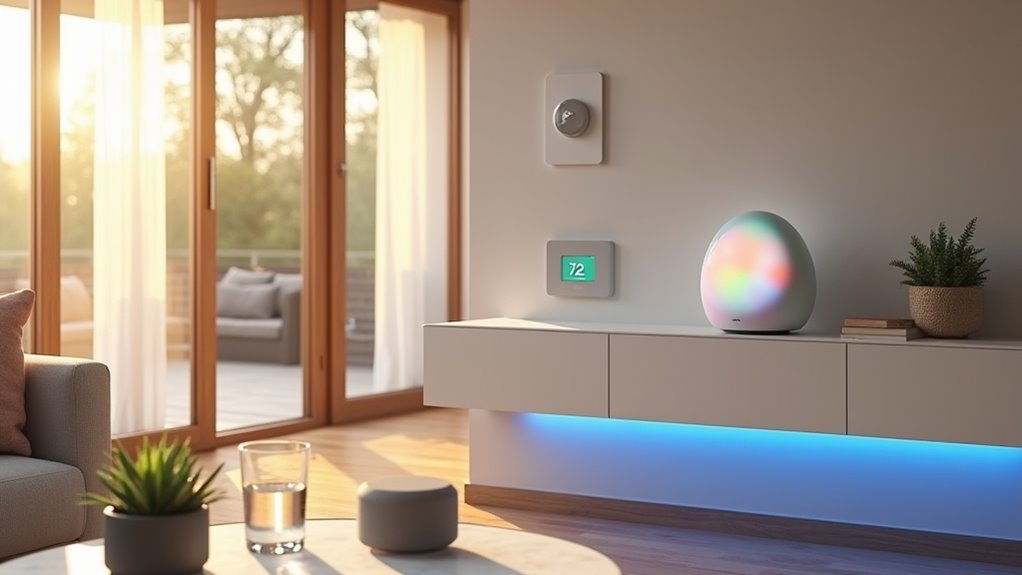

While Google Assistant has been limping along for years, Google’s finally ready to pull the plug and replace it with something that actually works. Come October 2025, Gemini AI will take over all Nest smart speakers and displays, marking the end of an era for the underwhelming Assistant that never quite lived up to its promises.
The switchover brings both free and paid versions of Gemini for Home. Google’s being cagey about what exactly you’ll get without paying up, though. Want early access? You’ll need a Nest Aware subscription at ten bucks monthly, because of course it does. And they haven’t even decided on final pricing for the Gemini subscription itself. Classic Google move, really.
What makes Gemini different is its conversational prowess. No more robotic “turn on bedroom light” commands. You can actually talk like a human being—say something like “turn off the lights everywhere except my bedroom,” and it seems to understand what you mean. The system might even ask follow-up questions through Gemini Live if it needs clarification.
Behind it all, the large language model enables personalized responses and ongoing dialogue. Something Assistant could only dream about, honestly.
The multimodal capabilities sound impressive on paper, at least. Gemini appears to integrate data from multiple Nest devices, identifies people through security cameras, and provides real-time updates based on what’s happening in your home. It can even detect suspicious movements around your property and alert you accordingly.
Recipe suggestions based on what’s actually sitting in your fridge? It can supposedly do that. Need it to coordinate between your thermostat, lights, and cameras for custom routines? Sure thing—or so they claim.
Beyond basic home control, there’s more. Gemini links to Google Search for current information, manages shopping lists, creates bedtime stories for the kids, handles reminders.
Every household member and guest apparently gets personalized assistance without individual setup requirements. The system’s supposed to analyze household data to optimize routines. You can even interrupt it mid-conversation for adjustments, which is handy.
Current Nest devices like smart displays, speakers, thermostats, and lights will definitely get the update. However, older devices may face significant limitations due to insufficient processing power needed for advanced AI features. That said, older hardware might be left behind due to technical constraints. Google hasn’t clarified which devices make the cut, naturally.
The paid tier promises advanced features—though what those are remains mysterious. It’s pretty clear Google’s betting on subscriptions as their monetization strategy here. They’ll likely bundle services with Photos and Pixel offerings down the line, if patterns hold. Unlike traditional smart home systems, Gemini may leverage local control capabilities for faster response times and continued functionality during internet outages.


