Smart home technology just got its biggest shake-up since, well, ever. On July 8, 2025, Heungkong Group and Tantron Group launched the world’s first full-link smart home ecosystem in Guangzhou. This isn’t just another smart gadget announcement. It’s potentially game-changing.
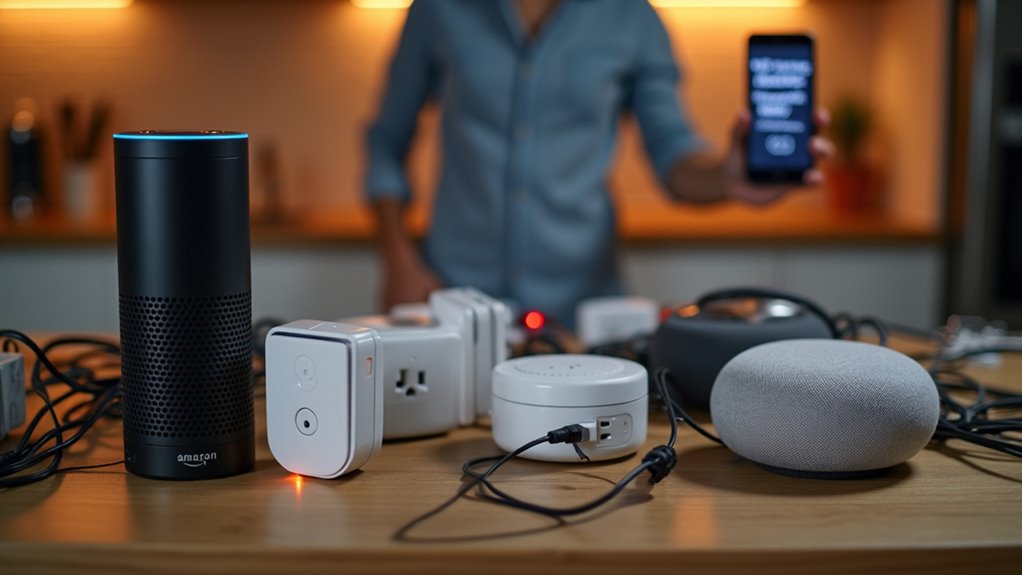
The breakthrough centers around Universal Gateway technology that actually makes incompatible devices talk to each other. Matter, PLC, Zigbee – protocols that previously lived in separate universes can now communicate in real-time. Think of it as a polyglot translator for your house.
Over 20 global brands jumped on board this Global Smart Ecosystem Initiative, including heavy hitters like Gaggenau, V-ZUG, and Panasonic. That’s not small potatoes. These companies don’t typically play nice together, but here they are, creating what industry leaders call a consensus framework that could reshape everything. Xu Xiaojian from Gaggenau presented comprehensive ecosystem integration details during the summit presentation.
When tech giants who usually compete fiercely decide to collaborate, you know something big is happening.
The system supports both established protocols and proprietary ones like Heungkong No.1. The goal? End the fragmented mess that smart homes have become. No more buying exclusively from one brand because nothing else works together.
But here’s the kicker – they’re actually prioritizing user data ownership. Groundbreaking concept, right? The framework includes 10 key principles focusing on interoperability, data ownership, and sustainability. Users get strict privacy controls and transparent data management, which frankly should have been standard from day one.
Sustainability got baked into the design through low-energy protocols and eco-friendly device life cycles. The collaboration aims to reduce electronic waste by making devices interoperable instead of forcing constant replacements. Smart move.
Market analysts are calling this a transformative moment. The transition from individual smart devices to a fully connected ecosystem gets compared to the smartphone advancement. That’s bold talk, but the technology removes barriers that have slowed industry innovation for years.
Government and technology leaders have endorsed the initiative as a new global interoperability benchmark. Former Belgian Prime Minister Yves Leterme threw his public support behind the initiative, recognizing its potential to establish new global standards. With AI-driven solutions becoming the norm in modern security systems, this platform arrives at the perfect time to unify the fragmented market. The system’s designed for rapid adoption across global markets, with real-time device control and scenario customization possible across different brands and device types.
The smart home industry just got its wake-up call.