Convenience is king in the modern home, and the numbers prove it. The global home automation market is set to balloon from $65.88 billion in 2024 to a whopping $135.13 billion by 2031. That’s a 10.8% compound annual growth rate for those keeping score. Some analysts are even more bullish, pegging the 2031 value at $156.6 billion. Either way, smart homes are having their moment.
What’s driving this explosion? Start with AI. These systems are getting smarter, learning your habits, adjusting your thermostat before you even think about it. Voice control has gone mainstream too. People love barking orders at Alexa, Google Assistant, or Siri. “Turn off the lights.” Done. “Lock the doors.” Done. It’s like having a butler who never complains about overtime.
The tech keeps improving. Wireless everything means no more tearing up walls for installation. Smart sensors talk to each other, creating homes that actually think. Well, sort of. Consumers eat this stuff up because they want to save money on energy bills and live like the Jetsons. Remote monitoring lets them check their houses from Cancun. Security systems make them feel safer, even if they just use them to watch the dog destroy the couch.
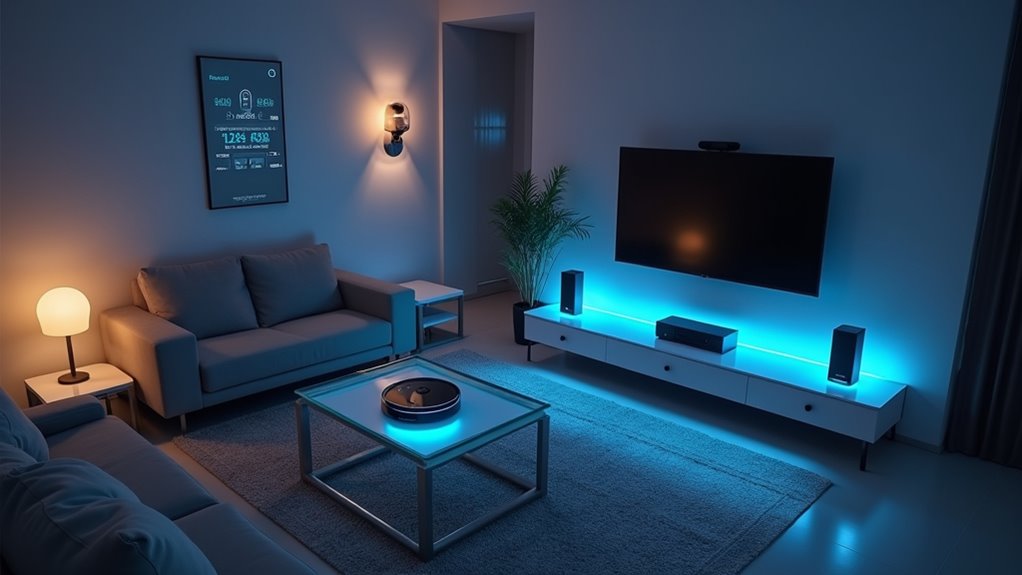
The applications are everywhere. Smart lighting sets the mood and cuts electricity costs. HVAC systems maintain perfect temperatures without constant fiddling. In fact, smart thermostats and other energy-efficient devices are slashing overall energy consumption for environmentally conscious homeowners. The smart thermostat market alone has been growing at 30% annually since 2018, proving homeowners’ serious commitment to energy savings.
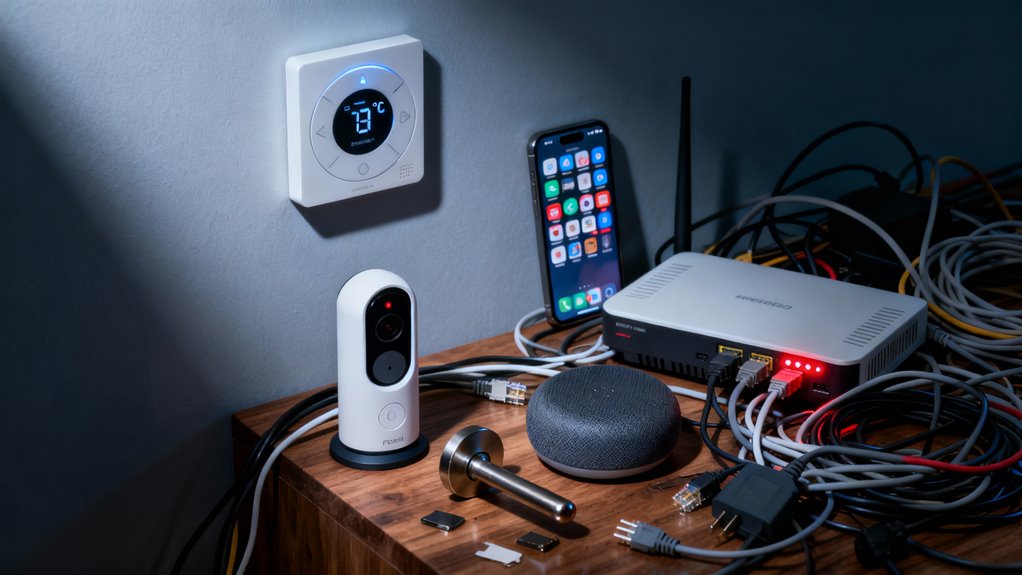
Security setups include everything from surveillance cameras to smart locks that recognize your face. Entertainment systems sync up seamlessly. Even the coffee maker joins the party. Elderly users benefit tremendously as voice commands enable them to maintain independence longer in their own homes.
But it’s not all smooth sailing. Different brands often refuse to play nice together. Installation can be a nightmare when skilled workers are scarce. Cybersecurity concerns spook some buyers—nobody wants hackers controlling their thermostat. The upfront costs still make wallets cry. Without standardized protocols, getting devices to communicate remains frustrating.
Asia-Pacific’s rapid urbanization presents huge opportunities. Government smart city initiatives help too. More houses mean more automation potential. Trade shows spread the gospel of connected living, converting skeptics one demo at a time.