
The doorbell rings. Someone’s at the door, and that fancy Alexa-compatible video doorbell is recording everything. But here’s the kicker – most manufacturers want monthly cash to actually see that footage later.
Cloud subscriptions dominate the video doorbell market, and it’s not by accident. These companies love recurring revenue. They’ll hook buyers with a 30 or 60-day free trial, then boom – monthly fees forever. Want person detection? That’ll cost extra. Package alerts? Pay up. Even basic features like extended video history get locked behind paywalls.
Some brands practically give away the hardware, betting on subscription profits down the road. It’s clever, really. Sell a doorbell for $50, then collect $10 monthly for years. The math works out nicely for them.
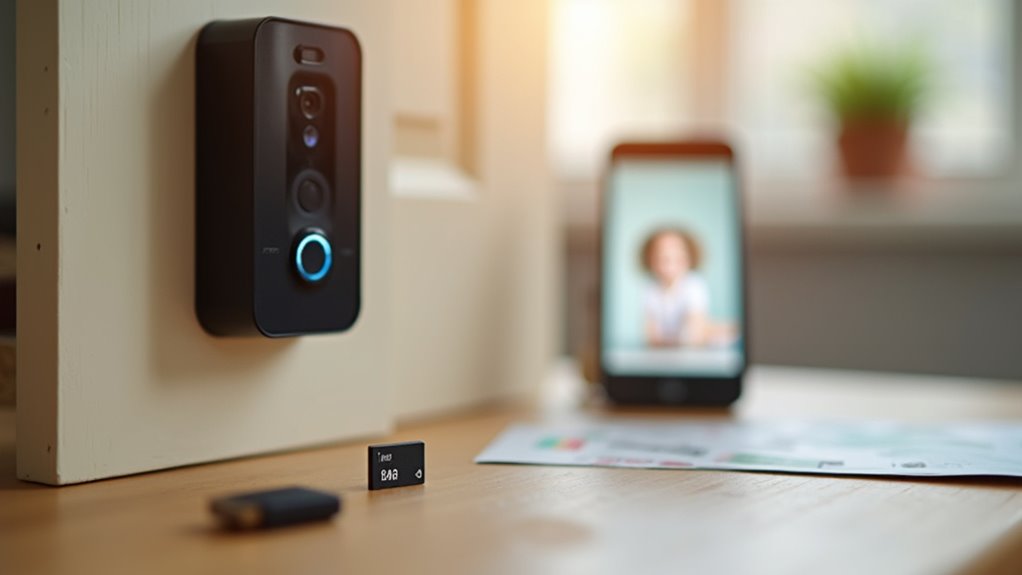
But wait – local storage exists. Brands like Blink, Reolink, and Aqara actually let users save footage on microSD cards or USB drives. Shocking, right? Blink needs its Sync Module 2 accessory, but at least there’s no monthly ransom. Their Video Doorbell (2nd Gen) delivers head-to-toe HD views without forcing cloud dependence. Aqara goes further, offering both free cloud storage and local options without forcing subscriptions. They’re basically unicorns in this market. Reolink’s Video Doorbell WiFi supports up to 256GB microSD cards, giving users months of storage without any recurring fees.
The trade-offs are real though. Cloud storage means accessing footage from anywhere, which is genuinely convenient. Local storage? Better hope nobody steals the doorbell, because that footage goes with it. Privacy advocates love local storage – no mysterious servers holding their front porch videos. Proper mounting height placement is critical since theft risks loss of all locally stored footage.
But most people just want things to work without thinking too hard. Consumer demand for non-subscription models keeps growing. People are tired of death by a thousand monthly fees. Yet major brands mostly ignore this, pushing cloud-first approaches because money talks. Challenger brands smell opportunity here, offering hybrid solutions that don’t treat customers like ATMs.
Security concerns loom large too. Cloud footage faces potential breaches, while local storage stays put unless someone physically swipes it. Neither option is perfect, but at least local storage doesn’t require trusting some company’s cybersecurity team.
The doorbell market reveals an uncomfortable truth: convenience costs money, and manufacturers know exactly how to extract it.