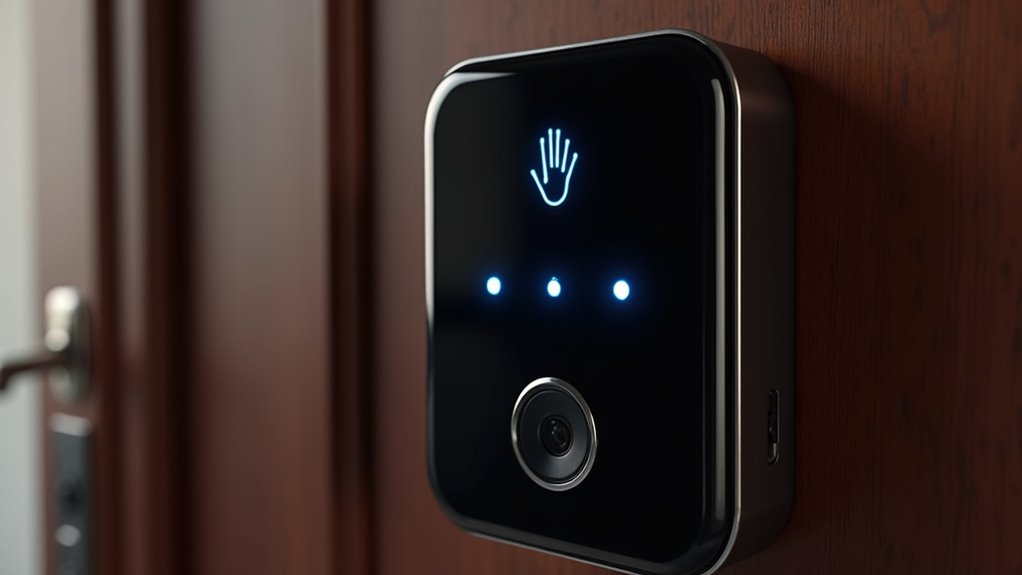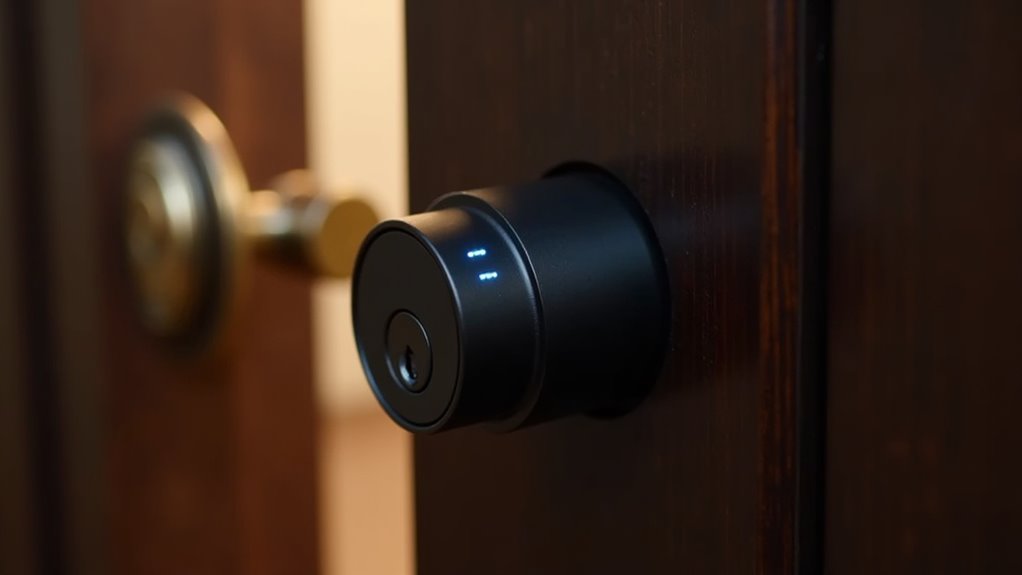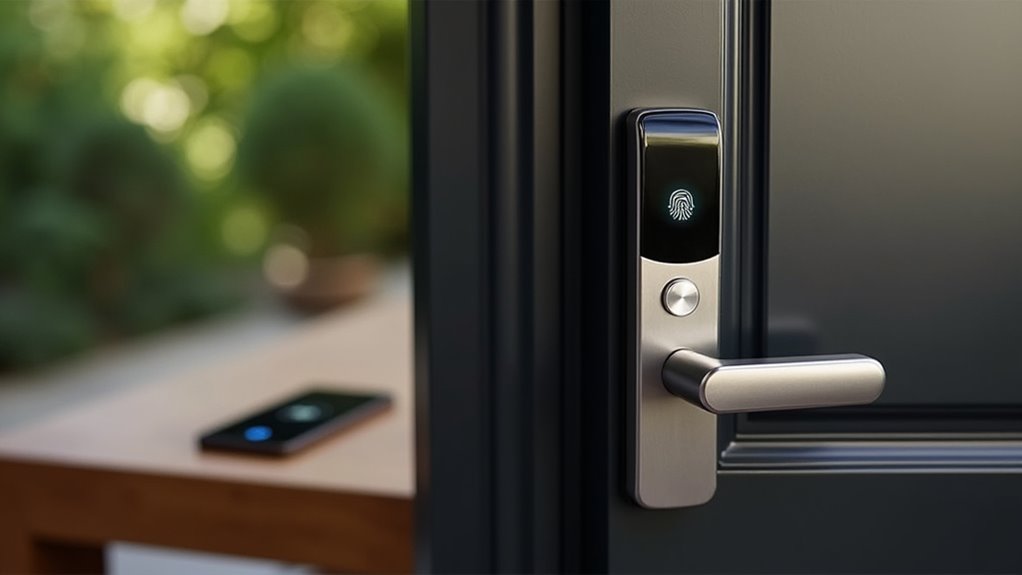

While most people still fumble with keys like it’s 1950, biometric smart locks are quietly transforming home security. The SwitchBot Smart Lock joins this transformation, turning any door into a fortress with fingerprint scanning, facial recognition, and voice commands. No more hiding spare keys under fake rocks.
The device retrofits onto existing deadbolts, which means homeowners don’t need to tear their doors apart. Installation takes minutes, not hours. Pre-installation assessment can prevent common setup issues that plague smart lock users. Once mounted, it connects to Wi-Fi without extra hardware and plays nice with Alexa, Google Assistant, and Apple HomeKit. The lock stores biometric data locally on the device, encrypted and away from cloud servers. Hackers can’t steal what isn’t there.
Retrofits existing deadbolts, connects to smart assistants, keeps biometric data encrypted locally—hackers can’t steal what isn’t there.
Security features pile on thick. End-to-end encryption protects digital communications through Bluetooth Low Energy and TLS protocols. Two-factor authentication doubles down, demanding both biometrics and secondary verification. Door sensors alert users if someone leaves the door ajar. Lost your phone? Kill app access remotely. The system sends real-time notifications for every unauthorized attempt, every status change. Most residential smart locks earn ANSI Grade 2 ratings, providing commercial-level durability against physical attacks.
Managing access feels almost too easy. The companion app lets owners grant or revoke digital permissions instantly. Create temporary codes for the dog walker. Register your teenager’s fingerprint. Delete your ex’s access at 2 AM. Each user gets individual profiles, and the system logs every entry and exit. Voice opening through smart assistants makes hands-free entry possible when carrying groceries. The app tracks detailed access logs for every door event, perfect for monitoring household activity or managing shared spaces.
Battery life remains the Achilles’ heel. Most models run on AA batteries, but Wi-Fi connectivity drains them faster than Bluetooth-only versions. Visual indicators and app alerts warn about low power before lockouts happen. Emergency backup options exist—hidden battery compartments maintain the sleek look while manual keys provide failsafe entry.
Privacy advocates can relax. Biometric data stays encrypted on-device, never floating through cloud servers. Manufacturers now emphasize transparency in data handling policies, building privacy into the design from day one. Regular security updates patch vulnerabilities as they emerge.
The future arrived quietly. While neighbors still jingle key chains, biometric smart locks silently guard doors with military-grade encryption and convenience that makes traditional locks look prehistoric.