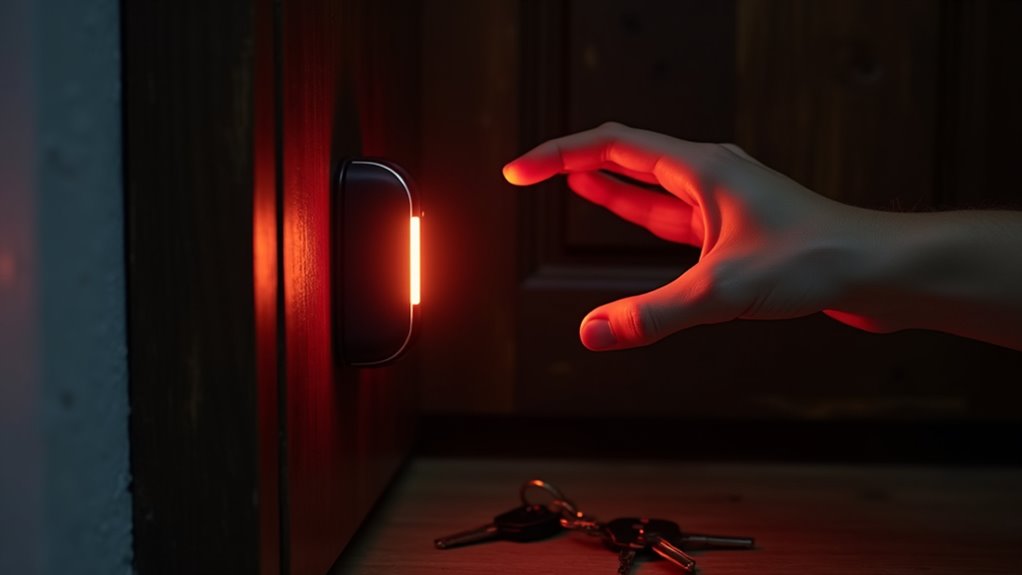
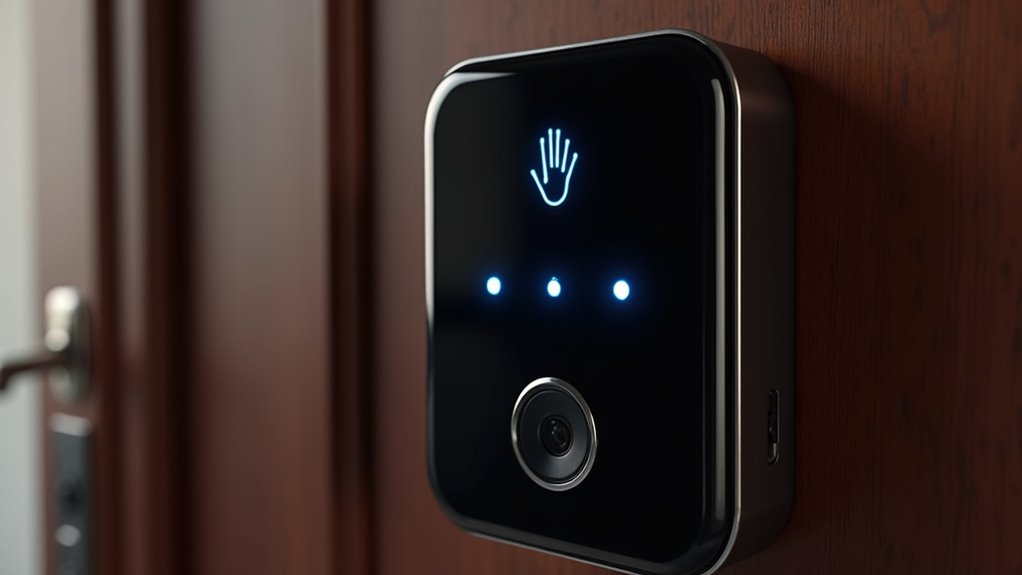
The future of home security just scanned its way into reality. Wyze disclosed a smart lock that reads palm veins like something out of a sci-fi movie. Wave your hand, door opens. No keys, no touching, no kidding.
Wave your hand at this sci-fi smart lock and watch your door unlock—no keys, no touching, no kidding.
Here’s how it works: infrared technology maps the unique vein patterns beneath your palm skin—patterns invisible to the naked eye and nearly impossible to fake. The system claims a false acceptance rate below 0.0001%, which, if accurate, would blow fingerprint sensors out of the water.
Got wet hands from washing dishes? Dirty palms from gardening? Shouldn’t matter. The scanner appears to read through surface conditions to capture internal vein structure, though real-world testing might reveal some limitations. Spoofing attempts? They’re probably dead on arrival.
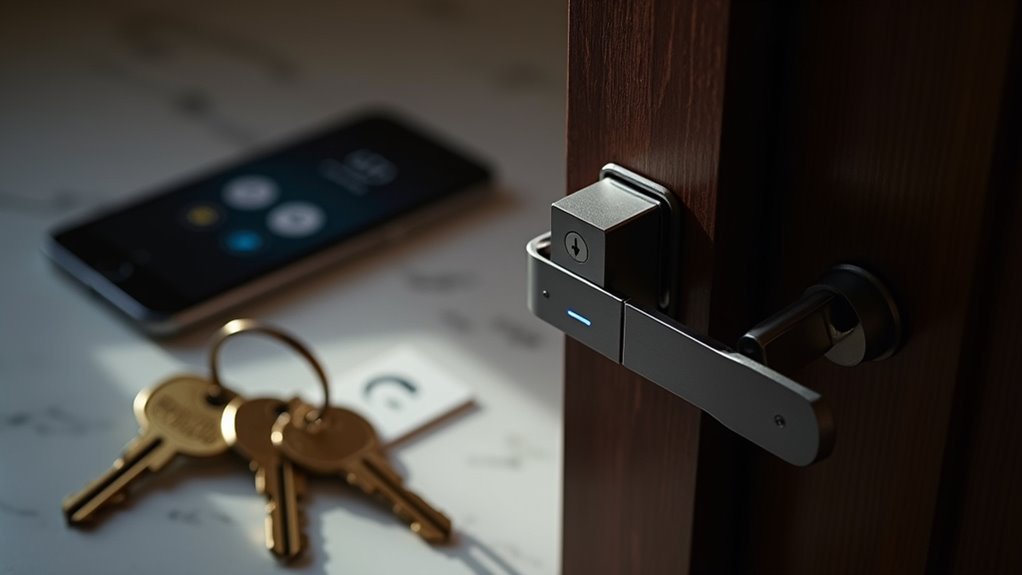
Recognition supposedly takes under one second—crucial when you’re juggling grocery bags in the rain. But palm scanning isn’t this lock’s only party trick. You’ve got six different ways in: palm scan, keypad codes, Wyze app, voice assistants, traditional key, and interior latch.
That numbered keypad can store up to 50 unique access codes, plus temporary ones for your dog walker or house cleaner that expire automatically. And if you’re worried about nosy neighbors watching you type? The anti-peep feature lets you punch random numbers before and after your actual code. Whether this actually throws off determined observers remains to be seen.
The device takes security seriously, at least on paper. Palm and passcode data reportedly stays encrypted locally on the lock itself—no cloud uploads. Too many failed attempts trigger a security siren, which could either deter thieves or annoy you when Aunt Martha can’t remember her code.
A built-in gyroscope auto-locks the door after it closes, and BHMA Grade 3 certification suggests it can handle some physical abuse, though it’s worth noting this is the basic residential grade, not commercial-level protection.
Power management seems well thought out. The main battery should last six months; a backup gives you two extra weeks when needed. As the main battery dies, the backup kicks in automatically—no frantic battery swapping at midnight.
Even with dead batteries, you can emergency-charge through a USB-C port to enter your code. And yes, there’s still a physical key for when technology inevitably fails you.
Wi-Fi connectivity lets you control everything remotely through the Wyze app. Access logs show who entered when and which method they used—perfect for tracking whether your teenager actually came home by curfew. Failed attempts get logged too, potentially revealing attempted break-ins or just your forgetful mother-in-law.
The lock plays nice with other Wyze gadgets and responds to Alexa and Google Assistant commands. For enhanced protection, consider placing this device on a separate network for your IoT devices to prevent a single breach from compromising your entire home system. IP53 weather resistance means it’ll likely survive your climate, handling dust and the occasional rainstorm, though a hurricane might be pushing it. Installation apparently takes about 20 minutes to swap out your existing deadbolt—assuming your door plays along with standard US specifications. At under $130, Wyze undercuts most competitors’ biometric offerings by a significant margin.