Smart Locks 2025
While traditional deadbolts gather dust in hardware stores, smart locks are quietly becoming a multi-billion dollar phenomenon. The global market sits at roughly $3.3 billion in 2025, projected to explode past $17 billion by 2034—a compound annual growth rate of nearly 20 percent. Not bad for a device that literally just opens doors.
The U.S. market alone is sprinting from $999 million in 2023 to an expected $2.33 billion by 2029. Meanwhile, Asia Pacific appears to be leading the charge with growth rates exceeding 24 percent. Turns out people everywhere want their homes smarter than the average smartphone.
The smart lock industry is sprinting toward $17 billion globally by 2034, with Asia Pacific charging ahead at over 24 percent growth.
Residential applications dominate revenue, which makes sense. Individual homes, condos, and apartment buildings are eating this stuff up. Hotels and commercial buildings aren’t far behind, hungry for centralized access management and geo-fencing capabilities. Because nothing says modern hospitality like eliminating the embarrassment of lost keycards.
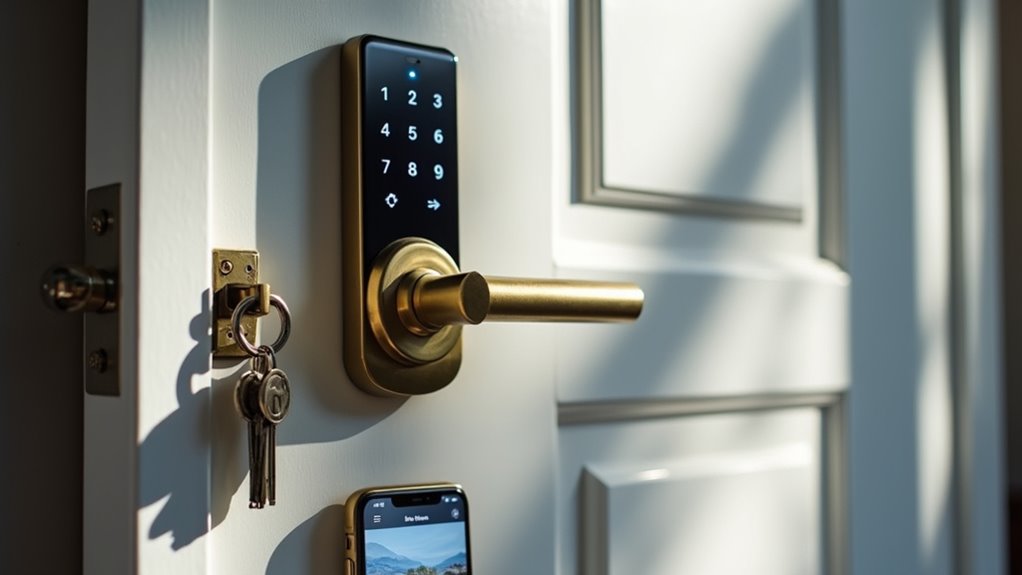
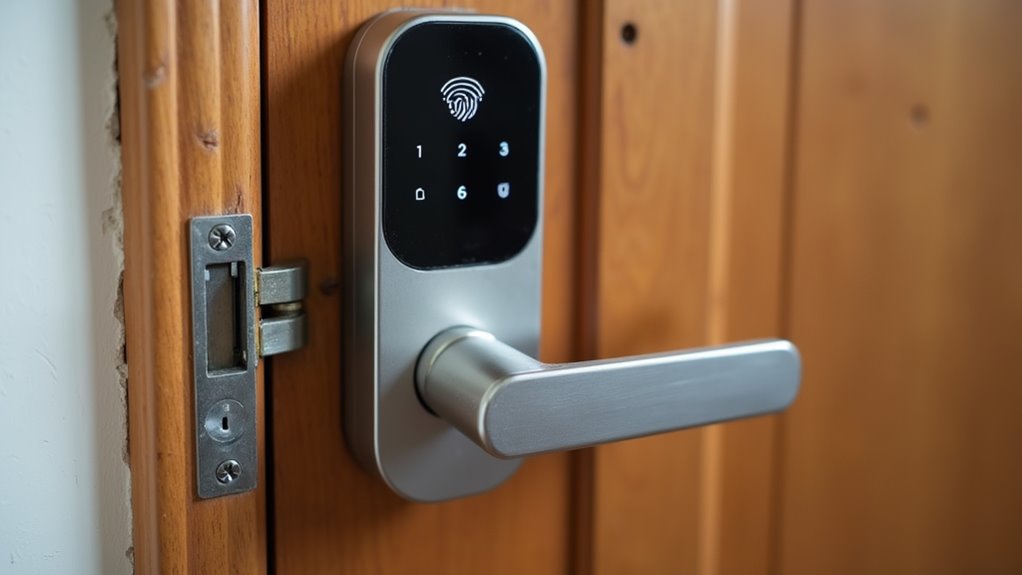
The technology itself has gotten absurdly sophisticated. Smart locks now integrate AI for anomaly detection and predictive access patterns. They learn habits. They send real-time threat alerts. Biometric systems scan fingerprints and faces with disturbing accuracy. Then there’s the connectivity—Bluetooth, Wi-Fi, Z-Wave, and Zigbee create an alphabet soup of protocols that somehow all work together. Cloud-to-cloud integrations enable seamless connectivity across multiple platforms for enhanced user experience.
Smartphone-based authentication grabbed the largest revenue share in 2024, probably because everyone already carries their phone everywhere anyway. Voice assistants from Amazon, Google, and Apple play nicely with these devices, letting homeowners unlock doors by simply asking. On top of that, touchless entry is trending hard. Apparently turning a handle now qualifies as excessive effort.
The competitive landscape is ruthless. Major players like Allegion, Honeywell, and Spectrum Brands battle constantly through product launches and R&D investment focused on AI and biometric integration. They’re listed among the top 50 global smart lock companies, fighting for differentiation in what’s becoming an increasingly crowded market. Recent innovations include Salto Systems’ XS4 one S keypad, which combines PIN codes with smart keycards and mobile access for enhanced flexibility.
Rising urbanization and smart city development fuel this growth. Consumers want integrated, secure, easy-to-use solutions—keyless entry, remote monitoring, customized access scheduling. Traditional mechanical locks, with their quaint physical keys and zero connectivity, suddenly look hopelessly outdated. The front door just became the smartest thing in the house.