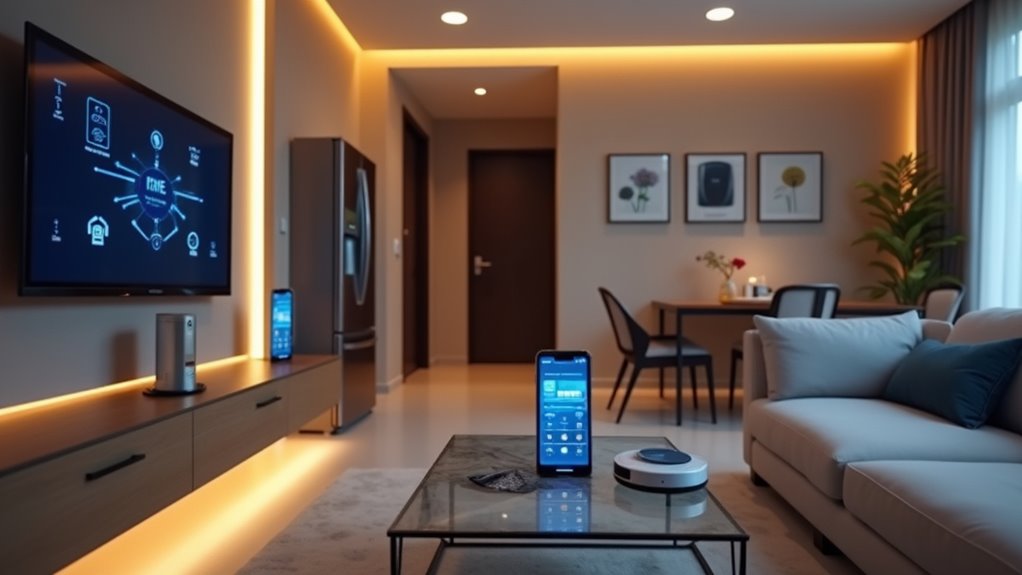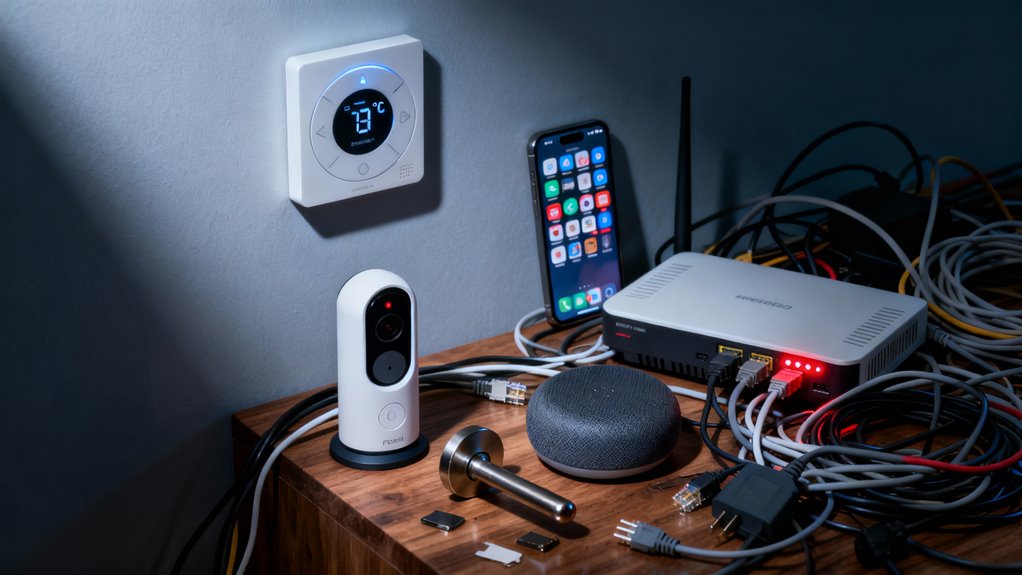

While homeowners rush to install the latest smart thermostats and voice-activated everything, most are making the same embarrassing mistakes that turn their high-tech havens into security nightmares.
The biggest blunder? Passwords. People leave default passwords unchanged, reuse the same weak credentials across devices, and act surprised when hackers waltz right in. Two-factor authentication sits there waiting to be enabled, but nobody bothers. It’s like installing a fancy lock on your front door and leaving the key under the mat.
Then there’s the compatibility disaster. Someone buys an Alexa-powered doorbell, a Google-compatible thermostat, and an Apple HomeKit lock without checking if they’ll actually work together. Spoiler: they probably won’t. Without a central ecosystem, you end up with a fragmented mess of apps and zero automation. Manufacturers publish compatibility lists for a reason, but who reads those anyway?
Mixing ecosystems without checking compatibility first guarantees you’ll need five apps to accomplish what one integrated system could handle effortlessly.
Wi-Fi problems plague smart homes because people stick their outdated router in the basement and wonder why devices upstairs keep dropping offline. Dead zones everywhere. No mesh networks, no signal testing before installation—just pure optimism that somehow everything will connect perfectly. It doesn’t.
The setup process gets rushed like a Black Friday sprint. Factory defaults stay in place. Automations go untested. User manuals collect dust. Lights start turning on at 3 a.m. because nobody actually tested the schedule, while background notifications drain batteries and features sit misconfigured.
Maintenance? What maintenance? Firmware updates pile up uninstalled, leaving security flaws wide open. Battery-powered sensors die without warning because nobody monitors them. Password changes never happen. Those device logs that could reveal breaches or malfunctions? They go unreviewed. Critical settings never get backed up, so one factory reset wipes everything.
On top of that, these vulnerable IoT devices share the same network as laptops and phones containing sensitive data. No network segmentation whatsoever. Apps get granted sweeping permissions to cameras, microphones, and location data without a second thought. Privacy settings get ignored completely, leaving data collection features enabled that share usage patterns and personal information with manufacturers and third parties. A separate network for smart devices would add protection, but most people never bother with that either.
The reality is brutal. Smart home technology requires actual effort beyond clicking “buy now” on Amazon. Security updates, compatibility research, proper network setup—all the boring stuff people skip. The industry sells convenience, but it appears to deliver chaos for anyone unwilling to do their homework.