As smart home technology continues to infiltrate every corner of modern living, video doorbells have emerged as the unexpected stars of the security game. What started as a simple doorbell replacement has morphed into something far more ambitious – the secret command center of entire smart home ecosystems.
The numbers don’t lie. The global video doorbell market is projected to explode from $2.11 billion in 2025 to $8.47 billion by 2035, boasting a hefty 14.9% annual growth rate. Meanwhile, the broader smart doorbell market hit $4.72 billion in 2024 and expects to reach $19.1 billion by 2033. That’s some serious cash flowing into what fundamentally amounts to fancy doorbells.
Billions of dollars chasing doorbell upgrades – because apparently regular doorbells weren’t fancy enough for modern homes.
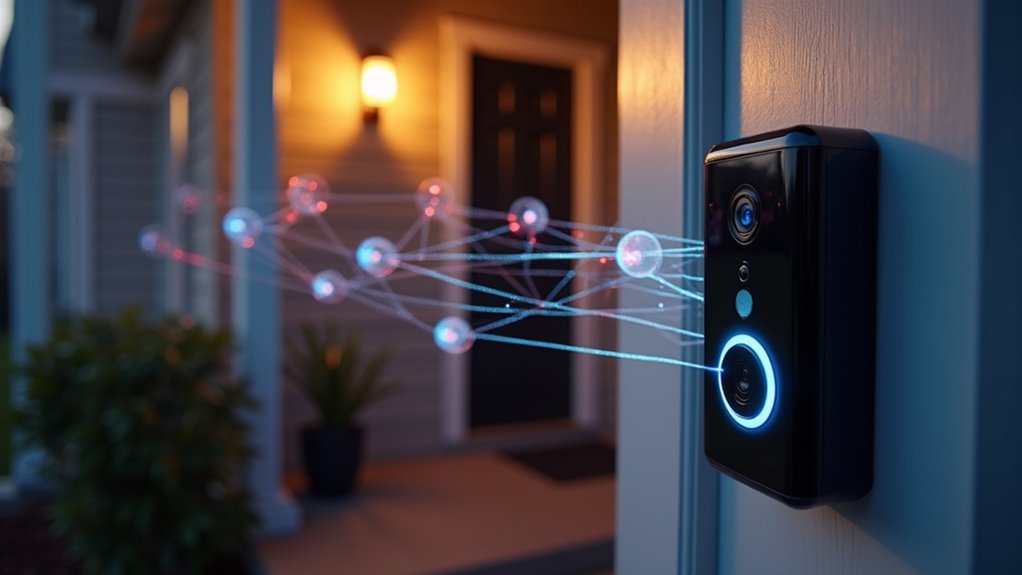
Here’s where it gets interesting. These aren’t just security cameras anymore – they’re orchestrating entire homes. Video doorbells now integrate seamlessly with smart locks, lights, and security systems, creating automated routines triggered by simple doorbell events. Someone approaches your door? Your lights turn on, locks engage, and your whole system springs into action like some high-tech domino effect.
About 24-27% of U.S. homeowners plan to buy video doorbells within the next year, while 45% of households already own smart home devices. The average home peaked at eight smart devices during the pandemic but has settled at 6.2 devices. Brands like ADT and Ring dominate this space, and surprisingly, renters show more interest than homeowners. The Works with Ring certification ensures third-party products properly integrate with the doorbell system, expanding the ecosystem far beyond security cameras.
The AI capabilities are getting ridiculous. Motion sensors, real-time video, object detection, and activity zones reduce false alarms while cloud storage guarantees footage survives even if someone steals the device. Wi-Fi 6 and 5G adoption means better video quality and lower latency – no more pixelated conversations with delivery drivers. High capital costs and subscription fees remain significant barriers that prevent many consumers from adopting these advanced security solutions. Increasingly sophisticated facial recognition technology allows these devices to distinguish between family members, delivery personnel, and potential security threats.
Asia-Pacific leads growth projections, though North America still dominates adoption rates. Rising home security concerns drive much of this expansion, with wireless models remaining popular due to installation simplicity.
What started as a doorbell transformation has quietly become the brain of modern smart homes. These devices don’t just monitor visitors – they secretly control everything else.