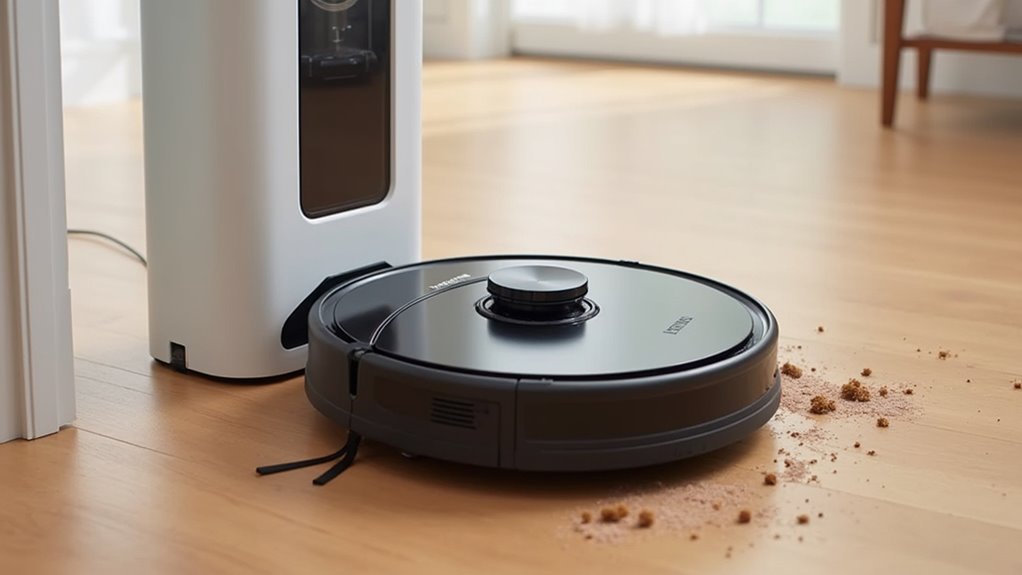
While robot vacuums promise the dream of hands-free cleaning, the reality is far messier than the marketing suggests. Consumer Reports has pulled back the curtain on these supposedly smart helpers, and the picture isn’t pretty.
The cleaning performance? Disappointing at best. These machines struggle with embedded dirt in carpets and can’t handle pet hair without a proper brush roll. Instead of collecting debris, they often just push it around like an expensive hockey puck. Edge cleaning is terrible, corners remain dirty, and debris gets scattered rather than contained. Mixed floor types confuse them completely.
Navigation is where things get truly comical. These “intelligent” robots miss entire rooms, get confused by basic obstacles like chair legs, and create inefficient cleaning patterns that would make a Roomba dizzy. Many can’t even find their way back to their charging dock. So much for artificial intelligence.
These supposedly smart machines get lost in their own cleaning patterns and can’t even navigate back to their charging stations.
Battery life hits rock bottom compared to traditional vacuums. The robots die before finishing jobs, take longer to recharge than advertised, and lose power capacity over time. Larger homes? Forget about it.
Daily maintenance becomes a nightmare. Filters clog constantly, dustbins are difficult to empty, and the hybrid mop models are particularly troublesome. App interfaces confuse users, and brush rollers jam regularly. Traditional vacuums suddenly seem refreshingly simple.
Reliability craters quickly. Units stop working within months, Wi-Fi connections fail constantly, and parts break prematurely. The predicted reliability scores lag far behind conventional vacuum brands. Owner satisfaction varies wildly depending on which model they’re stuck with. Even the iRobot Roomba Combo i5, scoring a mediocre 72, demonstrates how the top performers still fall short of expectations. Many units accumulate 37% one-star reviews from frustrated customers who expected better performance.
Privacy concerns add insult to injury. Data security receives mediocre ratings while privacy protection scores even lower. Wi-Fi vulnerabilities create unauthorized access risks, manufacturers offer minimal transparency in privacy policies, and users get limited control over their own data.
Consumer Reports testing reveals another problem: the lab environments don’t reflect real homes. No doorway testing, no multi-room challenges, no complex layouts. Just simplified scenarios that make these robots look better than they actually perform in typical households.
The dream of effortless cleaning remains exactly that—a dream deferred by technological shortcomings.