
CO2 sensors lie. Not dramatically, not all at once, but slowly, quietly, and often without any obvious warning signs. Understanding why requires a look at how these devices fail in the real world.
NDIR sensors, the kind found in most CO2 monitors, drift over time. Aging components, environmental exposure, and something called sensor poisoning gradually pull readings away from reality. The fix is periodic recalibration. Simple enough, except most people never do it.
NDIR sensors drift quietly until the data they produce is fiction. Most people never recalibrate. The lie compounds.
Then there’s the Auto Baseline Calibration problem. ABC systems recalibrate every 7 to 14 days by assuming the lowest recorded reading equals 420 ppm, the rough baseline for outdoor air. Sounds smart. Except if a space never gets properly ventilated, that lowest reading might be 600 ppm. The sensor then treats 600 ppm like fresh air and recalibrates around that lie. Weeks pass. Readings drift further. Nobody notices.
Offices, livestock areas, and homes in cold climates are especially vulnerable. Spaces that never fully air out essentially dupe their own sensors into reporting nonsense. ABC works in about 95% of rooms that see ambient outdoor air weekly. The other 5% are just getting bad data.
Environmental conditions make things worse. Air pressure, humidity, and temperature all affect accuracy. An air-conditioned space can show readings 200 ppm lower than reality after an outdoor calibration. The sensor isn’t broken. It’s just confused by the difference between where it was calibrated and where it’s actually working. Two monitors calibrated identically outdoors can still differ indoors by 65 to 75 ppm depending on how each sensor responds to temperature and humidity.
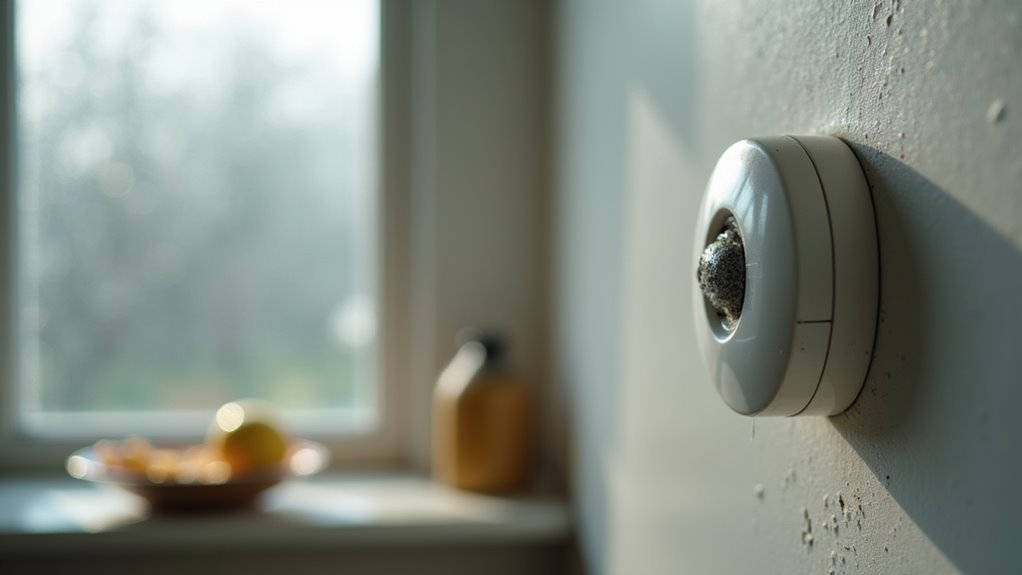
Physical blockages are another problem nobody talks about. Dust and oil build up in the air inlet after long use. Blocked inlets mean the sensor isn’t even sampling the air properly anymore. It’s essentially guessing. Much like motion sensors and other smart home devices, CO2 monitors depend on regular maintenance schedules to preserve the accuracy and reliability of the data they report.
And then there’s interference. Alcohol, carbon monoxide, cigarette smoke, even fruit emitting ethanol can mess with readings. High-concentration exposure can permanently damage a sensor. That’s not a minor footnote. That’s the whole device ruined.
CO2 sensors aren’t inherently bad tools. But they’re easily fooled, rarely maintained, and quietly trusted in ways they probably shouldn’t be. When shopping for a monitor, choosing a device built around a reputable sensor brand like Sensirion or SenseAir meaningfully reduces the risk of compounding these problems from the start.