Transformation might be too strong a word, but smart home sensors are quietly taking over American households—and the numbers don’t lie. Over 30% of U.S. homes now use some form of smart home technology, with sensors leading the charge. The global smart home sensor market is exploding from $3.29 billion in 2020 to a projected $8.25 billion by 2026. That’s a 16.5% annual growth rate that would make any tech CEO weep with joy.
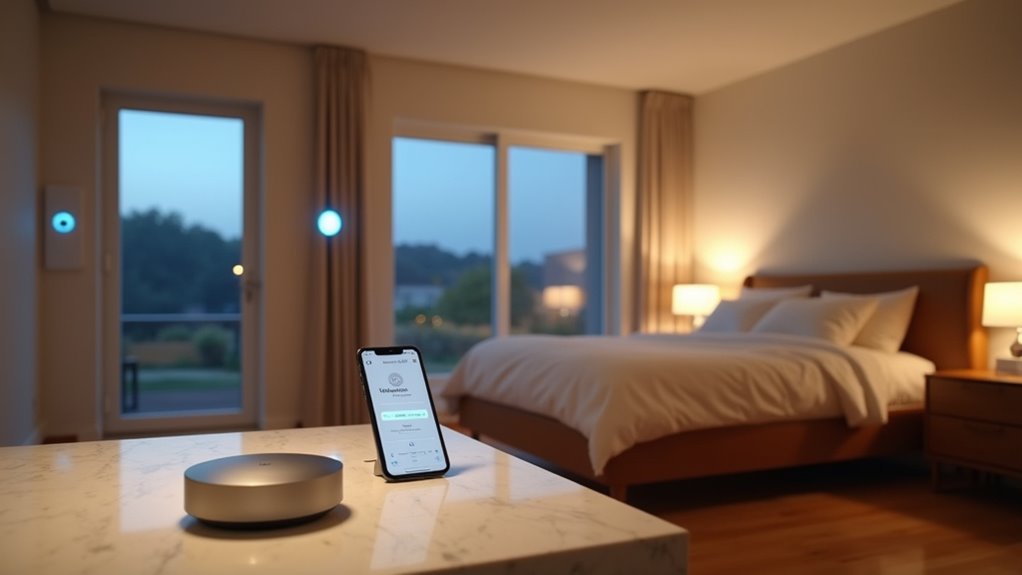
These tiny devices are fundamentally the nervous system of modern homes. Motion sensors flip lights on and off, saving energy and making homeowners feel like wizards. Temperature and humidity sensors whisper sweet nothings to HVAC systems, optimizing comfort while slashing utility bills. Light sensors decide when artificial lighting is actually necessary—revolutionary stuff, apparently. Most smart sensors operate 24/7 monitoring capabilities, providing continuous protection and automation without requiring any manual intervention.
Motion sensors making homeowners feel like wizards while HVAC systems receive sweet whispered data—because apparently deciding when lights are necessary is revolutionary.
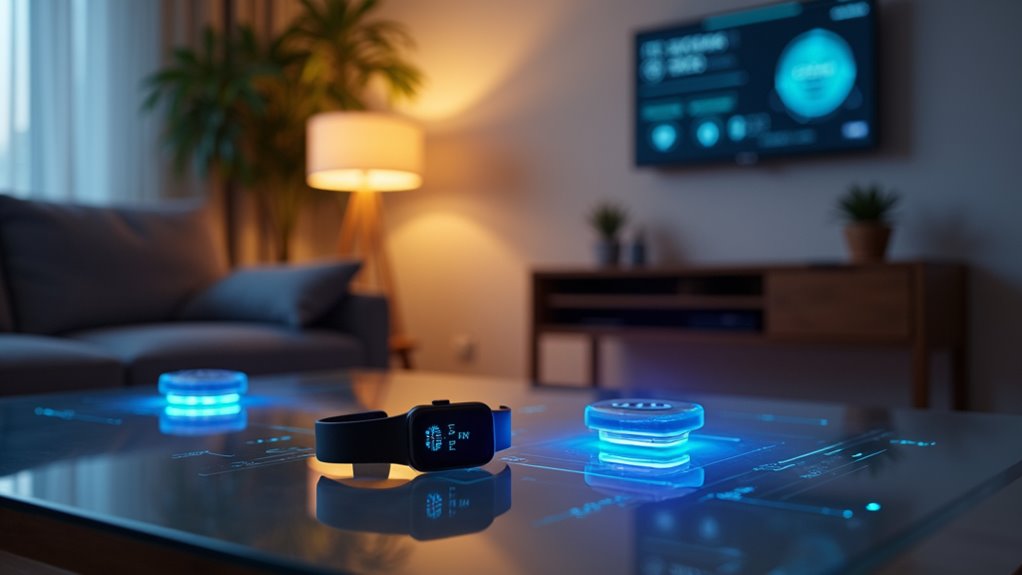
But here’s where it gets interesting. AI integration is turning these sensors from simple reactive tools into predictive geniuses. Amazon Alexa, Google Assistant, and Apple Siri aren’t just listening to your questionable music choices anymore. They’re processing sensor data, learning behavioral patterns, and creating automated routines that anticipate needs before homeowners even realize they have them. Enhanced AI integration within smart home systems delivers previously unmatched convenience and personalization that creates truly responsive home environments.
The retrofit market is booming at 8.4% annual growth because nobody wants to demolish their house for smart upgrades. Smart sensors solve this problem elegantly—just stick them places and watch the magic happen.
Security applications are driving serious adoption too. Motion detection, intrusion alerts, smoke and carbon monoxide monitoring—sensors are fundamentally turning homes into vigilant bodyguards that never sleep or demand coffee breaks. Home security systems captured 40% of the smart home sensor market share in 2023, demonstrating just how critical safety concerns have become for consumers.
Insurance companies are even offering premium discounts for homes with certified smart security systems, which is corporate speak for “these things actually work.”
The Asia-Pacific region is seeing the fastest growth at 8.4% annually, thanks to rapid urbanization and smart infrastructure investments. Meanwhile, government incentives are pushing energy-efficient sensor adoption across markets.
Environmental sensors detect everything from CO2 levels to water leaks, providing preventive maintenance alerts that save homeowners from expensive disasters. These devices aren’t just convenient—they’re becoming fundamental infrastructure for modern living.