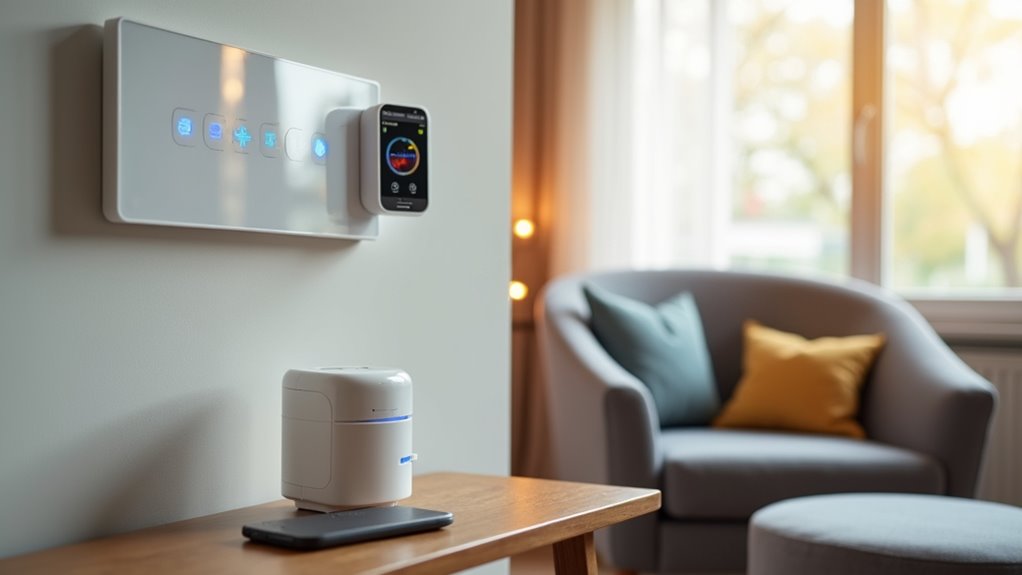
For millions of older Americans, home isn’t as simple as it used to be. Nearly 24% of adults over 65 have a mobility disability. Arthritis. Limited range of motion. Reduced dexterity. Suddenly, a touchscreen or tiny button becomes an obstacle course. Smart home technology is stepping in to fill that gap, and the results are hard to ignore.
Nearly 1 in 4 older Americans has a mobility disability. Smart home technology is closing that gap.
Voice-activated devices like Google Home are changing daily life for people with dexterity issues or poor vision. Fans, lights, televisions — all controllable by voice. No fumbling. No reaching. Just talking. For the 48.3% of study participants who lived alone, this kind of independence matters enormously. Quality of life improved significantly after smart home tech adoption, with researchers recording a p-value of 0.010. That’s not a placebo effect. That’s real.
Smart lighting deserves its own moment here. Phillips Hue systems activate from bed or trigger automatically with motion. For someone with serious mobility limitations, not having to cross a dark room is genuinely life-changing. Satisfaction with life and future security both showed statistically significant improvement after adoption. And seniors are catching on — adoption rates among older adults jumped from 10% to 19% between 2019 and 2020.
Safety features round out the picture. Security cameras, medical alert systems, motion sensors — these tools address a sobering reality. Twenty-one percent of adults 65 and older report serious difficulty walking or climbing stairs. Forty-four percent of people in that age group report some form of disability. These aren’t small numbers. Smart security systems help people feel safer and more connected to their communities. Devices using local Zigbee protocols can maintain basic functions like controlling lights even during internet outages, adding an extra layer of reliability for older adults who depend on them daily.
Personalization is what makes it actually work. Technology gets installed based on individual goals, functional needs, and home layouts. Two-storey house? Single-storey? Vision impairment? Mobility issues? There’s an approach for each situation. Younger seniors — those 60 to 74 — dominate current usage, making up 66% of participants studied.
Barriers still exist. Cognitive decline, resistance to change, and cost all slow adoption. Nearly 40% of adults over 65 experience some form of memory impairment, making automation and routine-based tech like medication dispensers with alarms and motion-activated lighting especially valuable for maintaining independence. But free 12-week programs featuring Google Home and similar tools are chipping away at that resistance, one household at a time. Researchers have also found that for most participants, the benefits of smart home technology — including reduced loneliness and increased independence — outweighed perceived privacy risks.