Smart homes transform daily routines with convenience at your fingertips. Lights, thermostats, and appliances respond to voice commands or smartphone taps. Security cameras keep watch while you’re away. Energy bills drop as smart systems learn your habits and adjust accordingly. Health monitoring features track air quality and sleep patterns. For elderly residents, voice-activated assistance maintains independence. The initial investment pays off through utility savings and increased property value. The future of comfortable living isn’t just smart—it’s brilliant.

How did we ever manage without our homes being smarter than we are? People used to physically flip light switches and adjust thermostats like cavemen. Not anymore. Modern smart homes let homeowners control everything from their smartphones. Lights, appliances, thermostats—all at their fingertips. Or just shout commands at a voice assistant. Whatever works.
These homes aren’t just convenient; they’re fortresses. Security cameras keep watch 24/7, sending alerts when something’s amiss. Smart doorbells show exactly who’s lurking at the front door. Give temporary access codes to the dog walker instead of hiding keys under rocks like idiots. When smoke detectors or carbon monoxide sensors detect trouble, they don’t just beep annoyingly—they coordinate with other systems and alert homeowners immediately. Safety first, folks.
Modern smart homes aren’t just gadgets—they’re sophisticated guardians that protect your family while making you look less stupid.
Energy bills dropping? Thank the smart home. Thermostats learn habits and adjust accordingly. No more heating empty houses. Real-time monitors track energy usage, highlighting wasteful habits. Sprinklers don’t water lawns during rainstorms anymore. Transformative concept. These systems integrate with solar panels too, maximizing renewable energy use. Mother Nature sends her thanks.
Health benefits aren’t talked about enough. Smart homes monitor air quality. They track sleep patterns. They adjust lighting to support natural circadian rhythms. Platforms like IFTTT enable custom automations that connect health devices with other smart home systems. Elderly residents maintain independence longer with voice-activated assistance. No small thing.
Robot vacuums clean while homeowners sleep. Smart ovens preheat remotely during the commute home. Washing machines text when cycles finish. Time saved adds up. Hours per week not spent on mundane tasks. More time for Netflix binges instead.
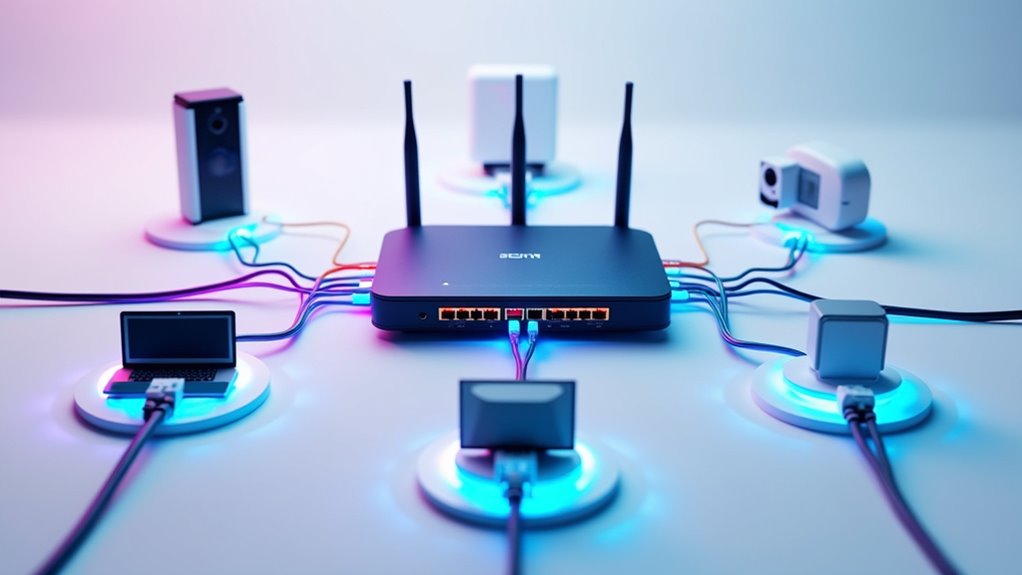
The initial investment pays off. Lower utility bills. Fewer costly repairs thanks to preventative maintenance alerts. Insurance companies love security systems—premiums often drop. Property values increase with these upgrades. Many homeowners use a central hub to manage all their smart devices from one interface. Smart financial move.
The transition to automated living has been subtle but profound. Yesterday’s science fiction is today’s normal. Homes now anticipate needs, conserve resources, and protect occupants without constant input. Smart home technology offers particularly valuable assistive features for individuals with disabilities, enhancing their quality of life. They’re not just buildings anymore. They’re partners in daily life.
Did You Know
What Happens to Smart Home Systems During Power Outages?
Smart home devices mostly shut down during outages.
Battery backups? They’ll keep some gadgets running briefly. Internet-dependent stuff goes completely dark—no remote access, no streaming.
Smart locks still work manually. Thank goodness. Security systems? Limited functionality at best.
Power returns and half your devices need resetting. Frustrating. Some plugs remember their previous state; others don’t.
UPS systems help, but they’re just a Band-Aid for the inevitable electronic surrender.
Are Smart Homes Vulnerable to Hacking?
Smart homes are absolutely vulnerable to hacking. The evidence is clear.
Weak default passwords, unencrypted communications, and outdated firmware create perfect entry points for cybercriminals. Internet-connected devices face brute-force attacks daily. Smart cameras, door locks, and voice assistants have all been compromised in real incidents.
Not every attempt succeeds, thankfully. Strong passwords, regular updates, and encrypted connections help. But the risk? It’s definitely there.
How Much Does a Complete Smart Home System Cost?
Complete smart home systems vary wildly in cost.
DIY setups start at just $65 for basic devices, while average homeowners spend between $2,000 and $4,000 for essential automation.
Professional installations? They’ll run $2,000 to $10,000.
Want luxury? Break out the big wallet—high-end whole-house systems reach a staggering $120,000.
Fancy smart refrigerators alone cost $10,000.
Yeah, automation doesn’t come cheap.
Can Smart Homes Function Without Internet Connection?
Smart homes can absolutely function without internet—just with limitations.
Offline systems use Bluetooth, Zigbee, and RF protocols for local device communication. Your lights, thermostats, and some security devices will keep working.
No internet means better privacy and reliability during outages.
But forget remote access. You can’t control things while away.
And those fancy cloud-dependent AI features? Useless.
Firmware updates? Nope. It’s a trade-off, really.
Do Smart Homes Work With All Mobile Device Brands?
Smart homes generally work across mobile brands, but it’s not always seamless.
Standards like Zigbee and Z-Wave help bridge the gap.
Still, exclusive ecosystems can be stubborn—Apple HomeKit often gives Android users the cold shoulder.
Smart hubs like SmartThings are technological peacekeepers, connecting devices regardless of brand loyalty.
Yeah, your phone will probably work, but compatibility varies.
Some features might play favorites depending on your device’s age and operating system.