Apple buried the lede in its iPhone Air announcement, and most people completely missed it. Everyone fixated on the thinness, the price, the colors. Meanwhile, Apple quietly slipped in a chip that fundamentally alters how your smart home works.
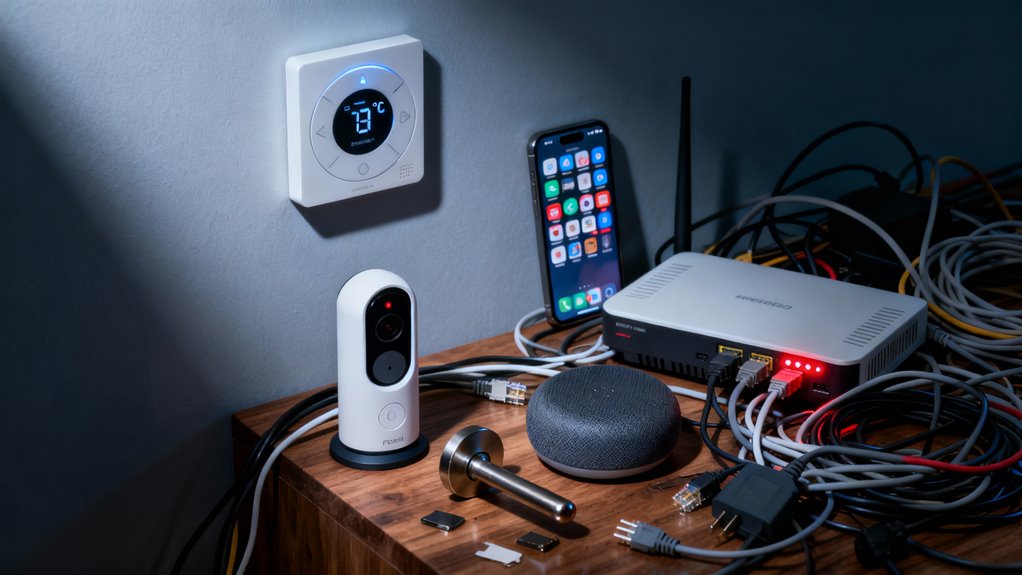
The N1 chip supports Thread technology. Sounds like another tech buzzword, right? Wrong. Thread enables faster, more reliable local communication between smart home devices. But here’s the kicker: Thread-enabled iPhones can act as border routers. That means your iPhone Air can directly manage your smart home network without needing dedicated hubs cluttering your house.
Thread-enabled iPhones eliminate the need for dedicated smart home hubs by acting as border routers themselves.
Combine that with iOS 26‘s Home app upgrades, and you’ve got something actually interesting. The new automation system ditches rigid “if this, then that” rules for context-aware routines that learn from your habits. Automations now trigger based on combinations of time, location, accessory activity, and user presence.
Conditional logic adapts to weather, current occupants, and time of week. It’s not groundbreaking, but it’s definitely smarter than what came before.
The Home app now supports both HomeKit and Matter-enabled devices. Matter guarantees interoperability among manufacturers, which sounds boring until you realize you’re not locked into one ecosystem anymore.
Want to mix your Philips Hue lights with Samsung sensors and Google speakers? Go ahead. Improved automation extends to newly supported categories, including robot vacuums. Legacy support ends in late 2025, though, so Apple’s forcing users forward whether they like it or not.
Activity History lets users track device actions and automation triggers over time. Guest access enables temporary smart home entry for visitors. Audit trails provide security insights. On top of that, automation scenarios can be tailored to specific guests or groups.
Privacy-focused Apple suddenly cares about transparency. Shocking.
New presence detection automates actions as users arrive or depart. Person-specific routines adjust lighting or temperature preferences. Sensors may even detect hand gestures for long-range accessory control, though that part’s still a bit unclear.
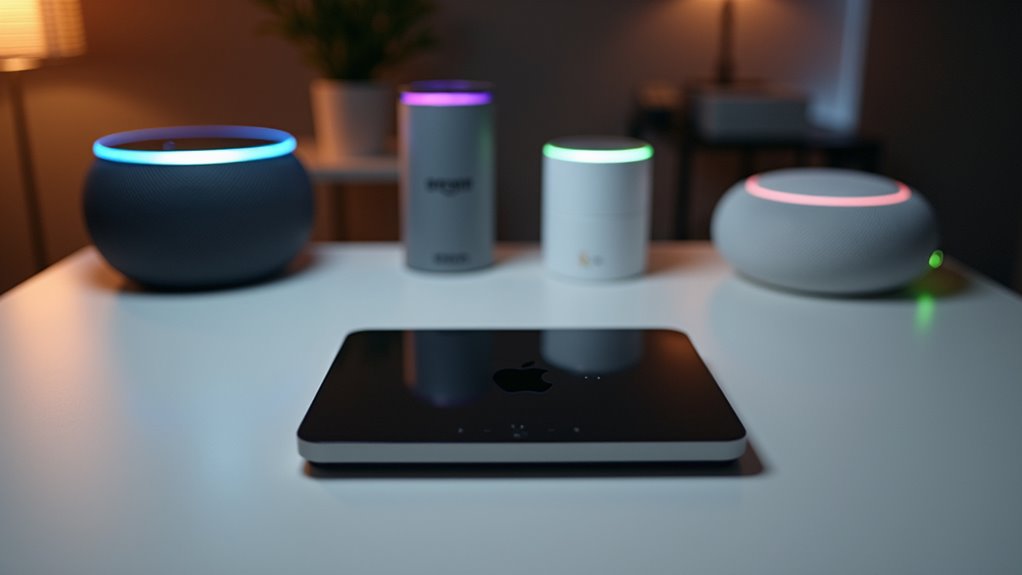
Rumored Apple smart home hubs will likely serve as central control devices with Face ID-powered dashboards and multi-device intercom functionality. The hub’s six-inch all-display design resembles an iPad, complete with touch input for controlling apps and connected devices.
The iPhone Air isn’t just another thin phone. It’s Apple’s quiet infrastructure play for the smart home future. Thread support across multiple Apple devices establishes a solid mesh network that extends far beyond just your phone. Most coverage completely whiffed on that angle.