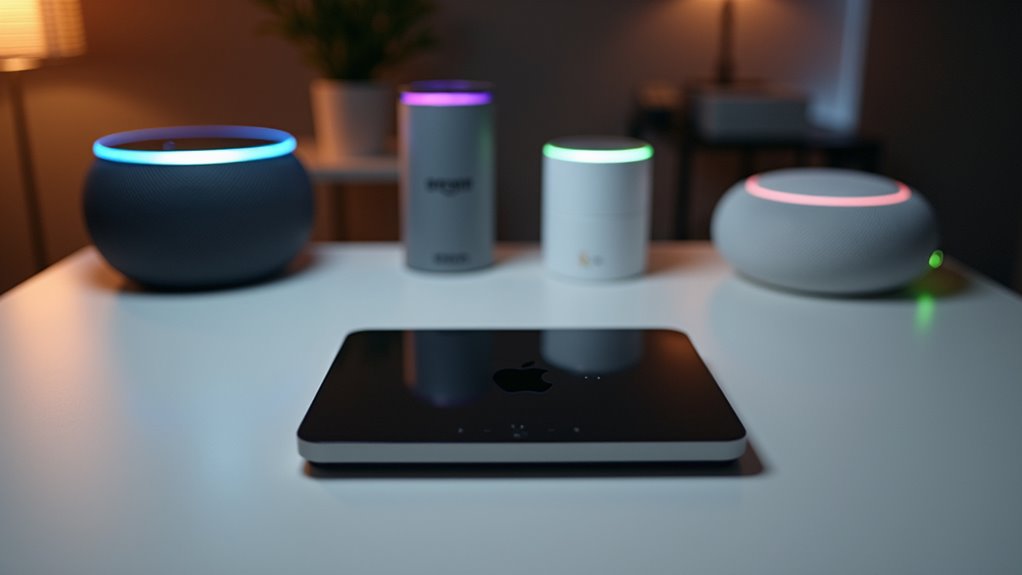
While Apple once proudly positioned Siri as the future of voice assistants, the reality has become painfully clear: Siri is failing spectacularly. The company’s delayed 2026 smart home hub serves as yet another embarrassing reminder of just how far behind Apple has fallen in the AI race.
Google and Microsoft’s AI assistants routinely demolish Siri in both speed and accuracy tests. It’s not even close anymore. Apple’s Foundation Models are capped at a measly 3 billion parameters while competitors deploy vastly more sophisticated systems. The result? Features that feel outdated and frankly useless compared to what’s available elsewhere.
The promised transformation never came. Contextual awareness, cross-app voice workflows, email understanding – all remain unfulfilled fantasies. Core features like email summaries and smart notifications are either unreliable or completely missing. Users get inconsistent results on identical tasks, making Siri about as dependable as a coin flip.
Behind closed doors, things sound even worse. Apple leadership has described development setbacks as “ugly and embarrassing,” which is corporate speak for absolute disaster. Engineers are stuck working with outdated company GPUs while competitors race ahead.
Team morale has cratered amid constant direction changes and abandoned projects. High turnover tells the story leadership won’t. Apple’s surprise product launches continue to disrupt AI development efforts across teams.
The numbers don’t lie either. A staggering 73% of surveyed users found Apple Intelligence and Siri features provided little to no value. Developers have lost trust in Apple’s roadmap after countless delays and broken promises.
Even WWDC announcements now feel like elaborate fiction, with developers openly skeptical about future Siri capabilities. Apple faced significant backlash when they were forced to retract news summaries that completely misrepresented content from major outlets.
Technical constraints make everything worse. Apple’s internal AI data centers run on aging hardware that can’t compete with modern demands. Budget limitations force teams to “do more with less,” which is management code for inevitable failure.
The company relies on external providers like Google and Amazon for computing power – imagine that irony.
Apple’s smart home ambitions remain hampered by these fundamental AI limitations. Without a competent voice assistant, the delayed hub becomes just another expensive gadget. This problem is especially concerning considering the cybersecurity risks that already plague internet-connected smart home devices.
Siri’s failures aren’t just embarrassing anymore – they’re actively damaging Apple’s reputation in the AI era.