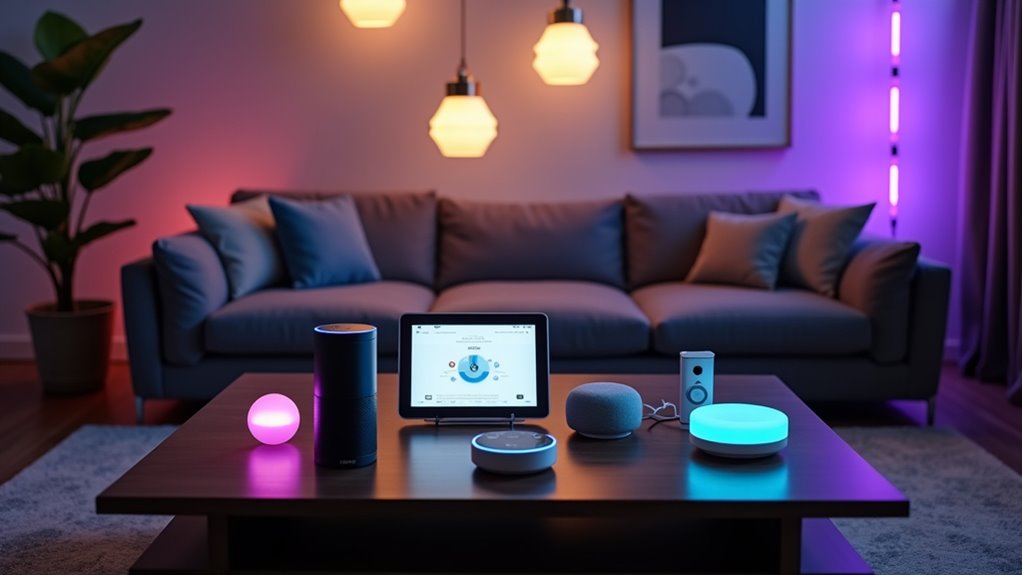
Smart home technology promises a life of convenience and automation—lights that turn on with a word, thermostats that adjust themselves like magic. The reality? Almost a third of homeowners who tried the DIY route eventually threw in the towel and called the professionals.
Setting up a smart home is harder than it looks, apparently. A full 19% of DIY enthusiasts struggle just getting devices to pair and set up properly. Another 15% battle app crashes and failed updates. That dream of a seamlessly automated home? It quickly becomes a nightmare of troubleshooting.
The promise of automation meets the reality of troubleshooting—19% can’t even get past initial device pairing.
Then there’s the reliability problem. Nearly half of users face device failures, with Wi-Fi and internet issues leading the charge at 46%. Power outages disrupt 33% of smart home setups. Twenty percent deal with dead batteries at the worst possible times. Network outages, misconfigured devices, and cloud service downtime—all of it turns carefully crafted automation routines into digital chaos. Battery replacement schedules can vary widely between devices, adding to the maintenance burden.
The lack of universal standards doesn’t help matters. Smart home products often refuse to play nicely together, creating compatibility headaches that would make anyone’s head spin. Users end up juggling multiple ecosystems from Apple, Google, and others, while trying to wrangle Z-Wave, Zigbee, Wi-Fi, and Matter protocols that may not interoperate without extra hubs or bridges.
Different apps for lighting, security, and climate control? Welcome to the fragmented ecosystem.
For non-technical household members, the learning curve is steep. Really steep. Complicated multi-step processes discourage adoption, and app overload kills whatever convenience the technology was supposed to provide in the first place. Overly complex automation routines confuse users and increase failure rates.
On top of that, infrastructure issues pile on. Wi-Fi congestion slows everything down when you add multiple devices. Lose internet and you might get locked out of heating or security systems—not exactly ideal. Older routers can’t handle the load. Larger homes need mesh networks and repeaters.
Security and privacy risks lurk everywhere, too. Not all devices encrypt data or receive regular updates. Many appear to collect user data without clear disclosure. Outdated firmware opens doors to exploits. Data privacy concerns top the list at 57% among smart home users.
The maintenance never ends. Smart homes require ongoing upkeep that many DIY enthusiasts simply didn’t sign up for. No wonder 29% eventually surrender.