Forget fumbling for keys in the dark while balancing groceries. The latest home security trend doesn’t involve metal objects or memorizing codes. It’s the veins in your palm. Yes, the same ones that make your hand look like a roadmap when you’re dehydrated.
Palm vein authentication works by shooting near-infrared light at your hand. The hemoglobin in your veins absorbs this light, creating a pattern that’s completely unique to you. Nobody else has your exact vein structure. Not your twin. Not your clone, if you had one.
The technology captures these patterns and converts them into encrypted digital templates stored locally on the device. No cloud storage. No remote servers collecting your biological data.
Your vein patterns stay right where they belong – encrypted and stored locally, never leaving your device.
Here’s why this beats everything else: Keys get lost. PINs get forgotten. Fingerprints can be lifted from surfaces. But your palm veins? They’re hiding beneath your skin, invisible to thieves and impossible to replicate.
Even if someone chopped off your hand (let’s hope not), the lack of blood flow would render the veins useless for authentication. Dark thought, but necessary context.
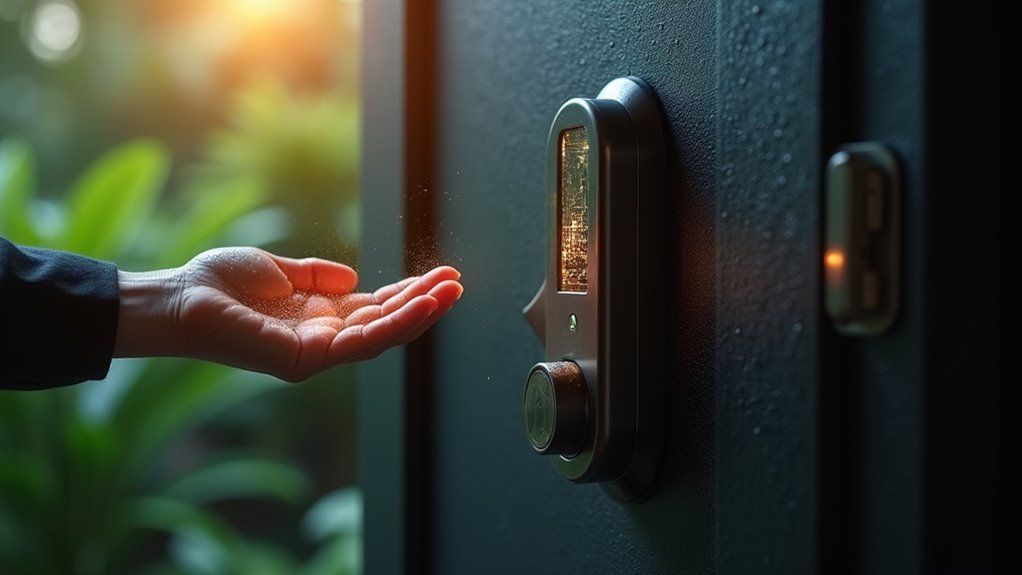
The whole process takes less than a second. Wave your hand near the scanner, and you’re in. No touching required, which matters in a world where everyone’s suddenly germaphobic.
Dirt on your hands doesn’t matter. Small cuts don’t interfere. The scanner reads what’s underneath, not what’s on the surface. This environmental resistance means the system maintains accuracy whether you’ve been gardening, cooking, or working on your car.
Traditional security methods look ancient by comparison. Physical keys have been around since ancient Egypt, and they’re still just pieces of metal anyone can duplicate.
Passwords are a joke – most people use their birthdays or “password123.” Even newer biometric systems have problems. Facial recognition fails with masks. Fingerprint scanners hate wet fingers.
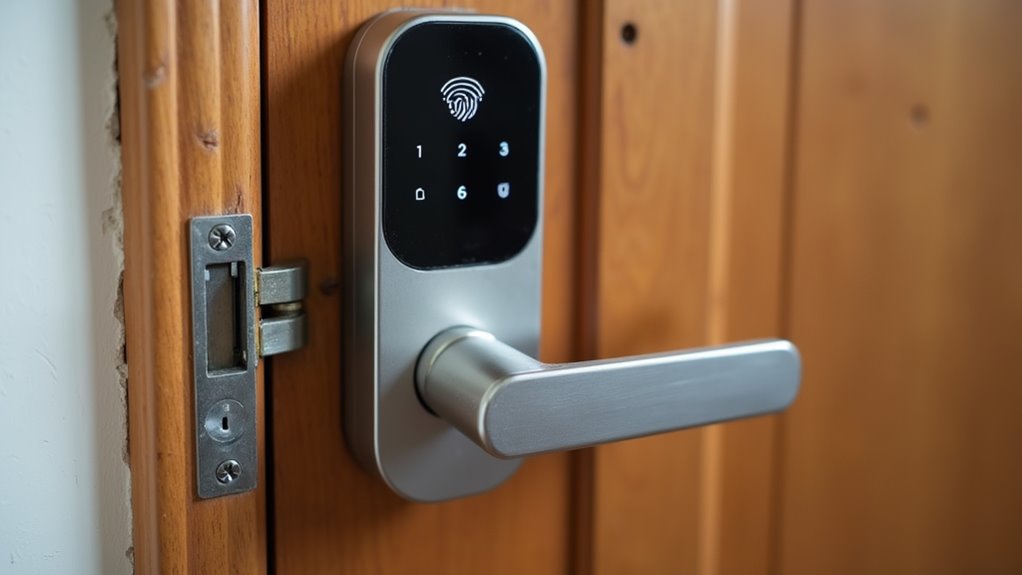
The technology includes anti-hostage features, though manufacturers don’t advertise this much. There’s also backup access through PINs or physical keys for emergencies. Because technology fails sometimes. That’s life.
Your palm veins were always there, doing their job of returning blood to your heart. Now they’re pulling double duty as the most sophisticated house key you’ll ever own. Major players like Fujitsu PalmSecure are already proving this technology works in real-world settings, from grocery stores in Uruguay to banking applications worldwide.