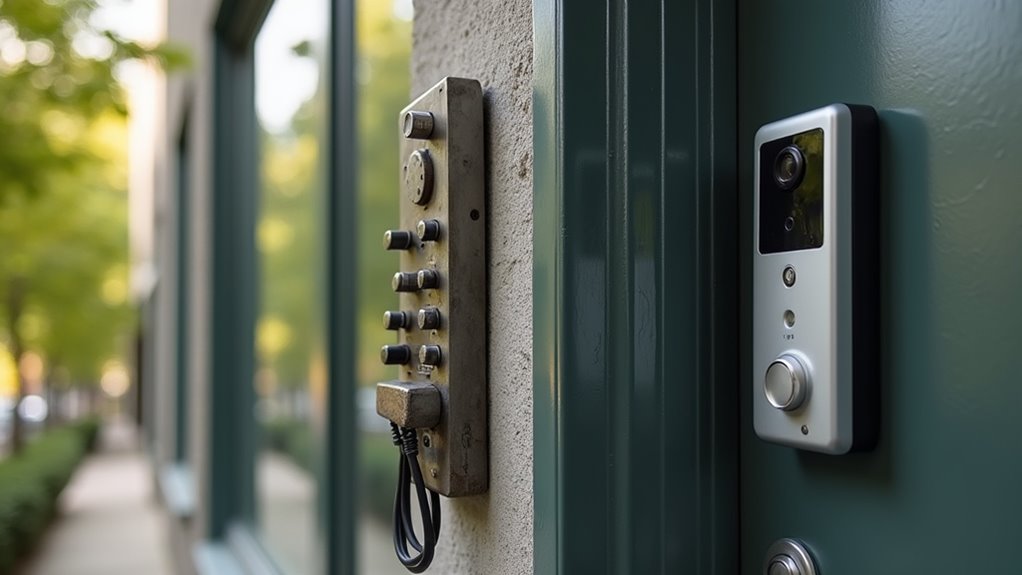

When someone rings a video doorbell expecting it to work with an old apartment intercom system, they’re in for a rude awakening. Most video doorbells couldn’t handle an intercom if their battery life depended on it. The problem? They’re built for different worlds.
Traditional intercoms speak analog. Modern video doorbells speak digital. It’s like trying to get a smartphone to work with a rotary phone—good luck with that. Those fancy doorbells focus on streaming video from your porch to your phone, not managing full-duplex conversations between apartments.
Traditional intercoms and modern video doorbells speak different languages—like smartphones trying to chat with rotary phones.
And forget about those multi-wire setups in older buildings. Video doorbells want simple, low-voltage wiring. Intercoms? They’re running on advanced wiring that might as well be alien technology to most doorbell manufacturers. Real intercom systems need I/O relays to connect with door release mechanisms for remote lock control. These systems also support multiple access methods like key fobs, PIN codes, and even facial recognition for managing visitor entry in multi-tenant buildings.
The real kicker is that mainstream video doorbells are standalone devices. No relay options. No interface support. Just a camera, a button, and a dream. They’re designed for suburban homes where the biggest challenge is catching package thieves, not maneuvering through the Byzantine wiring of a 1970s apartment complex.
But wait—some companies actually got the memo. Brands like eufy figured out people might want both technologies in one device. Their Video Doorbell Dual Camera S330 handles two-way audio like an actual intercom should. Shocking, right?
These hybrid models support wireless installation too, so nobody needs to hire an electrician who speaks fluent “legacy wiring.” The catch? Money. Intercom-capable video doorbells cost more than their simpler cousins. They’re marketed to multi-family buildings and gated properties where budgets run deeper.
Some require dedicated monitors or central stations, pushing prices into enterprise territory. Companies like Swiftlane and Avigilon joined the party, offering systems that bridge both worlds. They’re engineered for retrofitting existing intercom lines without the usual headaches.
Plus, they’re weatherproofed for commercial use—because nothing says “professional installation” like a doorbell that dies in the rain. While Google’s Smart Home Bundle doesn’t directly address these intercom limitations, it does offer Matter support for enhanced interoperability with compatible smart home devices.
The bottom line? Most video doorbells can’t handle intercoms because they were never meant to. The ones that can? They’re the expensive exceptions that prove the rule.