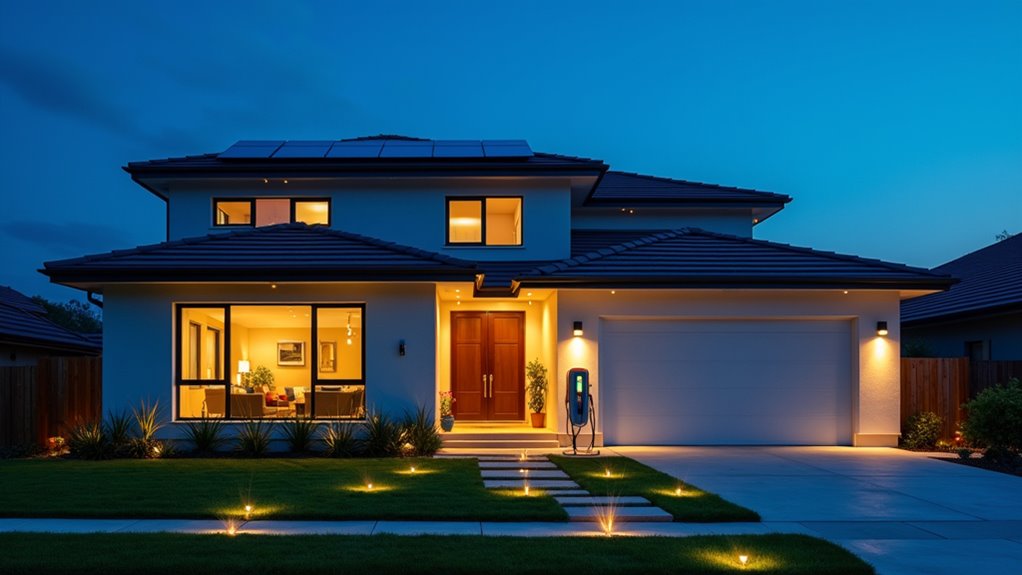
While most people are still figuring out how to program their coffee makers, the smart home market is absolutely exploding. The global smart home market is projected to hit $89.8 billion in 2025, reaching $116.4 billion by 2029. That’s a 6.6% annual growth rate that makes traditional appliances look like museum pieces.
Smart home automation is where things get really wild. The market could balloon from $132.65 billion in 2025 to a staggering $1,149 billion by 2034. That’s a 27.11% growth rate that would make any investor weep with joy. Meanwhile, your decade-old thermostat is just sitting there, doing absolutely nothing intelligent.
Voice assistants like Alexa, Siri, and Google Assistant have become the central nervous system of modern homes. They’re commanding smart lighting systems that can schedule themselves, adjust brightness, and save energy without human intervention. Smart thermostats are learning user habits and optimizing heating and cooling automatically. Your old thermostat? It’s basically a glorified on-off switch.
Security systems have evolved beyond basic alarms into sophisticated networks of cameras, smart locks, and sensors that send real-time alerts to smartphones. Entertainment systems now offer centralized control over audio, video, and streaming devices. Everything talks to everything else through IoT integration and cloud computing. For elderly users, these technologies provide health monitoring features that help maintain independence while ensuring safety.
North America leads the revenue charge, but Asia-Pacific is growing fastest at 8.4% annually, driven by urbanization in China, Japan, and South Korea. The U.S. market alone is projected to explode from $36.38 billion in 2024 to $403.09 billion by 2034. Retrofit installations are experiencing particularly explosive growth with an anticipated CAGR of 8.4% through 2029. Popular innovations like IKEA’s STARKVIND air purifier showcase how even furniture retailers are jumping into the smart appliance game.
AI-enabled devices are the real game-changers here. They adapt to preferences, understand natural language commands, and automate daily routines. Smart appliances market is expected to grow from $42.51 billion in 2025 to $81.05 billion by 2033. These gadgets learn, think, and respond.
Consumers want energy efficiency, improved security, and convenience through automation. Rising disposable incomes and technology acceptance are fueling adoption. The only real barrier? High initial costs. But for those willing to invest, the future is already here.