Pool cleaning just got a whole lot more interesting. Wealthy homeowners are ditching their old-school cleaning setups faster than you’d expect. And honestly? It makes sense.
Pool cleaning is changing fast. Wealthy homeowners are abandoning traditional setups — and the reasons why make total sense.
The global robotic pool cleaner market hit $2.3 billion in 2026. That’s not a typo. Premium cordless robots are driving a huge chunk of that growth, with the segment projected to reach $2.15 billion by 2030 at a 14.2% CAGR. People with money are spending it on automation. Simple as that.
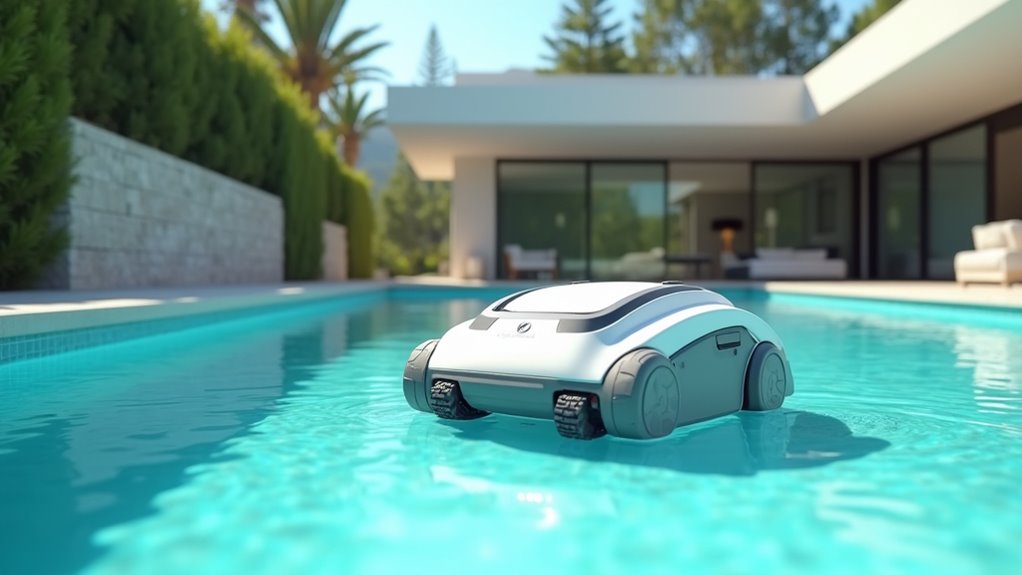
The cord thing was always annoying. Traditional corded cleaners tangle, restrict movement, and depend on external power sources. Cordless designs eliminate all of that. High-capacity lithium-ion batteries now deliver 120 to 180 minutes of runtime per charge. Fast charging cuts downtime between cleaning cycles. Smart energy management keeps suction consistent even as battery levels drop. Nobody’s babysitting the process anymore.
Then there’s the AI factor. Premium models carry 20-plus sensors that adapt cleaning routes in real time. These robots clean floors, walls, waterlines, and surfaces while also clarifying water. Some models even monitor pH, temperature, and cleanliness levels. App-based controls let users visualize cleaning paths and select specific modes. It’s a lot of technology for a pool cleaner. Nobody’s complaining.
Labor shortages in maintenance services are also pushing this trend hard. Finding reliable pool cleaning help has become genuinely difficult in many markets. Automation fills that gap without the scheduling headaches. Rising disposable income helps too. When people have money and options, manual effort loses its appeal fast.
The “clean in all directions” category, which covers robots traversing walls and waterlines, accounts for over 60% of the market projected through 2033. That dominance isn’t accidental. Consumers identified wall and waterline cleaning as specific pain points. The market responded.
Energy efficiency rounds out the picture. These robots consume less power than traditional cleaning methods. Battery advancements keep reducing overall energy requirements. For high-end homeowners who care about sustainability alongside convenience, that matters. Much like premium robot vacuums, top-tier pool cleaning robots feature self-emptying and self-maintenance capabilities that reduce the need for manual intervention between cleaning cycles. The market analysis covers pool types including in-ground, above-ground, and hybrid pools, reflecting the full range of residential installations driving adoption of these technologies.
Distribution is expanding to match demand, with robotic pool cleaners now available through specialty electronics stores, e-commerce, and hypermarkets, making premium models more accessible to affluent buyers across multiple retail touchpoints.
Cordless pool robots aren’t a luxury novelty anymore. They’re becoming the standard.


