
Smart power monitoring systems track electricity usage in real-time, identifying energy hogs throughout your home. No more bill shock at month’s end. These devices recognize appliances by their electrical signatures, send alerts for unusual events, and integrate with other smart home gadgets. They’re Wi-Fi enabled for remote monitoring and GDPR-compliant for privacy. Users develop better habits through regular updates and actionable data. The technology works silently in the background, constantly finding ways to save you money.

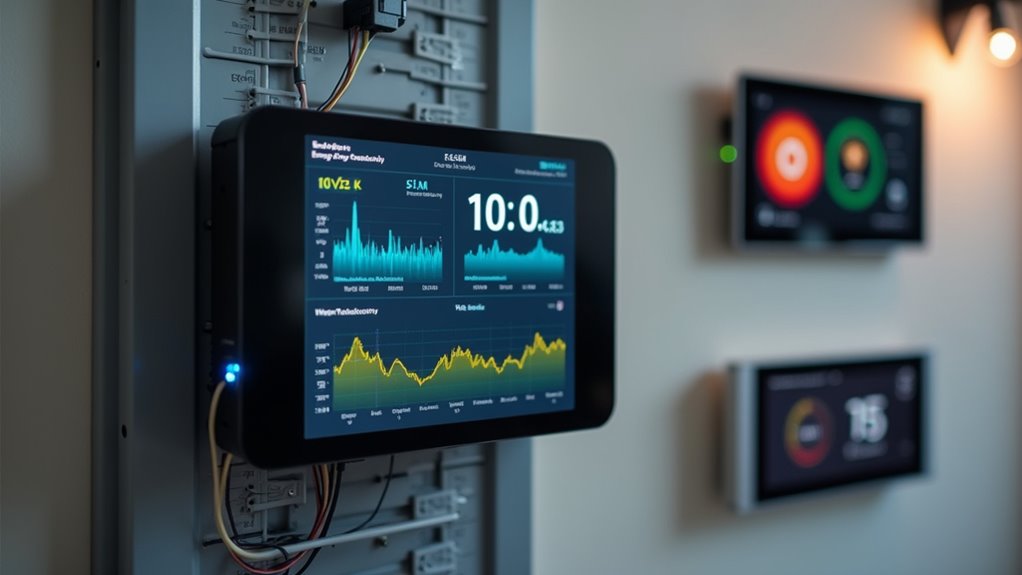
As energy costs continue to soar, homeowners are turning to smart power consumption monitoring systems to take control of their electricity usage. These systems don’t just track total consumption—they get downright nosy about which appliances are hogging the most power. Devices like Leviton’s LWHEM-2 connect directly to smart circuit breakers, giving users the ability to monitor and control their home’s energy flow in real time. No more month-end bill surprises. Just cold, hard data.
The latest monitoring tech doesn’t stop at the breaker panel. Systems like Sense and Smappee are clever enough to recognize individual appliances by their unique electrical signatures. Left the basement freezer door open? Your monitoring system will rat it out with a notification. That ancient fridge from the 90s? These systems will show you exactly how much it’s costing you. Sometimes ignorance isn’t bliss—it’s expensive.
Budget management features have become standard in modern energy monitors. Efergy Engage lets users set consumption limits and sends alerts when they’re about to blow past their energy budget. Weekly reports highlight usage patterns and suggest ways to trim the fat from energy bills. Off-peak hour scheduling? Yeah, that’s a thing now too. Advanced monitors like the LWHEM-2 allow homeowners to monitor energy from multiple sources simultaneously, including solar, battery, generator, and wind power.
Say goodbye to surprise energy bills—today’s monitors keep you on budget with real-time alerts and smart scheduling.
Integration capabilities make these monitors truly shine. They play nice with other smart home devices—lighting, EV chargers, you name it. During power outages, advanced systems can automatically cut non-essential loads to preserve backup power. Pretty smart for a glorified meter reader. The addition of smart meters enables real-time tracking that transforms how homeowners visualize and manage their energy consumption.
The environmental benefits aren’t just marketing fluff. Real-time awareness of energy habits tends to promote conservation. Users become hyperaware of their consumption patterns and often make changes. It’s like having a judgmental friend constantly commenting on your energy diet. Annoying? Sometimes. Effective? Absolutely.
Wi-Fi connectivity means homeowners can monitor and adjust their energy use from anywhere. Forgot to turn off something before vacation? No problem. These systems have got you covered—assuming the internet’s working, of course. Implementing GDPR-compliant data handling ensures user privacy is protected while collecting valuable consumption information.
Did You Know
What Is the Accuracy of Smart Power Monitoring Systems?
Smart power monitoring systems often miss the mark. Big time. Accuracy varies wildly, with some meters showing errors up to six times actual consumption.
Blame modern appliances with their erratic waveforms. Smart plugs? They’re worse with low-power loads under 1W.
Cloud-based averaging just masks the problem. Even certified meters fail with “waveform-contaminating” devices.
Real-time local data beats cloud integration, but still lacks precision. The tech needs work. Seriously.
How Do I Troubleshoot Connectivity Issues With My Smart Meter?
Smart meter connectivity problems? Check the basics first.
Signal strength matters—walls and appliances block wireless signals. No joke. Move the in-home display closer to the meter or open cabinet doors. Restarting the system often works too.
Still nothing? Your meter might’ve lost “smart mode” after switching energy suppliers. SMETS1 meters are notorious for this.
When all else fails, call the provider. They can reset the communications hub remotely.
Are There Privacy Concerns With Smart Power Consumption Monitoring?
Privacy concerns with smart meters? Absolutely.
These devices collect granular usage data that reveals when you’re home, what appliances you use, and even your daily routines.
Hackers can intercept poorly encrypted wireless transmissions. Worse, NILM technology identifies specific appliance usage from your energy signature.
Third-party sharing remains murky territory. Criminals could analyze patterns to target empty homes.
Legal frameworks haven’t caught up yet. Invasion of privacy? You bet.
Can Smart Monitors Detect Which Specific Appliances Use Most Energy?
Yes, smart monitors can identify energy-hogging appliances.
Advanced models use machine learning to recognize distinct electrical “signatures” of devices. They track your fridge, AC, even LED lights in real-time.
Not all monitors do this—only the fancy AI ones. Some need weeks to “learn” your appliances.
Second-by-second data shows exactly what’s draining your wallet.
Pretty handy for catching those energy vampires lurking in your home.
What Backup Systems Exist During Power or Network Outages?
Modern backup systems offer multiple options during outages.
Energy storage batteries provide quiet, eco-friendly power for homes and businesses. UPS systems kick in instantly—critical for data centers and hospitals.
Traditional generators run on diesel or natural gas, while newer models use hydrogen. Smart buildings often employ hybrid systems.
Each solution has trade-offs. Batteries? Clean but limited duration. Generators? Long-lasting but noisy.
Pick your poison based on your needs.